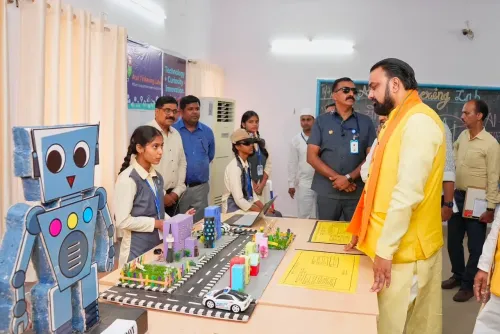
CM Bihar's Vision: Model Schools to Rival Convent Education
Synopsis
Bihar's Chief Minister's Office shared a statement on 18 June 2026 setting a striking benchmark for the state's Model Vidyalaya programme: true success will come only when children from convent schools voluntarily choose to enrol in these upgraded government institutions.
Key Takeaways
Bihar's Chief Minister's Office posted the statement on 18 June 2026 .
The quoted speaker defined success for Model Vidyalayas as attracting students currently enrolled in private convent schools.
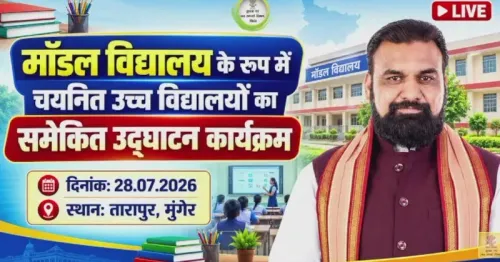
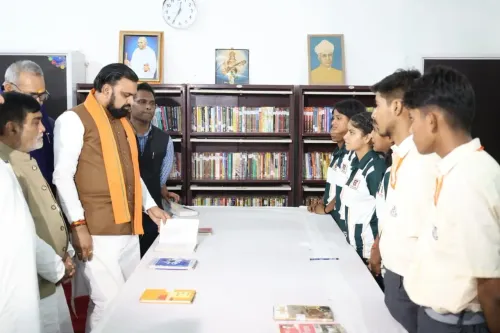
Model Vidyalayas are Bihar's initiative to build high-quality public secondary schools with improved facilities and teaching standards.
Bihar's public education drive dates to 2005 , with earlier phases covering free uniforms, textbooks, and bicycles to boost enrolment.
Similar 'model school' programmes have been launched across multiple Indian states to narrow the quality gap between public and private institutions.
Enrolment data and learning-level assessments from upcoming state education reports will be the key measure of progress.
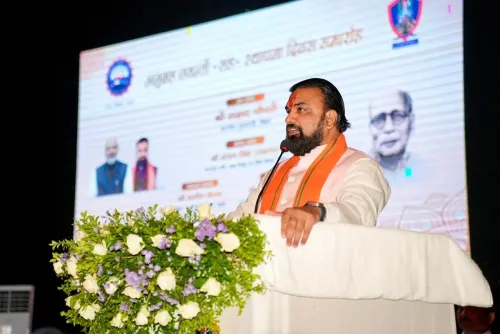
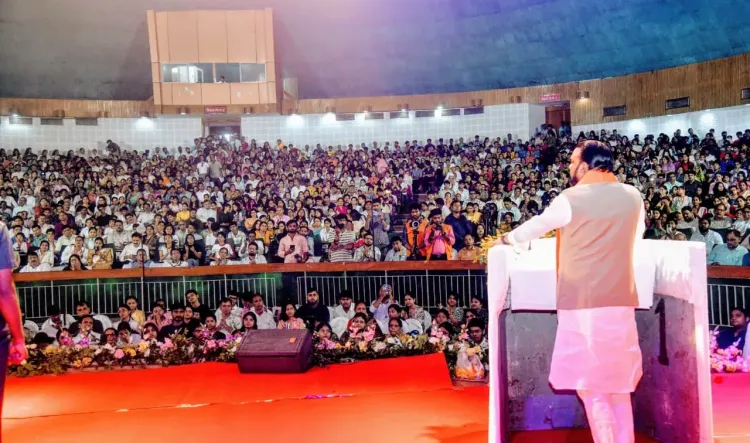
The Chief Minister's Office of Bihar shared a statement on 18 June 2026 quoting a senior government voice articulating an ambitious benchmark for the state's Model Vidyalaya programme — that its success will be measured only when children currently enrolled in convent schools choose to shift to these government-run institutions.
The post quoted the speaker as saying: 'हमारा सपना तब साकार होगा, जब कॉन्वेंट स्कूलों में पढ़ने वाले बच्चे भी इन मॉडल विद्यालयों में नामांकन लेकर शिक्षा प्राप्त करेंगे' — translated: 'Our dream will be fulfilled when children studying in convent schools also enrol in these Model Vidyalayas to receive education.'
Context
The statement sets a pointed aspirational standard: not merely improving government schools in isolation, but making them compelling enough to attract students who currently attend fee-charging private English-medium institutions. Convent schools in Bihar — and across India — have long been regarded by middle-class families as a marker of quality, discipline, and English-language proficiency. Positioning Model Vidyalayas as a credible alternative to these institutions represents a significant rhetorical and policy ambition.
Policy Backdrop
The Model Vidyalaya initiative is part of a broader education infrastructure push in Bihar that has been underway since 2005, when Chief Minister Nitish Kumar first took office. That era saw large-scale interventions including free uniforms, textbooks, and bicycles for girl students — measures credited with sharply improving school enrolment, particularly among girls in rural areas.
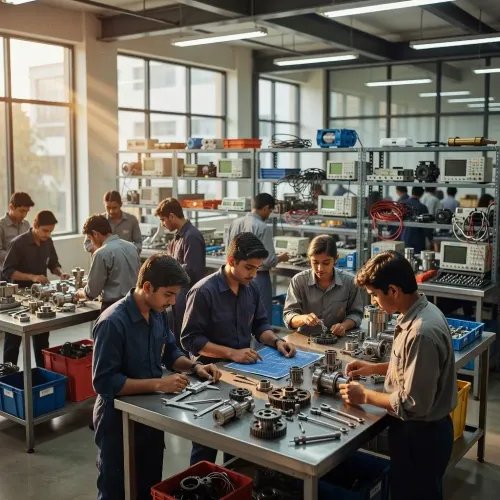
Model Vidyalayas represent the next phase of that effort: moving beyond access and towards quality. These schools are designed with improved physical infrastructure, better-trained teachers, and enhanced academic standards at the secondary level. The ambition mirrors similar initiatives across Indian states — including the Delhi government's school transformation programme and various Adarsh Vidyalaya schemes — all aimed at narrowing the perceived quality gap between public and private schooling.
Stakeholders and Impact
The primary beneficiaries of the Model Vidyalaya programme are Bihar's students from low- and middle-income families who cannot afford private school fees. If the programme achieves its stated ambition, it would reduce the financial burden on aspirational families while expanding access to quality secondary education at scale.
Parents who currently stretch budgets to pay convent school fees represent a critical audience for this messaging. The government's framing — that enrolment from this demographic would mark true success — signals that quality perception, not just infrastructure, is the target. Teachers, school administrators, and district education officers are the operational stakeholders who will determine whether the ambition translates into outcomes.
What's Next
The credibility of this vision will be tested by measurable outcomes: enrolment data, learning-level assessments, and infrastructure completion reports for Model Vidyalayas across Bihar's districts. The next annual school education report from the state is expected to provide the first comparative data point between Model Vidyalaya enrolment trends and private school figures. Sustained political will and budgetary allocation will be essential to convert the stated dream into a verifiable shift in parental preference.
Point of View
Teachers) to outcomes (parental trust and choice). This mirrors a broader national trend where state governments have begun competing with the private school sector on quality rather than simply expanding access. For Bihar, a state that has made measurable strides in enrolment since 2005, the challenge now is the harder one: changing perception among aspirational families. Whether the rhetoric is matched by sustained budgetary commitment and administrative follow-through will determine if this vision ages into a policy achievement or a campaign talking point.
NationPress
17 Sept 2026
Frequently Asked Questions
What are Model Vidyalayas in Bihar?
Model Vidyalayas are a Bihar government initiative to establish high-quality public secondary schools with improved infrastructure, better-trained teachers, and higher academic standards, aimed at narrowing the quality gap with private institutions.
What did the Bihar CMO post say about convent schools?
The Bihar Chief Minister's Office quoted a statement saying the dream for Model Vidyalayas will be fulfilled only when children currently studying in convent schools also choose to enrol in these government-run institutions.
How has Bihar improved its government schools since 2005?
Since 2005, Bihar has distributed free uniforms, textbooks, and bicycles to boost enrolment, and has more recently launched Model Vidyalayas to upgrade the quality of secondary education in the state.
Are other Indian states running similar model school programmes?
Yes, several Indian states have launched model or Adarsh school programmes — including initiatives in Delhi and other states — with the shared goal of raising public school standards to compete with private English-medium institutions.
How will the success of Bihar's Model Vidyalayas be measured?
Success is expected to be tracked through enrolment data, learning-level assessments, and annual state education reports that compare Model Vidyalaya performance against private school enrolment trends in Bihar.