CBSE 3-language mandate for Class 9: Annamalai urges rollback of sudden circular

Synopsis
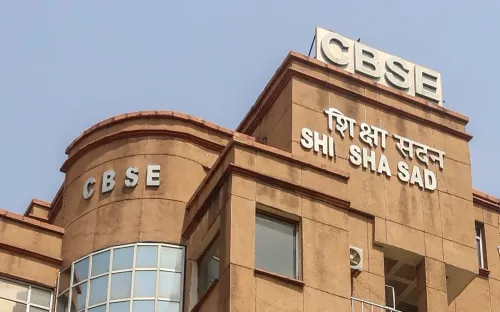
CBSE quietly advanced its three-language mandate for Class 9 students by three years — from 2029–30 to July 2026 — with a May 15 circular that contradicted its own April notification. Former Tamil Nadu BJP chief K. Annamalai is now demanding a rollback, flagging the whiplash for students who had already locked in their language choices in Class VI.
Key Takeaways
CBSE's April 2026 notification had set 2029–30 as the start date for the three-language requirement for Class IX students.
A fresh CBSE circular dated 15 May 2026 advanced the mandate to 1 July 2026 , the current academic year.
Under the directive, Class IX students must study three languages, with at least two being Indian languages.
Former Tamil Nadu BJP president K.
Annamalai has demanded CBSE withdraw the revised circular, citing undue pressure on students and parents.
The move is particularly sensitive in Tamil Nadu , where language-policy disputes have deep political and social roots.
Former Tamil Nadu Bharatiya Janata Party (BJP) president K. Annamalai has called on the Central Board of Secondary Education (CBSE) to withdraw a circular making a third language compulsory for Class IX students from the 2025–26 academic year, warning that the abrupt policy shift would impose undue academic pressure on students and financial stress on parents. The demand, made via a post on his X account, comes amid heightened sensitivity over language policy in Tamil Nadu.
What the April 2026 Notification Said
When CBSE issued its original notification in April 2026, it introduced a three-language framework for students from Class VI onwards, requiring at least two of the three languages to be Indian languages. Annamalai had at the time publicly welcomed the move, stating it would give children meaningful access to India's literary and cultural heritage from an early age.
Crucially, the April 2026 notification had specified that the three-language requirement for Class IX students would come into force only from the 2029–30 academic year — giving schools, students, and parents a multi-year runway to prepare.
The May 15 Circular That Changed Everything
According to Annamalai, CBSE issued a fresh circular to all affiliated schools on 15 May 2026, effectively advancing the deadline by three years. Under the revised directive, Class IX students would be required to study three languages — including two Indian languages — beginning 1 July 2026, the start of the current academic year.
The revised circular, he alleged, came as a shock to parents who had already enrolled their children with a two-language course selection when they joined Class VI. Those students are now in Class IX and would be expected to add a third language mid-stream, with little preparation time.
Annamalai's Core Objections
Annamalai argued that forcing students to suddenly take up an additional language within weeks of the academic year beginning could meaningfully harm their overall performance. He described the revised circular as a deviation from the Board's own stated timeline and urged CBSE to reconsider and formally withdraw the 15 May notification.
His intervention carries particular resonance in Tamil Nadu, where debates over language policy — especially around Hindi imposition — have historically triggered political and social flashpoints. Notably, this is not the first time a centrally driven language directive has drawn pushback from the state's political class across party lines.
Broader Context and What Comes Next
The three-language formula has been a recurring point of friction between the Centre and southern states, particularly Tamil Nadu, since the drafting of the National Education Policy (NEP) 2020. Critics argue that while the policy is framed as promoting multilingualism, its implementation timelines and compulsory nature disproportionately affect states with strong regional-language identities.
As of now, CBSE has not publicly responded to Annamalai's demand. Schools affiliated with the Board in Tamil Nadu are awaiting clarity on whether the 15 May circular will be modified or withdrawn ahead of the 1 July 2026 deadline.
Point of View
With no public consultation. That kind of administrative whiplash erodes institutional trust. In Tamil Nadu, where any hint of language imposition carries outsized political charge, the timing is especially fraught. What is striking is that the criticism is coming from within the BJP's own orbit — a signal that the circular's rollout was poorly managed even by the Centre's own standards. CBSE owes schools and parents a clear, public explanation before July 1.
NationPress
10 Oct 2026
Frequently Asked Questions
What did CBSE's May 15 circular change for Class 9 students?
The May 15, 2026 circular advanced the three-language requirement for Class IX students from the originally stated 2029–30 academic year to July 1, 2026 — the current academic year. Students must now study three languages, including at least two Indian languages, effective immediately.
Why is K. Annamalai opposing the CBSE circular?
Annamalai argues that the revised circular contradicts CBSE's own April 2026 notification, which had promised a 2029–30 implementation date. He contends that students who chose their languages in Class VI are now being asked to add a third language mid-stream, creating avoidable academic pressure.
What did CBSE's original April 2026 notification say?
The April 2026 notification introduced a three-language framework for students from Class VI onwards, requiring at least two Indian languages, but explicitly stated that the mandate for Class IX students would take effect only from the 2029–30 academic year.
Why is this issue particularly sensitive in Tamil Nadu?
Tamil Nadu has a long history of resistance to centrally mandated language policies, particularly those perceived as promoting Hindi. Language-related disputes have repeatedly become major political and social flashpoints in the state, making any abrupt change to curriculum language requirements especially contentious.
Has CBSE responded to the demand for withdrawal?
As of the time of reporting, CBSE had not publicly responded to Annamalai's demand. Schools affiliated with the Board in Tamil Nadu are awaiting official clarification ahead of the July 1, 2026 deadline.