CBSE makes 3 languages mandatory for Class IX from July 1, 2 must be Indian

Synopsis
CBSE has made three languages — at least two of them native Indian — compulsory for Class IX students from 1 July 2026, in a significant step toward implementing NEP 2020. To ease the transition, Class X students will face no Board exam for the new R3 language; all assessments will remain internal and school-based.
Key Takeaways
CBSE has made studying three languages mandatory for Class IX students from 1 July 2026 .
At least two of the three languages (R1, R2, R3) must be native Indian languages.
No Board Examination will be held for R3 at the Class X level; all assessments will be internal.
Until dedicated R3 textbooks are ready, students will use Class VI R3 textbooks (2026–27 edition) .
Textbooks in 19 scheduled languages will be available to schools before 1 July 2026 .
Schools must update R3 offerings on the OASIS portal by 30 June 2026 .
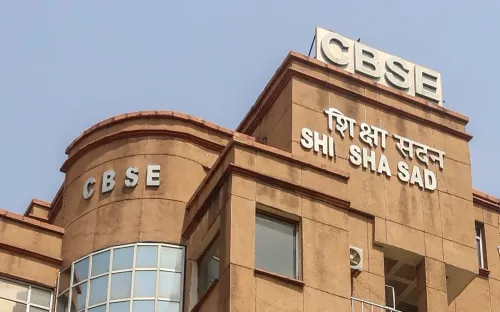
The Central Board of Secondary Education (CBSE) has made it compulsory for Class IX students to study three languages starting 1 July 2026, with at least two of them being native Indian languages. The directive, issued through a circular dated 15 May 2026, aligns the Board's Scheme of Studies with the revised NCERT syllabus under the National Education Policy (NEP) 2020 and the National Curriculum Framework for School Education (NCF-SE) 2023.
What the New Language Policy Requires
Under the revised framework, the three languages are designated R1, R2, and R3. At least two of these must be native Indian languages. Students wishing to study a foreign language may do so only as the third language — provided the first two are native Indian languages — or as an optional fourth language.
Schools have been asked to update their R3 language offerings for Classes VI to IX on the OASIS portal by 30 June 2026, as per the circular signed by Dr Praggya M. Singh, Professor and Director (Academics), CBSE.
Addressing the Textbook Shortage
Acknowledging a transitional gap in learning materials, CBSE has directed that until dedicated R3 textbooks are ready, Class IX students will use Class VI R3 textbooks (2026–27 edition) of their chosen language. The Board has confirmed that Class 6 R3 textbooks in 19 scheduled languages will be made available to schools before 1 July 2026.
No Board Exam for R3 at Class X Level
To contain academic pressure, CBSE has decided that no Board Examination will be held for the R3 language at the Class X level. All R3 assessments will be entirely school-based and internal, with results reflected on the CBSE certificate. The Board has also clarified that no student will be barred from appearing in Class X Board Examinations on account of R3. Sample question papers and assessment rubrics will be shared by the Board shortly.
Support Measures for Schools
CBSE has acknowledged that some schools may face difficulty sourcing qualified teachers for native Indian languages during the transition period. To address this, the Board has permitted flexible staffing arrangements, including inter-school resource sharing through Sahodaya clusters, hybrid teaching support, engagement of retired language teachers, and recruitment of suitably qualified postgraduates.
Broader Context
This move is part of a wider overhaul of school education under NEP 2020, which has long emphasised multilingualism and the promotion of regional languages. The three-language formula itself is not new — it dates to the 1968 National Policy on Education — but its formal embedding into CBSE's assessment structure marks a significant implementation step. Notably, the decision to keep R3 assessment school-based at the Class X level reflects a calibrated approach: mandate the exposure, but limit the high-stakes pressure.
Point of View
But the real test is execution. Mandating two native Indian languages is straightforward on paper; finding qualified teachers for less-commonly-taught scheduled languages — in urban private schools as much as rural ones — is where past language policies have collapsed. The Sahodaya cluster workaround is sensible but ad hoc. The decision to keep R3 assessment entirely internal at Class X is pragmatic, yet it also risks the subject being treated as a box-ticking exercise by schools and students alike. Without a credible monitoring mechanism, the policy could deliver multilingual certificates without multilingual competence.
NationPress
29 Sept 2026
Frequently Asked Questions
What is the new CBSE three-language policy for Class IX?
CBSE has made it mandatory for Class IX students to study three languages — designated R1, R2, and R3 — from 1 July 2026, with at least two being native Indian languages. The policy aligns with NEP 2020 and the NCF-SE 2023 framework.
Will Class X students have a Board exam for the new R3 language?
No. CBSE has decided that no Board Examination will be conducted for R3 at the Class X level. All R3 assessments will be entirely school-based and internal, though the performance will be reflected on the CBSE certificate.
What if a school does not have textbooks for the R3 language?
Until dedicated R3 textbooks are available, Class IX students will use Class VI R3 textbooks from the 2026–27 edition. CBSE has confirmed that textbooks in 19 scheduled languages will reach schools before 1 July 2026.
Can a student choose a foreign language as one of the three?
Yes, but only as the third language (R3), and only if the other two languages are native Indian languages. Alternatively, a foreign language can be studied as an optional fourth language.
How can schools manage if they lack qualified language teachers?
CBSE has permitted several flexible arrangements: inter-school resource sharing through Sahodaya clusters, hybrid teaching support, engagement of retired language teachers, and hiring suitably qualified postgraduates. Schools must update their R3 offering on the OASIS portal by 30 June 2026.