SC tells CBSE: Start third language from Class 6, not Class 9
Synopsis
The Supreme Court didn't just flag stress — it effectively told CBSE where it went wrong: introducing a third language at Class 9, right when students are gearing up for Boards, is a policy misfire. Justice Nagarathna's 'the student in me is still alive' remark signals rare judicial empathy for curriculum design, arriving just as a separate Bench prepares to hear a full challenge to CBSE's three-language policy on 29 July.
Key Takeaways
The Supreme Court on 16 July said introducing a third language at Class 9 places unnecessary stress on students preparing for Board exams .
A Bench of Justices B.V.
Mahadevan suggested the third language should begin from Class 6 and conclude by Class 9.
The court clarified that the CBSE three-language policy does not mandate Hindi — any third language qualifies.
The Bench urged Tamil Nadu to allow Jawahar Navodaya Vidyalayas (JNVs) , noting the Centre bears all costs and the state only needs to provide land.
The matter has been posted for next hearing on 11 August ; a separate challenge to CBSE's language policy is listed before CJI Surya Kant's Bench on 29 July .
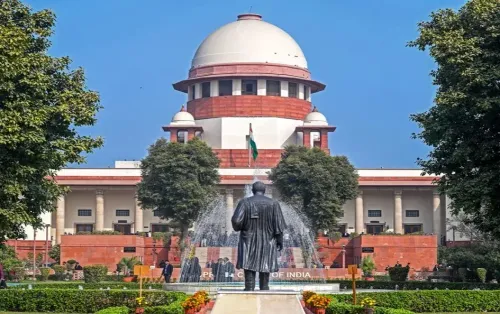
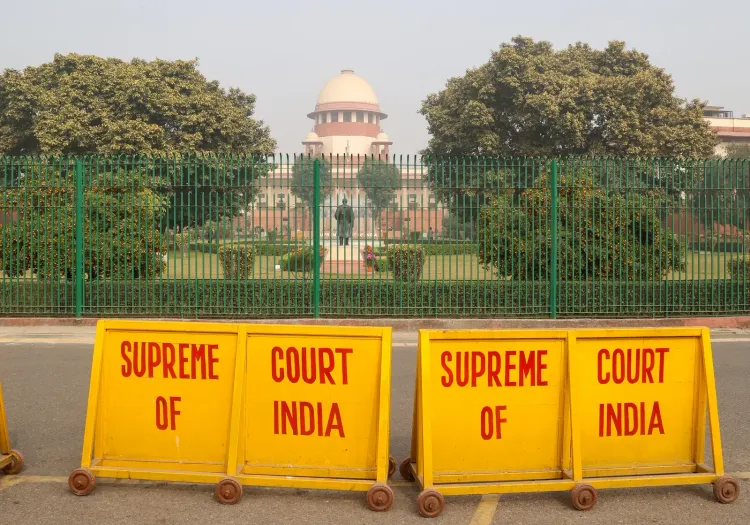
The Supreme Court on Thursday, 16 July flagged serious concern over the CBSE curriculum's practice of introducing a third language at the Class 9 level, observing that burdening students with a new language just as they begin preparing for Board examinations was avoidable and counterproductive. The remarks came from a Bench of Justices B.V. Nagarathna and R. Mahadevan during a hearing in New Delhi.
How the Issue Arose
The Bench was hearing the Tamil Nadu government's appeal against a Madras High Court judgment that directed the state to facilitate the establishment of Jawahar Navodaya Vidyalayas (JNVs) in every district. Tamil Nadu's opposition to JNVs is partly grounded in its objection to the three-language framework these schools follow. Although the validity of CBSE's revised three-language policy was not directly under challenge in this case, the policy's implementation details surfaced during arguments.
What the Court Said
Justice Nagarathna spoke pointedly on the timing of language instruction. 'Don't have a new language in 9th standard please. In 5th or 6th standard, you can start a third language. And by 9th standard, it should stop, the third language. See the stress they are having. Advise your government. The student in me is still alive!' she remarked.
When informed that the third language becomes compulsory only from Class 9 in CBSE schools, the court was unequivocal. 'No, that is very bad. 9th standard is stressful. Why do you introduce a new language in 9th? You introduce it in 6th,' Justice Nagarathna said, recalling that students in her own school had begun a third language — chosen from Kannada, Hindi, or Sanskrit — in middle school. She added that 'the earlier, the better' when it comes to language acquisition.
The Bench also noted that students typically begin preparing for Class 10 Board exams from the end of Class 8, making Class 9 a particularly poor time to introduce an entirely new subject.
On Tamil Nadu's Three-Language Objection
The court pushed back against Tamil Nadu's framing of the three-language policy as a vehicle for imposing Hindi. 'The State language has to be taught, English has to be taught and any third language. It doesn't say Hindi,' the Bench clarified. The observation underscores a distinction that has often been lost in the political debate around language policy in southern states.
The JNV Dispute
On the question of Jawahar Navodaya Vidyalayas, the Supreme Court questioned Tamil Nadu's continued resistance. 'You must have Navodaya schools,' it said, pointing out that the Centre would bear all establishment costs and the state need only provide land. 'All other States, Navodaya schools are there. Why are you depriving Tamil Nadu?' the Bench asked.
The state's counsel submitted that discussions with the Centre were still ongoing. Taking note that a newly-elected Tamil Nadu government was now in place, the court agreed to defer the matter to 11 August to allow fresh instructions to be obtained.
The Madras High Court had earlier held that the state's refusal to permit JNVs curtailed students' right to choose educational institutions and was inconsistent with the Right of Children to Free and Compulsory Education Act. The Supreme Court had stayed those directions in 2017 and, in December 2025, directed both governments to consult on feasibility.
Parallel Challenge to CBSE Language Policy
Separately, the validity of CBSE's revised three-language policy is under challenge before a different Bench headed by Chief Justice of India Surya Kant. Earlier this week, the apex court issued notice to the Centre, CBSE, and NCERT on a fresh batch of petitions challenging the policy but declined to stay its implementation, scheduling a detailed hearing for 29 July.
With the next date set for 11 August in the Tamil Nadu JNV matter, the broader question of how India's multilingual education framework is structured — and when — now sits before the country's highest court on two simultaneous tracks.
Point of View
But the underlying point is backed by developmental research: language acquisition is far more effective before adolescence. The deeper irony is that Tamil Nadu's resistance to JNVs, ostensibly about protecting linguistic identity, may be denying its own students access to well-resourced residential schooling. With two separate Benches now engaged on the three-language question, the policy's future may be shaped as much in court as in Parliament.
NationPress
15 Oct 2026
Frequently Asked Questions
What did the Supreme Court say about CBSE's third-language policy?
The Supreme Court said introducing a third language at Class 9 adds avoidable stress on students already preparing for Board exams, and suggested CBSE should instead begin the third language from Class 6. The observations were made by a Bench of Justices B.V. Nagarathna and R. Mahadevan on 16 July.
Why did the third-language issue come up in the Tamil Nadu JNV case?
Tamil Nadu's opposition to Jawahar Navodaya Vidyalayas is partly based on its objection to the three-language framework these schools follow. While the policy's validity was not directly under challenge, its implementation details surfaced during arguments, prompting the court's remarks.
Does the CBSE three-language policy require students to learn Hindi?
No. The Supreme Court explicitly clarified that the policy requires the state language, English, and any third language — it does not specify Hindi. This directly addresses Tamil Nadu's stated concern that the policy is a vehicle for imposing Hindi.
What is the dispute over Jawahar Navodaya Vidyalayas in Tamil Nadu?
The Madras High Court directed Tamil Nadu to facilitate JNVs in every district, holding that the state's refusal curtailed students' right to choose schools. Tamil Nadu appealed; the Supreme Court stayed those directions in 2017 and the matter is now listed for 11 August 2025.
Is there a separate legal challenge to CBSE's three-language policy?
Yes. A fresh batch of petitions challenging the revised CBSE three-language policy is before a separate Bench headed by Chief Justice of India Surya Kant. The court issued notice to the Centre, CBSE, and NCERT earlier this week and has listed the matter for detailed hearing on 29 July.