CM Sai Pushes Skill-Led Self-Reliance for Chhattisgarh Youth
Synopsis
Chhattisgarh Chief Minister Vishnu Deo Sai on 16 July 2026 declared that a developed Chhattisgarh can only be achieved when every youth is skilled and self-reliant, signalling the state government's alignment with the national Viksit Bharat 2047 and Skill India frameworks.
Key Takeaways
CM Vishnu Deo Sai on 16 July 2026 linked the vision of a 'Viksit Chhattisgarh' directly to youth skilling and self-reliance.
The statement draws on the vocabulary of the national Atmanirbhar Bharat package and Skill India Mission , launched in 2015 .
Chhattisgarh has been under BJP governance since December 2023 , when Sai was sworn in as Chief Minister.
The state's large tribal and rural youth population makes skill-to-employment pipelines a critical policy lever.
Budget allocations for skill centres, placement data, and new industry MoUs will be the key metrics to watch.
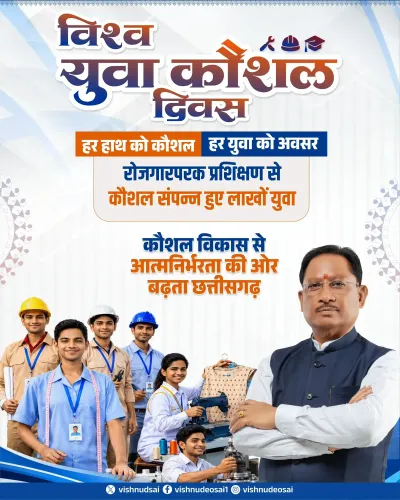
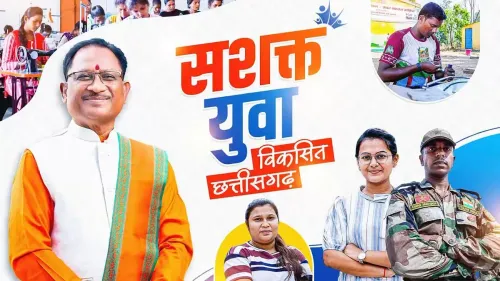
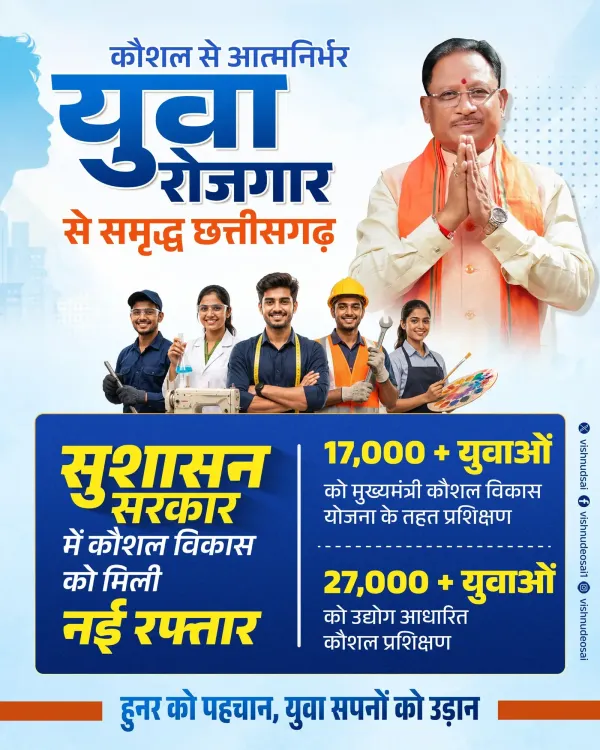
Chhattisgarh Chief Minister Vishnu Deo Sai on Thursday, 16 July 2026, reaffirmed his government's commitment to making every young person in the state skilled and self-reliant, framing youth empowerment as the cornerstone of a 'Viksit Chhattisgarh' — a developed Chhattisgarh.
Context
In his post, CM Sai wrote in Hindi: 'विकसित छत्तीसगढ़ का संकल्प तभी साकार होगा, जब प्रदेश का हर युवा कौशल संपन्न और आत्मनिर्भर बने' — 'The resolve of a developed Chhattisgarh will be realised only when every youth of the state becomes skilled and self-reliant.' He added that his government is moving youth 'from skill to opportunity, and from opportunity to self-reliance.'
The statement positions youth skilling as a prerequisite — not a supplementary goal — for the state's broader development ambitions, echoing the national Viksit Bharat 2047 framework under which BJP-governed states are aligning local programmes with central mandates.
Policy Backdrop
The policy lineage behind this statement stretches back to the Skill India Mission, launched in 2015, which set a target of training over 400 million people in industry-relevant vocational skills. The mission was later extended beyond its original 2022 deadline as states integrated it with sector-specific employment pipelines.
The Atmanirbhar Bharat package, announced in 2020, further tied skill development to entrepreneurship and self-reliance — the precise vocabulary CM Sai deployed in his post. Chhattisgarh, a mineral-rich central Indian state with a large tribal population, returned a BJP government after the 2023 assembly elections, and Sai took charge as Chief Minister in December 2023.
Stakeholders and Impact
The primary beneficiaries of this stated policy direction are Chhattisgarh's youth — particularly those in rural, tribal, and semi-urban pockets where formal employment opportunities remain limited. Skill training infrastructure, when channelled into sectors such as manufacturing, agriculture, and services, can directly improve employability in a state where the economy is heavily dependent on natural resources and public-sector jobs.
Industry partners operating in Chhattisgarh — especially in mining, steel, and agro-processing — stand to benefit from a better-trained local workforce, reducing dependence on migrant labour and potentially anchoring more value addition within the state.
What's Next
Observers will watch the Chhattisgarh state budget for allocations to skill development centres and vocational training infrastructure. The government's follow-through will be measured against placement outcomes from state-run training programmes and any new memoranda of understanding signed with industry partners.
If the rhetoric translates into measurable enrolment and employment figures, it could serve as a template for other BJP-ruled states seeking to localise the Viksit Bharat 2047 agenda — making Chhattisgarh a test case for how central skill-development policy is adapted at the state level.
Point of View
This is both a political signal and a governance priority. The real test will be whether state budgets and institutional capacity match the ambition of the rhetoric.
NationPress
16 Jul 2026
Frequently Asked Questions
What did Chhattisgarh CM Vishnu Deo Sai say about youth skill development?
CM Vishnu Deo Sai said on 16 July 2026 that the vision of a developed Chhattisgarh can only be realised when every youth in the state becomes skilled and self-reliant, and that his government is guiding youth from skill to opportunity to self-reliance.
What is the Viksit Chhattisgarh vision?
'Viksit Chhattisgarh' refers to the BJP state government's development blueprint for Chhattisgarh, aligned with the national Viksit Bharat 2047 goal of making India a developed nation by its centenary of independence.
How does Chhattisgarh's skill policy connect to Skill India Mission?
The Skill India Mission, launched nationally in 2015 to train over 400 million people, provides the central framework that Chhattisgarh's state-level vocational and skill training programmes draw upon.
When did Vishnu Deo Sai become Chief Minister of Chhattisgarh?
Vishnu Deo Sai was sworn in as Chief Minister of Chhattisgarh in December 2023 after the BJP won the state assembly elections.
What should we watch for in Chhattisgarh's youth skill programme?
Key indicators to track include state budget allocations for skill development centres, placement outcomes from government training programmes, and new MoUs signed between the Chhattisgarh government and industry partners.