Dr. Jitendra Singh Unveils India Bioeconomy Roadmap 2035
Synopsis
Union Minister Dr. Jitendra Singh on 16 July 2026 presented the DBT's 'Roadmap for Building India as a Leading Bioeconomy Powerhouse by 2035', outlining India's plan to become a global biotechnology leader through aligned policy, startup support, and research commercialisation by the end of the decade.
Key Takeaways
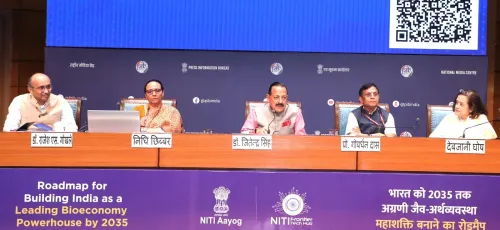
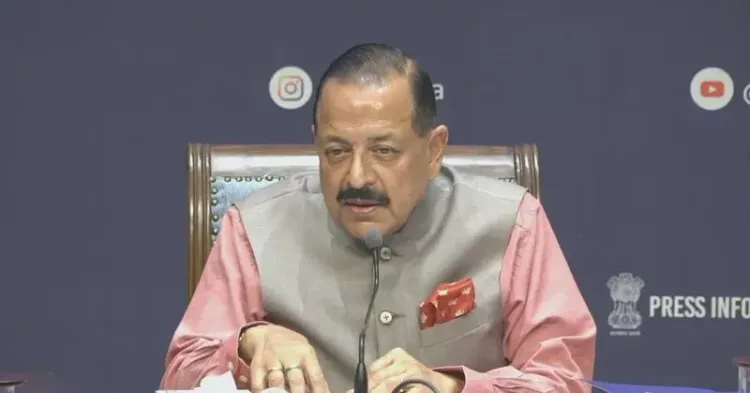
Jitendra Singh , Union Minister of State (Independent Charge) for Science and Technology, hosted a media briefing on 16 July 2026 on India's bioeconomy roadmap.
The Department of Biotechnology (DBT) is the nodal agency driving the 'Roadmap for Building India as a Leading Bioeconomy Powerhouse by 2035 '.
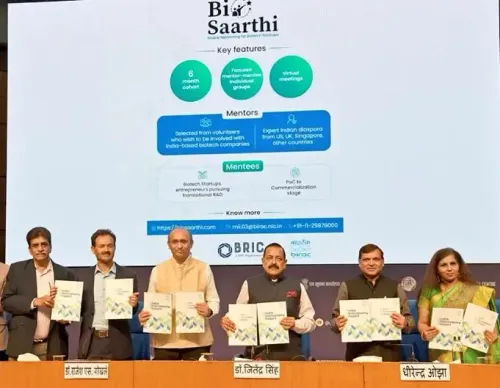
The roadmap builds on the National Biotechnology Development Strategy (2015–2020) and the work of BIRAC , established in 2012 .
Key beneficiaries include biotech startups , research institutions, and the agri-biotech sector .
Parliamentary scrutiny of DBT budget proposals and state-level implementation frameworks are expected in the coming fiscal cycle.
India's bioeconomy push mirrors global trends of decade-long national strategies to capture value in bio-based industries.
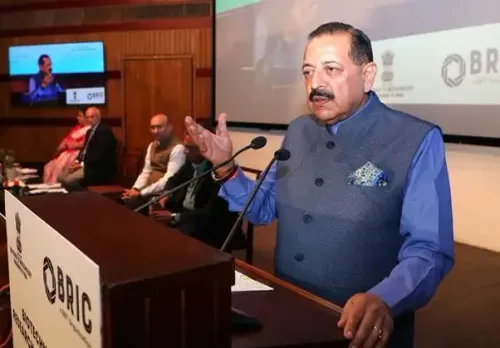
Union Science and Technology Minister Dr. Jitendra Singh hosted a media briefing on Thursday, 16 July 2026, presenting the government's 'Roadmap for Building India as a Leading Bioeconomy Powerhouse by 2035' — a Department of Biotechnology (DBT) initiative aimed at positioning India among the world's foremost biotechnology-driven economies within the decade.
Context
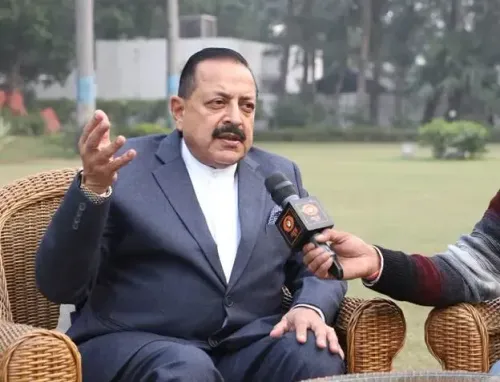
The briefing centred on a DBT-led planning document that charts India's trajectory in biotechnology-driven economic sectors through 2035. Dr. Jitendra Singh, who holds independent charge of both the Ministry of Science and Technology and the Ministry of Earth Sciences, has made biotech expansion a central pillar of his ministerial agenda. The roadmap is understood to align biotech growth with India's broader technology self-reliance objectives.
The #DBT hashtag used in the minister's post signals the Department of Biotechnology's direct ownership of the initiative. A live broadcast link shared alongside the post extended the briefing's reach beyond the immediate press audience.
Policy Backdrop
The 2035 roadmap builds on a lineage of DBT strategies. The department's National Biotechnology Development Strategy (2015–2020) laid the groundwork by accelerating biotech research and development, industry growth, and human resource development. The Biotechnology Industry Research Assistance Council (BIRAC), established in 2012, has since served as the primary vehicle for funding and mentoring biotech startups and entrepreneurs.
Successive DBT strategies have progressively linked biotechnology to national economic and sustainability goals — spanning health security, climate-resilient agriculture, and green manufacturing. The 2035 roadmap extends this pattern, mirroring global trends where leading economies set decade-long bioeconomy targets to capture value in emerging bio-based industries. India's approach draws parallels with its push for self-reliance in semiconductors and digital infrastructure.
Stakeholders and Impact
Biotech startups, academic and research institutions, and the agri-biotech sector are among the primary stakeholders identified in the roadmap's orbit. For startups, a clearly articulated government roadmap typically signals sustained policy support, potential funding pipelines through BIRAC, and a more predictable regulatory environment.
Research institutions stand to benefit from aligned grant priorities, while the agri-biotech segment — which intersects with India's food security agenda — could see targeted interventions for climate-resilient crop development and bio-inputs. The roadmap's 2035 horizon also gives industry players a long enough window to plan capital-intensive investments in biomanufacturing and bio-based products.
What's Next
The media briefing marks a public communication milestone, but implementation will depend on follow-up steps including parliamentary scrutiny of DBT budget proposals and the rollout of scheme guidelines. State-level implementation frameworks are expected to take shape in the next fiscal cycle, as central bioeconomy goals are translated into regional action plans.
India's ambition to lead the global bioeconomy by 2035 will ultimately be tested by its ability to convert policy intent into measurable outcomes — in startup formation rates, research commercialisation, export competitiveness in bio-based products, and the depth of skilled talent in life sciences. The roadmap's next phase of public scrutiny is likely to come when DBT presents its annual budget demands before Parliament.
Point of View
The ministry is creating a measurable benchmark that future governments and parliamentary committees will be held to. The initiative fits a broader pattern under the current administration of framing technology sectors — semiconductors, AI, space, and now biotech — as sovereign economic priorities rather than purely scientific pursuits. How quickly DBT converts this roadmap into funded schemes and state partnerships will determine whether 2035 remains an aspiration or becomes a credible industrial target.
NationPress
16 Jul 2026
Frequently Asked Questions
What is India's Bioeconomy Roadmap 2035?
India's Bioeconomy Roadmap 2035 is a Department of Biotechnology (DBT) planning document that sets out a strategy for India to become a leading global player in biotechnology-driven economic sectors by the year 2035, covering areas such as health, agriculture, and green manufacturing.
Who presented the Bioeconomy Roadmap 2035 briefing?
Union Minister of State (Independent Charge) for Science and Technology Dr. Jitendra Singh hosted the media briefing on the roadmap on 16 July 2026 .
What is BIRAC and how does it relate to the bioeconomy roadmap?
The Biotechnology Industry Research Assistance Council (BIRAC), established in 2012 under DBT, provides funding and mentoring to biotech startups and is expected to be a key implementation arm for the goals outlined in the 2035 roadmap.
Which sectors will benefit from India's bioeconomy roadmap?
Biotech startups, academic and research institutions, and the agri-biotech sector are among the primary stakeholders expected to benefit from the policy direction and potential funding aligned with the 2035 roadmap.
What comes next after the Bioeconomy Roadmap 2035 briefing?
The next steps include parliamentary scrutiny of DBT's budget proposals and the development of scheme guidelines and state-level implementation frameworks, likely in the next fiscal cycle.