CM Hemant Soren Offers Rath Yatra Greetings to Lord Jagannath
Synopsis
Jharkhand Chief Minister Hemant Soren marked Rath Yatra on 16 July 2026 by posting a devotional Sanskrit shloka on X invoking Lord Jagannath, Balabhadra, and Subhadra, reflecting Jharkhand's deep cultural ties with the Jagannath tradition of Odisha.
Key Takeaways
Jharkhand Chief Minister Hemant Soren posted a Sanskrit Rath Yatra shloka on X on 16 July 2026 .
The verse invokes the Jagannath triad — Lord Jagannath, Balabhadra, and Subhadra — enshrined at Puri, Odisha .
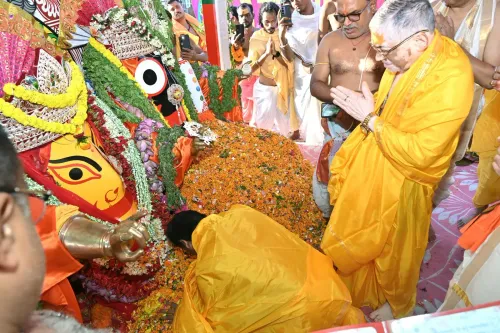
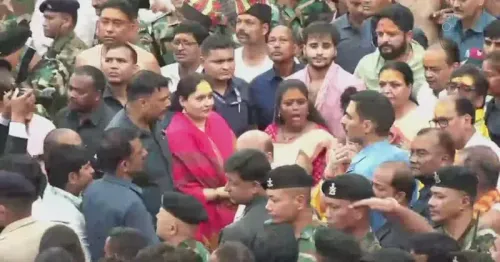
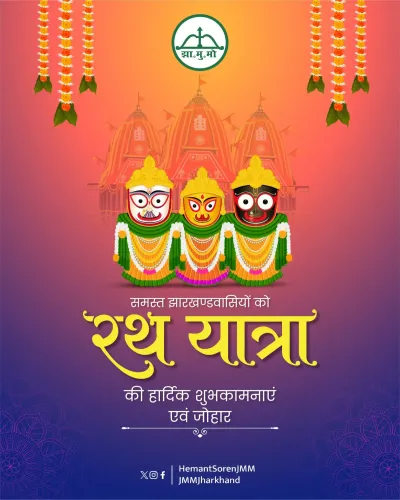
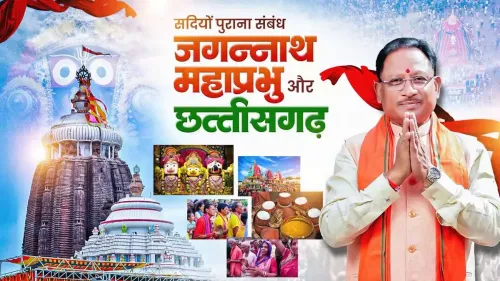
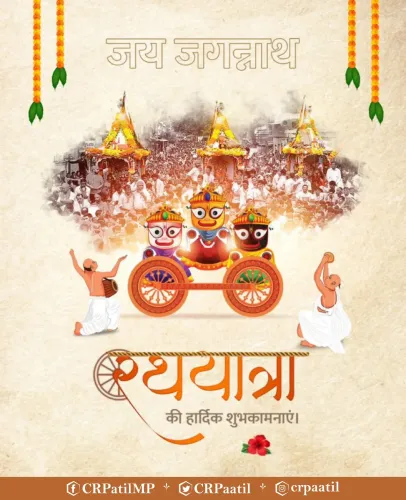
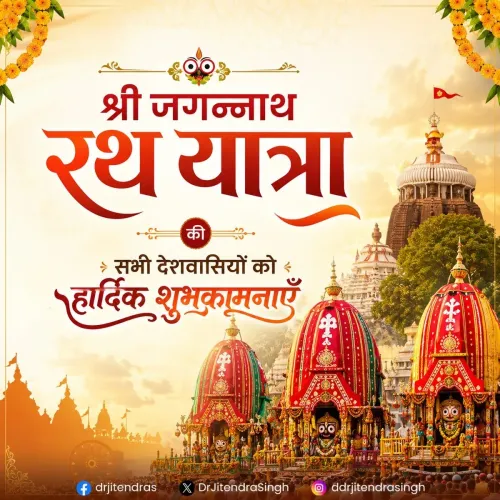
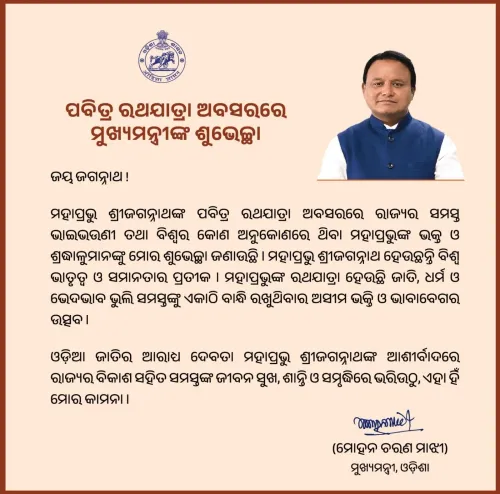
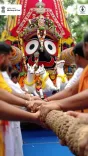
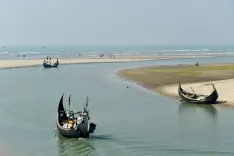
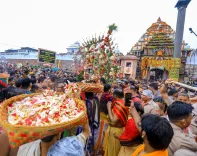
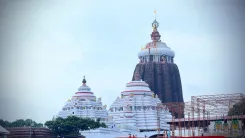
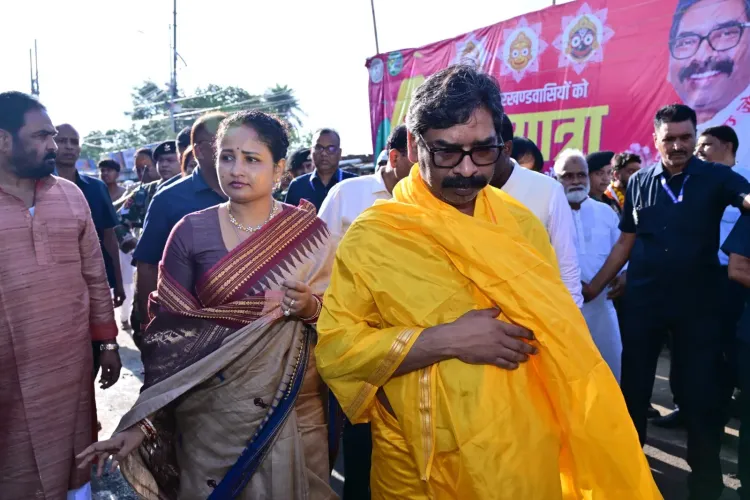
The post included 4 images and concluded with the exclamation 'Jai Jagannath.
Jai Jai Jagannath!' Jharkhand shares a border with Odisha and has longstanding cultural and pilgrimage links with the Jagannath tradition.
Soren is the executive president of the Jharkhand Mukti Morcha (JMM) in addition to his role as Chief Minister.
Jharkhand Chief Minister Hemant Soren on Thursday, 16 July 2026 shared a devotional Sanskrit shloka on X to mark the occasion of Rath Yatra, offering obeisance to the presiding deities of the Jagannath Temple, Puri — Lord Jagannath, Balabhadra, and Subhadra.
The Chief Minister posted the verse: 'Nilachala-nivasaya nityaya paramatmane, Balabhadra-Subhadrabhyam Jagannathaya te namah' — roughly translated as 'Salutations to the eternal Supreme Soul who resides on Nilachala (the sacred hill at Puri), to Balabhadra, Subhadra, and to Lord Jagannath.' He followed the shloka with the exclamation 'Jai Jagannath. Jai Jai Jagannath!'
Context
Rath Yatra, one of the largest Hindu festivals in India, centres on the annual chariot procession of Lord Jagannath at the Jagannath Temple in Puri, Odisha. The festival draws millions of pilgrims from across the country. The shloka shared by Soren is a traditional Sanskrit invocation used to venerate the Jagannath triad — Jagannath, his elder brother Balabhadra, and sister Subhadra.
Jharkhand shares a long border with Odisha and has deep cultural and pilgrimage ties with the Jagannath tradition, with large sections of Jharkhand's tribal and non-tribal population holding Lord Jagannath in reverence.
Policy Backdrop
It is a well-established practice among Indian chief ministers to post devotional greetings and Sanskrit verses on social media during major Hindu festivals, reflecting the cultural sentiments of their constituents. For Jharkhand's leadership in particular, acknowledging the Jagannath tradition carries additional resonance given the state's geographic and cultural proximity to Odisha.
Soren, who is also the executive president of the Jharkhand Mukti Morcha (JMM), has previously used such occasions to reinforce the state's shared heritage with neighbouring regions.
Stakeholders and Impact
Hindu devotees and residents of Jharkhand — particularly those with family or pilgrimage connections to Puri — are the primary audience for this outreach. The gesture also signals goodwill toward Odisha, with which Jharkhand shares both cultural traditions and administrative boundaries.
For Soren's political constituency, which includes a significant tribal population that reveres Jagannath as a central deity, the post carries cultural and community significance beyond routine political messaging.
What's Next
State-level Rath Yatra observances are typically held across Jharkhand's towns and cities during the festival season. Observers will watch whether the Jharkhand government announces any formal cultural-exchange initiatives or pilgrimage facilitation programmes with the Odisha administration in the coming weeks. The Chief Minister's post, accompanied by 4 images, suggests active engagement with the occasion beyond a routine text greeting.
Point of View
Aligning the JMM leadership with pan-Hindu devotional traditions at a time when tribal identity politics and Hindu cultural assertion increasingly intersect in eastern India. The Jagannath tradition is particularly significant in this calculus: Lord Jagannath is venerated by both tribal and non-tribal communities across Jharkhand and Odisha, making the invocation a politically unifying gesture. By publicly marking Rath Yatra with imagery and verse, Soren also reinforces Jharkhand's cultural kinship with Odisha — a relationship that carries practical administrative and electoral dimensions. This pattern of festival engagement has become a standard tool in the arsenal of regional chief ministers seeking to broaden their appeal beyond core vote banks.
NationPress
16 Jul 2026
Frequently Asked Questions
What did Hemant Soren post on Rath Yatra 2026?
Jharkhand Chief Minister Hemant Soren posted a devotional Sanskrit shloka on X on 16 July 2026, invoking Lord Jagannath, Balabhadra, and Subhadra of the Jagannath Temple in Puri, Odisha, accompanied by 4 images and the exclamation 'Jai Jagannath.'
What does the shloka posted by Hemant Soren mean?
The shloka translates as: 'Salutations to the eternal Supreme Soul who resides on Nilachala (the sacred hill at Puri), to Balabhadra, Subhadra, and to Lord Jagannath.' It is a traditional Sanskrit invocation of the Jagannath triad.
What is Rath Yatra and why is it significant?
Rath Yatra is one of India's largest Hindu festivals, centred on the annual chariot procession of Lord Jagannath at the Jagannath Temple in Puri, Odisha. It draws millions of pilgrims from across the country and holds deep cultural significance for communities in Odisha, Jharkhand, and beyond.
What is Hemant Soren's connection to the Jagannath tradition?
As Chief Minister of Jharkhand — a state that shares a border with Odisha — Soren represents a region with deep cultural and pilgrimage ties to the Jagannath Temple in Puri. Large sections of Jharkhand's population, including tribal communities, revere Lord Jagannath.
What party does Hemant Soren lead?
Hemant Soren is the executive president of the Jharkhand Mukti Morcha (JMM) and serves as the Chief Minister of Jharkhand.