India-Bangladesh ties: Bay of Bengal key to shared future, report says
Synopsis
A report by BD Digest argues the Bay of Bengal must be a cooperation corridor, not a rivalry theatre, for India and Bangladesh — and that Dinesh Trivedi's Cabinet-rank appointment as High Commissioner, combined with the resumption of visa services, offers a rare diplomatic opening to reset one of South Asia's most consequential bilateral relationships.
Key Takeaways
A BD Digest report calls on India and Bangladesh to treat the Bay of Bengal as a cooperation platform, not a geopolitical contest zone.
The report identifies maritime security, disaster relief, sustainable fisheries, and offshore renewable energy as key convergence areas.
Dinesh Trivedi has been appointed India's High Commissioner to Bangladesh with Cabinet rank — the first political leader accorded this distinction in recent years.
The recent resumption of visa services between the two countries is highlighted as an encouraging step toward rebuilding public confidence.
The report urges deeper rail, road, waterway, port, and digital connectivity to build regional value chains across eastern South Asia.
Cultural and linguistic ties — anchored by the Bengali language — are framed as a strategic asset for long-term trust-building.
A report published by Bangladeshi media outlet BD Digest has argued that the Bay of Bengal must serve as a platform for cooperation — not rivalry — between India and Bangladesh, as the waterway assumes growing strategic weight in the broader Indo-Pacific order. The report, released recently, outlines a sweeping vision for bilateral collaboration spanning maritime security, trade connectivity, cultural exchange, and diplomatic engagement.
Bay of Bengal as a Cooperation Corridor
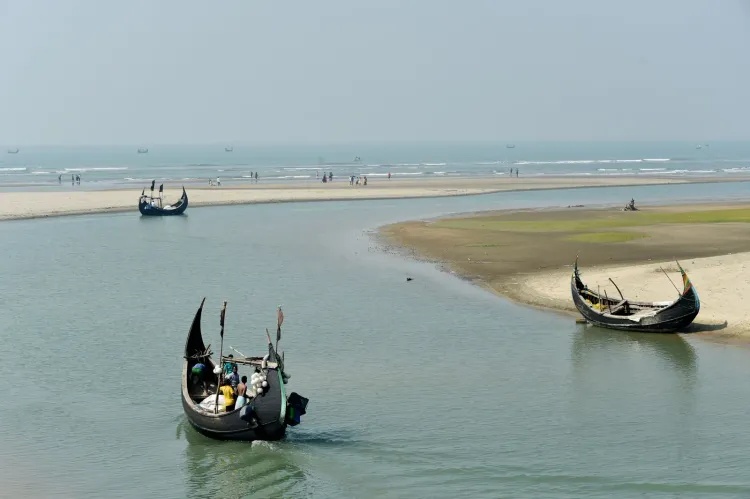
The report identifies the Bay of Bengal as far more than a shared maritime boundary. It has evolved into one of the region's most strategically consequential zones, underpinning trade routes, energy flows, fisheries, and blue economy development — while drawing intensifying interest from major global powers.
According to the report, both countries share naturally converging interests across several maritime domains: 'Maritime domain awareness, humanitarian assistance, disaster relief, marine environmental protection, sustainable fisheries, offshore renewable energy, and coastal resilience are areas where the interests of both countries naturally converge.' The report frames these as practical initiatives capable of generating mutual confidence while delivering tangible benefits to ordinary citizens.
Economic Complementarity and Connectivity
On the economic front, the report urges both governments to view bilateral trade through a wider lens of resilience, not just growth. It notes that Bangladesh's globally competitive manufacturing sector and India's expanding industrial ecosystem are complementary in many respects.
Better connectivity — through rail, roads, inland waterways, ports, and digital infrastructure — could help create regional value chains across eastern South Asia, reducing dependence on distant markets while generating employment and investment. The report argues that recent global disruptions have underscored that supply-chain resilience matters as much as headline trade volumes.
Cultural Ties as a Diplomatic Anchor
The report emphasises that few country-pairs share as deep a cultural and linguistic bond as India and Bangladesh. Literature, music, cinema, cuisine, and intellectual traditions have crossed their borders freely for generations. The Bengali language, in particular, is described as a powerful bridge between communities on both sides, one that political cycles have repeatedly failed to erode.
Notably, the report argues that trust is often rebuilt not through official communiqués but through everyday human connections — making cultural and people-to-people ties a strategic asset, not merely a sentimental one.
Dinesh Trivedi's Appointment and the Visa Resumption
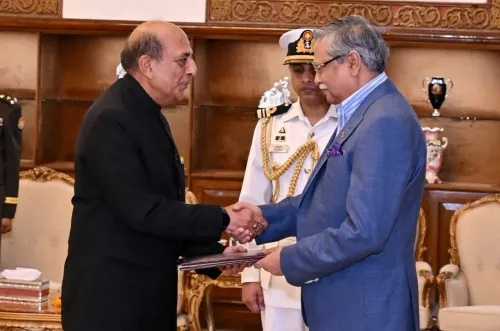
The report highlights the recent appointment of Dinesh Trivedi as India's High Commissioner to Bangladesh as diplomatically significant. It notes that Trivedi becomes the first political leader in recent years to be entrusted with this responsibility while also being accorded Cabinet rank — a distinction the report reads as a signal of the importance New Delhi attaches to its relationship with Dhaka.
The recent resumption of visa services between the two countries is also welcomed in the report as an encouraging development. Easier mobility for students, researchers, entrepreneurs, artists, and families, it argues, has the potential to restore public confidence at a time when both societies would benefit from greater interaction rather than greater distance.
The Road Ahead
The report concludes with a clear framing of the choice facing both nations: remain weighed down by recurring differences, or acknowledge that the defining challenges of the future can only be addressed through shared solutions. 'Geography made the two countries neighbours. History made them partners. The future should make them collaborators in building resilience against an increasingly uncertain world,' it states. With the Indo-Pacific order continuing to shift, the bilateral relationship between India and Bangladesh is increasingly seen as a bellwether for regional stability in South Asia.
Point of View
With the Trivedi appointment and visa resumption serving as tentative reset signals. The framing of the Bay of Bengal as a cooperation corridor rather than a contested space is strategically sound, but it sidesteps the harder question: how both governments manage domestic political pressures that periodically weaponise bilateral grievances. Cultural memory is a real asset, but it has not historically been sufficient to prevent periodic diplomatic freeze. The real test of this reset will be whether connectivity projects — long promised, rarely delivered at pace — actually move forward under the new diplomatic framework.
NationPress
16 Jul 2026
Frequently Asked Questions
What does the BD Digest report say about India-Bangladesh relations?
The BD Digest report argues that India and Bangladesh must shift from managing recurring differences to building shared solutions, particularly around the Bay of Bengal. It identifies maritime cooperation, trade connectivity, and cultural exchange as the three pillars of a renewed bilateral relationship.
Who is Dinesh Trivedi and why is his appointment significant?
Dinesh Trivedi is India's newly appointed High Commissioner to Bangladesh, notable for being the first political leader in recent years to hold this post while also being accorded Cabinet rank. The report reads this as a signal that New Delhi regards the Dhaka relationship as a top diplomatic priority.
Why does the Bay of Bengal matter for India and Bangladesh?
The Bay of Bengal has evolved into one of the Indo-Pacific's most strategically significant zones, supporting trade routes, energy flows, fisheries, and blue economy development. Both countries share converging interests in maritime security, disaster relief, and offshore renewable energy in the region.
What is the significance of the India-Bangladesh visa resumption?
The resumption of visa services is described in the report as a welcome development that can restore public confidence between the two societies. Easier mobility for students, researchers, entrepreneurs, artists, and families is seen as a trust-building measure beyond formal diplomatic channels.
How can India and Bangladesh strengthen economic ties, according to the report?
The report recommends deeper connectivity through rail, roads, inland waterways, ports, and digital infrastructure to create regional value chains across eastern South Asia. It argues that Bangladesh's manufacturing competitiveness and India's industrial expansion are complementary and should be leveraged jointly.