Bengal verdict reshapes India's Act East strategy and Bay of Bengal vision
Synopsis
The Bengal electoral mandate is being read not just as a domestic political shift but as a strategic inflection point for India's eastern corridor. A former diplomat argues that political alignment between Delhi, Kolkata, and the Northeast creates a rare window to accelerate Act East, deepen India-Bangladesh ties, and position the Bay of Bengal as a critical node in regional and global trade.
Key Takeaways
The West Bengal electoral verdict is being interpreted as a mandate for coordinated governance and economic integration with the national agenda under PM Narendra Modi .
Political alignment between New Delhi , Kolkata , and the Northeast is seen as accelerating the "Act East Act Fast" doctrine.
Long-pending issues including the Teesta water-sharing arrangement and Ganga water framework renewal are flagged as priority items in India-Bangladesh relations.
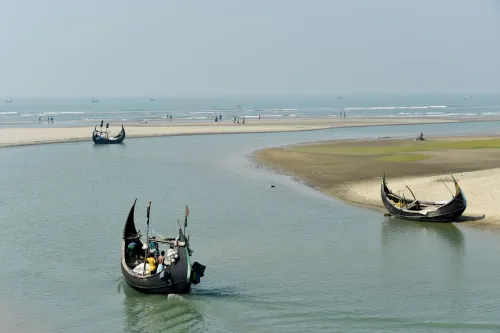
Disruptions in western maritime routes, including around the Strait of Hormuz , have elevated the strategic importance of the Bay of Bengal eastern seaboard.
Port access through Chattogram and Mongla , along with rail and road corridors, are identified as central to integrating Northeast India with Southeast Asia .
Joint industrial zones, renewable energy partnerships, and liberalised visa regimes are proposed as near-term confidence-building measures.
The electoral mandate in West Bengal — encapsulated in the phrase "Parivartan hoyechhe" (change has come) — carries implications that stretch well beyond domestic politics, according to a former diplomat and strategic affairs expert writing for NationPress. The political alignment between New Delhi, Kolkata, and the Northeast is being seen as a rare opportunity to accelerate Prime Minister Narendra Modi's "Act East Act Fast" doctrine, with the Bay of Bengal emerging as the centrepiece of a renewed eastern strategy.
Why Voters Chose Change
The Bengal verdict, according to the analysis, is rooted in a clear public aspiration for coordinated governance, infrastructure expansion, industrial revival, and job creation. Voters, the author argues, have moved beyond narrow political narratives and chosen a forward-looking economic agenda that links West Bengal to the broader national and regional growth story. There is, the piece notes, visible fatigue with administrative delays and fragmented authority — a sentiment that translated into demand for faster delivery and transparent systems.
India-Bangladesh: From Intent to Execution
The most immediate geopolitical consequence of this political shift, the author contends, is on India's relationship with Bangladesh. The bilateral partnership has remained strong in intent but has faced periodic constraints in execution. A politically aligned eastern corridor, the analysis argues, strengthens trust, accelerates connectivity, and restores momentum to bilateral initiatives that had slowed. Long-pending issues — including the Teesta water-sharing arrangement and the renewal of the Ganga water framework — are flagged as requiring timely, balanced, and mutually respectful resolution, with the political alignment in West Bengal now providing the space to move forward.
Connectivity as the Backbone of Integration
The analysis identifies connectivity as the core of the India-Bangladesh partnership. Rail links, road corridors, inland waterways, and port access through Chattogram and Mongla are described as central to the vision. For India's northeastern states, Bangladesh provides the most efficient route to global markets. For Bangladesh, integration with India's vast market and infrastructure network opens new avenues for growth. Modern integrated check posts, digital clearance platforms, and border haats are cited as instruments to transform the India-Bangladesh boundary from a line of regulation into a zone of opportunity. Notably, disruptions in western maritime routes — including around the Strait of Hormuz — have underscored the strategic importance of the eastern seaboard anchored in the Bay of Bengal.
Economic Complementarity and Energy Cooperation
The author points to sectors such as textiles, pharmaceuticals, and light engineering as offering strong potential for integrated manufacturing and supply chains. Joint industrial zones near the border, the piece suggests, can attract investment and generate employment on both sides. On energy, cross-border electricity trade and fuel supply arrangements are described as a strong foundation that can be expanded into renewable energy partnerships. The Bay of Bengal is identified as a critical economic and strategic space where India and Bangladesh can jointly strengthen maritime security and develop port infrastructure.
Northeast India and the Broader Southeast Asian Vision
The integration of India's northeastern states with Bangladesh is described as central to the success of the Act East policy. Trade corridors linking the Northeast to Southeast Asia through Bangladesh and Myanmar can, the analysis argues, redefine regional commerce and transform the Northeast from a peripheral region into a vibrant economic hub. This aligns, the author notes, with the larger Indo-Pacific vision and strengthens economic resilience across the region. The piece concludes that the success of "Act East Act Fast" will ultimately be measured by the speed of execution, the fairness of partnerships, and the tangible benefits delivered to people on both sides of the border.
(The author is a former diplomat and strategic affairs expert. Views expressed are personal.)
Point of View
And the assumption of a stable, development-oriented partner on the other side of the border deserves scrutiny. The Teesta issue has been pending for over a decade, and West Bengal's political alignment alone does not resolve the federal complexity that has blocked it. The Bay of Bengal framing is strategically sound — but converting geopolitical opportunity into executed infrastructure requires more than political will; it requires institutional capacity, cross-ministry coordination, and sustained financing, none of which are guaranteed by an electoral outcome.
NationPress
22 Sept 2026
Frequently Asked Questions
What does 'Parivartan hoyechhe' mean in the context of the Bengal verdict?
'Parivartan hoyechhe' is a Bengali phrase meaning 'change has come,' used to describe the electoral shift in West Bengal that aligned the state with the national leadership under PM Narendra Modi. Analysts argue this shift carries strategic implications beyond domestic politics, particularly for India's Act East policy and relations with Bangladesh.
How does the Bengal verdict affect India-Bangladesh relations?
The political alignment between New Delhi and Kolkata is seen as creating space to resolve long-pending bilateral issues, including the Teesta water-sharing arrangement and the Ganga water framework renewal. It is also expected to accelerate connectivity projects involving Chattogram and Mongla ports and border trade infrastructure.
Why is the Bay of Bengal gaining strategic importance?
Disruptions in western maritime routes, including around the Strait of Hormuz, have exposed vulnerabilities in traditional trade flows. The eastern seaboard anchored in the Bay of Bengal is being positioned as a stable and efficient alternative, with India and Bangladesh seen as natural partners in developing port infrastructure and maritime security.
What role does Northeast India play in the Act East policy?
Northeast India is described as the gateway to Southeast Asia under the Act East framework. Improved connectivity through Bangladesh and Myanmar can transform the Northeast from a peripheral region into a vibrant economic hub, with trade corridors linking it to broader Southeast Asian markets.
What are the key connectivity projects proposed between India and Bangladesh?
The proposed measures include rail links, road corridors, inland waterways, and port access through Chattogram and Mongla. Modern integrated check posts, digital clearance platforms, and border haats are also recommended to ease movement of goods and people along the India-Bangladesh border.