BJP leads West Bengal polls: Leaders declare end of 'appeasement politics'
Synopsis
BJP leaders are declaring a historic political shift in West Bengal as early election results show the party ahead — potentially ending decades of TMC dominance. With leaders invoking nationalism, women voters, and 'double-engine government', the BJP is framing this not just as a state win but as a national ideological turning point.
Key Takeaways
BJP surged ahead in West Bengal Assembly election results on 4 May , with leaders claiming a historic first state government.
BJP National Spokesperson Gaurav Bhatia declared the end of Mamata Banerjee's "appeasement politics" and credited women voters with delivering a "decisive blow." BJP leader Ajay Alok claimed "only Modi's nationalism will prevail in India," signalling the party's broader ideological ambitions.
BJP National General Secretary Arun Singh promised a "double-engine government" to accelerate development in West Bengal.
Singh alleged the incumbent TMC government ran a "jungle raj" marked by corruption and poor implementation of central schemes.
A BJP win would mark one of the most significant electoral shifts in West Bengal's modern political history.
As the Bharatiya Janata Party (BJP) surged ahead in West Bengal Assembly election results on Monday, 4 May, party leaders claimed the early trends reflected a decisive shift in public sentiment — signalling what they described as the end of "appeasement politics" and the rise of nationalism-driven governance under Prime Minister Narendra Modi. The BJP, which has long sought to break through in West Bengal, appeared on course for a historic win as counting progressed.
BJP Spokesperson's Reaction
BJP National Spokesperson Gaurav Bhatia said the celebrations were not confined to New Delhi but were visible across the country, including in West Bengal itself. "The message is clear that the politics of appeasement, followed by Mamata Banerjee, has come to an end. And the politics of nationalism that Prime Minister Narendra Modi practices has been held in high regard by the people," Bhatia told IANS.
He also highlighted the role of women voters, asserting that the electorate — particularly women — had delivered a "decisive blow" through their ballots. Bhatia invoked past political differences over the women's reservation bill, stating, "Recall the time when the Prime Minister was making efforts to ensure reservation for women, and Mamata voted against that bill. Today, the people of Bengal, especially women, have responded strongly."
Party Leaders Make Sweeping Claims
BJP leader Ajay Alok went further, making a broader ideological assertion: "Mamata is gone, (Gaurav) Gogoi is gone, Stalin is gone — now only Modi's nationalism will prevail in India." The remark underscored the party's confidence in expanding its ideological footprint well beyond West Bengal's borders.
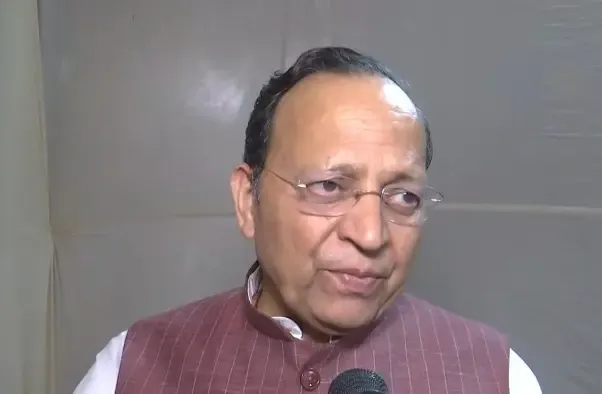
BJP National General Secretary and Rajya Sabha MP Arun Singh described the day as "special" for party workers nationwide, claiming the BJP was on track to form its first-ever government in the state. "Today is a special day for party workers across the country as, for the first time, a BJP government is going to be formed in West Bengal," Singh said.
The 'Double-Engine Government' Pitch
Singh credited the party's performance to Prime Minister Modi's leadership and asserted that the mandate would pave the way for a "double-engine government" — a formulation the BJP has used in other states to describe alignment between state and central administrations. "Under PM Modi's leadership, the people of Bengal have given full support. Now a double-engine government will be formed in Bengal, and development will accelerate rapidly," he said.
Singh also levelled sharp criticism at the incumbent state government led by Mamata Banerjee's All India Trinamool Congress (TMC), alleging that people had been "distressed and living in fear" under what he characterised as a "jungle raj" — a state of lawlessness — where central government schemes were allegedly not implemented and corruption was widespread.
Context and What Comes Next
West Bengal has historically been a stronghold first of the Communist Party of India (Marxist) and then of the TMC, making a potential BJP victory one of the most significant electoral shifts in recent Indian political history. This comes amid the BJP's broader strategy of expanding into states where it has traditionally had limited presence.
As counting continued, BJP leaders remained optimistic that early leads would translate into a full majority. Should the trends hold, the outcome would mark a watershed moment in West Bengal's electoral landscape and reshape the national opposition's arithmetic ahead of future elections.
Point of View
And its repeated deployment risks reducing complex electoral outcomes to a single narrative. West Bengal's voters have historically defied simple ideological labels — the Left ruled for 34 years before the TMC dismantled that machinery. Whether a BJP government can hold a state with such a distinct political culture, and whether the 'double-engine' promise delivers visible development, will be the real test of this claimed mandate.
NationPress
7 Oct 2026
Frequently Asked Questions
What are the West Bengal Assembly election results showing on 4 May?
Early trends on 4 May showed the BJP surging ahead in the West Bengal Assembly election results, with party leaders claiming the party was on course to form its first-ever government in the state. Final results were still being counted at the time of reporting.
What did BJP's Gaurav Bhatia say about the West Bengal results?
BJP National Spokesperson Gaurav Bhatia said the results signalled the end of Mamata Banerjee's 'appeasement politics' and a validation of PM Modi's nationalism. He specifically credited women voters, citing Mamata Banerjee's vote against the women's reservation bill as a key factor in their response.
What is a 'double-engine government' as claimed by BJP's Arun Singh?
A 'double-engine government' is a BJP formulation referring to the alignment of a BJP state government with the BJP-led central government, which the party argues accelerates development and implementation of central schemes. Arun Singh used the term to indicate that a BJP win in West Bengal would unlock faster development for the state.
Why is a BJP win in West Bengal considered historically significant?
West Bengal has been dominated first by the Communist Party of India (Marxist) for 34 years and then by Mamata Banerjee's TMC since 2011. A BJP victory would be the first time the party forms a government in the state, representing one of the most significant electoral shifts in modern Indian political history.
What allegations did BJP leaders make against the TMC government?
BJP National General Secretary Arun Singh alleged that under the TMC, people in West Bengal lived in fear under a 'jungle raj', with widespread corruption and poor implementation of central government schemes. These are the BJP's stated justifications for the need for a change of government in the state.