Should Bangladesh Reassess Its Relations with India Amid Rising Complexities?
Synopsis
In an insightful report, experts suggest that Bangladesh must recalibrate its diplomatic strategy with India and other South Asian countries. This shift aims at fostering a respectful and mutually beneficial relationship, emphasizing sovereignty and the importance of addressing new geopolitical challenges. Discover how these dynamics could reshape Bangladesh's future.
Key Takeaways
Calibrated bilateralism is essential for Bangladesh's future.
Focus on respect for sovereignty and territorial integrity .
A new generational shift is redefining Bangladeshi politics .
Geopolitical challenges require strategic responses.
Addressing non-traditional security issues can enhance Bangladesh's global standing .
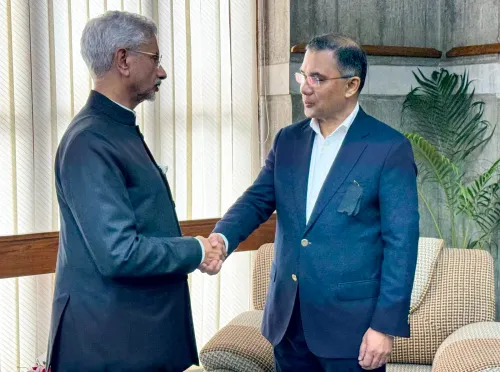
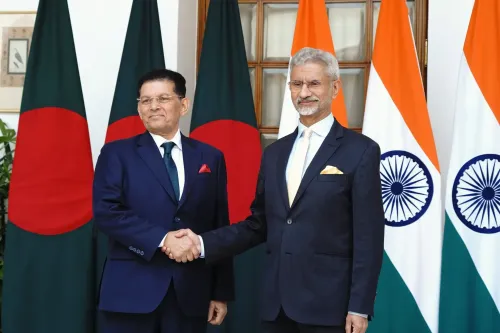
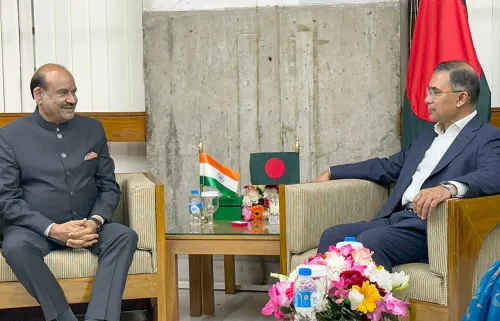
Dhaka, Jan 29 (NationPress) Bangladesh should engage in strategic and interest-driven bilateralism to foster a respectful, fair, and mutually advantageous relationship with India and other neighbors in South Asia. This approach should be underpinned by principles such as sovereignty, territorial integrity, and non-interference in each other's internal matters, along with the commitment of “no harm to one another or to third parties”, as highlighted in a recent report.
In an article for Bangladesh’s prominent newspaper, The Daily Star, Humayun Kabir, who serves as President of the Bangladesh Enterprise Institute (BEI) and is a former diplomat, asserted that the increasing complexities within South Asia necessitate that Bangladesh reassesses the significance of its connections with both immediate and distant neighbors. These relationships must align with national interests, shared requirements, and collective priorities.
“Post-July 2024, Bangladesh will encounter new strategic realities. Domestically, a generational transition is reshaping the political environment and emphasizing the quest for justice and a fair economic order. Following Bangladesh's graduation in 2026, our external relations will undergo a significant transformation with nearly all partners, demanding necessary reforms in various aspects of our domestic policies and practices. Outdated mindsets and behaviors may become irrelevant in this evolving context,” Kabir elaborated.
“Externally, multiple layers of geopolitical challenges are also confronting Bangladesh. The increasing interest of both global and regional powers in domestic matters, viewed through a geopolitical lens, adds further complexity. Tensions between Bangladesh and India are already present, and these strains are beginning to influence the broader geopolitical landscape,” he noted.
According to the report, amidst the recent developments in Bangladesh, the importance of global reputation management has gained renewed attention.
“While it may be tempting to assign blame for many of our issues, it is crucial to focus on how we define ourselves, the priorities we establish as a nation, our methods of pursuing them, and the company we choose to keep. In the realm of diplomacy and statecraft, signals, narratives, gestures, and initiatives can shape perceptions, which often influence reality,” it stated.
The report further emphasized, “Engaging in non-traditional security concerns, such as climate change, transnational crimes like drug trafficking and extremism, disaster management, migration issues, and humanitarian efforts, might enhance the regional and global stature of Bangladesh.”
Point of View
It's imperative to recognize that Bangladesh's approach to international relations must adapt to the changing dynamics of South Asia. While challenges exist, a commitment to respectful and equitable partnerships can pave the way for a brighter future. Our nation must prioritize its interests while maintaining strong ties with neighbors, ensuring stability and progress.
NationPress
10 Oct 2026
Frequently Asked Questions
Why should Bangladesh reset its ties with India?
Resetting ties with India is crucial for Bangladesh to navigate the complexities of the region and ensure mutually beneficial relations that respect sovereignty and non-interference.
What are the new strategic realities facing Bangladesh?
Bangladesh is experiencing a generational shift in politics and preparing for its graduation in 2026, which necessitates reassessing its international relationships.
How can Bangladesh improve its global standing?
By addressing non-traditional security issues such as climate change and humanitarian initiatives, Bangladesh can enhance its regional and global reputation.