CM Mohan Yadav Secures ₹18,601 Cr Investment Pledges at Delhi Session
Synopsis
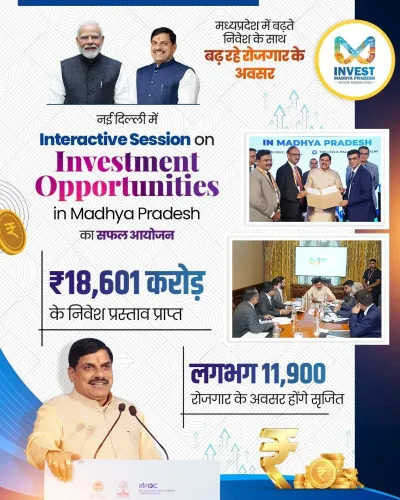
Madhya Pradesh CM Dr. Mohan Yadav secured ₹18,601 crore in investment proposals at a New Delhi session on 16 July 2026, with MoUs spanning defence, AI, semiconductors, renewable energy and food processing, expected to create 11,900 jobs.
Key Takeaways
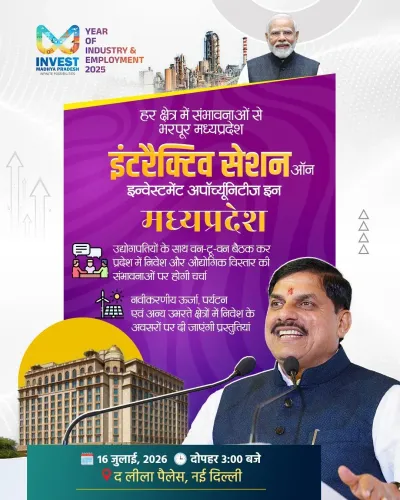
Investment proposals worth ₹18,601 crore were received at the 'Interactive Session on Investment Opportunities in Madhya Pradesh' in New Delhi on 16 July 2026 .
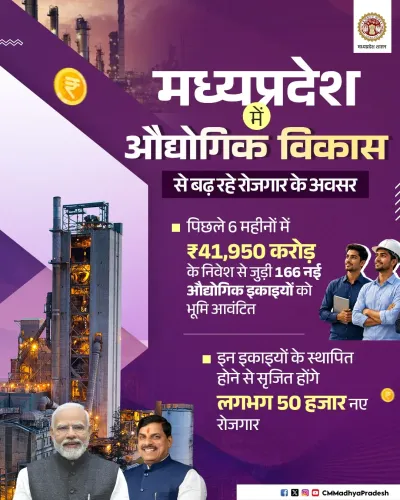
The proposals are projected to generate 11,900 jobs across multiple sectors in the state.
MoUs were signed in defence, data centres, IT, AI, semiconductors, renewable energy, tourism, and food processing .
The event was the second major investment outreach organised by the Madhya Pradesh government under CM Dr.
The state is positioning itself as a competitor to Gujarat, Karnataka, and Tamil Nadu in attracting high-value industrial investment under the Atmanirbhar Bharat framework.
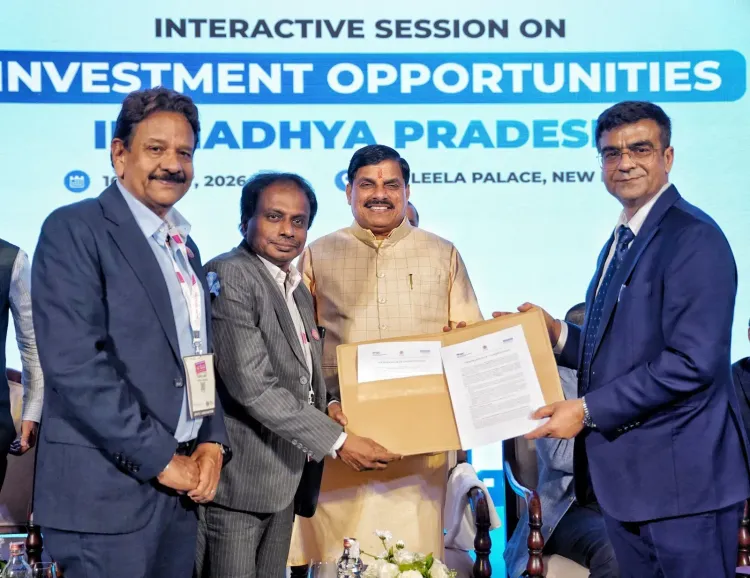
Madhya Pradesh Chief Minister Dr. Mohan Yadav announced on Thursday, 16 July 2026 that the state received investment proposals worth ₹18,601 crore at the 'Interactive Session on Investment Opportunities in Madhya Pradesh' held in New Delhi, the second major investment outreach event organised by the state government. The proposals are projected to generate 11,900 jobs across multiple sectors.
What Was Announced
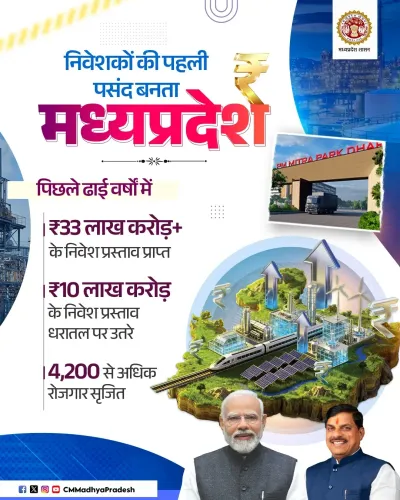
Chief Minister Yadav stated that Memoranda of Understanding (MoUs) were signed at the session covering sectors including defence, data centres, information technology, artificial intelligence, semiconductors, renewable energy, tourism, and food processing. Posting on X, he wrote: 'निवेशकों की पहली प्राथमिकता मध्यप्रदेश' ('Madhya Pradesh is investors' first priority'), framing the outcome as a vote of confidence in the state's industrial direction.
The Chief Minister highlighted four pillars underpinning the state's pitch to investors: attractive policy, quality infrastructure, fast-track services, and a secure operating environment. He described the state as ready for a 'new industrial leap.'
Context
Madhya Pradesh has been running the Invest MP campaign since Dr. Mohan Yadav took office in December 2023, positioning the state as a competitive destination for capital in high-value sectors. The New Delhi session was described as the 'second major event' in this outreach series, suggesting a structured, multi-city roadshow format.
The sectors targeted — semiconductors, AI, data centres, and defence manufacturing — align with the central government's Atmanirbhar Bharat framework, which has incentivised states to compete for investments in strategic industries. States such as Gujarat, Karnataka, and Tamil Nadu have run similar roadshows since 2021, securing large commitments in these domains.
Policy Backdrop
Madhya Pradesh has sought to differentiate itself through single-window clearance mechanisms and targeted sector-specific policies. The inclusion of renewable energy and food processing alongside technology-heavy sectors reflects the state's attempt to attract a broad investor base, spanning both traditional industries and emerging ones.
The state's geography — landlocked but centrally located — has historically been cited both as a logistical challenge and as an advantage for distribution to multiple regions of the country. The government's infrastructure push is in part a response to investor concerns about connectivity.
Stakeholders and Impact
The most direct beneficiaries of the announced proposals would be the 11,900 workers expected to be employed if the MoUs translate into operational projects. Investment in sectors like data centres and semiconductors typically brings higher-wage technical employment, while food processing and tourism investments tend to generate broader rural and semi-urban livelihoods.
For investors, the session represented an opportunity to engage directly with state leadership and secure early-mover advantages in a state that has been offering policy incentives to attract capital away from more saturated destinations.
What's Next
The critical test for the state government will be converting signed MoUs into ground-level projects. Historically, a significant share of MoUs signed at investment summits and roadshows across Indian states do not result in immediate project execution, making follow-up policy implementation and land allocation the key variables to watch. Further investment outreach events or a full-scale Global Investors Summit could follow as the state builds momentum ahead of its industrial calendar.
Point of View
The Yadav administration is signalling a sustained, structured campaign rather than a one-off summit. The sectoral spread — from semiconductors to food processing — is calibrated to appeal to both central government priorities under Atmanirbhar Bharat and to a diverse investor base. The real measure of success, however, will come in the months ahead, when MoU commitments are tested against ground-level implementation, land availability, and regulatory follow-through.
NationPress
15 Oct 2026
Frequently Asked Questions
How much investment did Madhya Pradesh receive at the New Delhi session in July 2026?
Madhya Pradesh received investment proposals worth ₹18,601 crore at the 'Interactive Session on Investment Opportunities in Madhya Pradesh' held in New Delhi on 16 July 2026 .
How many jobs will the Madhya Pradesh investment proposals create?
The investment proposals announced at the New Delhi session are expected to generate 11,900 jobs in Madhya Pradesh across the sectors covered by the MoUs.
Which sectors were covered in the Madhya Pradesh investment MoUs?
MoUs were signed covering defence, data centres, information technology, artificial intelligence, semiconductors, renewable energy, tourism, and food processing .
What is the Invest MP campaign?
Invest MP is a state-level investment promotion campaign run by the Madhya Pradesh government, highlighting policy incentives, infrastructure quality, single-window clearance, and a secure business environment to attract domestic and international investors.
How does Madhya Pradesh compare to other states in attracting investment?
Madhya Pradesh is competing with states like Gujarat, Karnataka, and Tamil Nadu , which have run similar investor roadshows since 2021 and secured large commitments in high-value sectors such as semiconductors, AI, and defence manufacturing.