Pralhad Joshi Reviews 'One Nation, One Time' at Bengaluru Lab
Synopsis
Union Consumer Affairs Minister Pralhad Joshi visited the Regional Reference Standard Laboratory in Bengaluru to review the 'One Nation, One Time' initiative, which aims to give India a uniform, sovereign Indian Standard Time by integrating ISRO and CSIR-NPL capabilities across financial, telecom, and digital sectors.
Key Takeaways
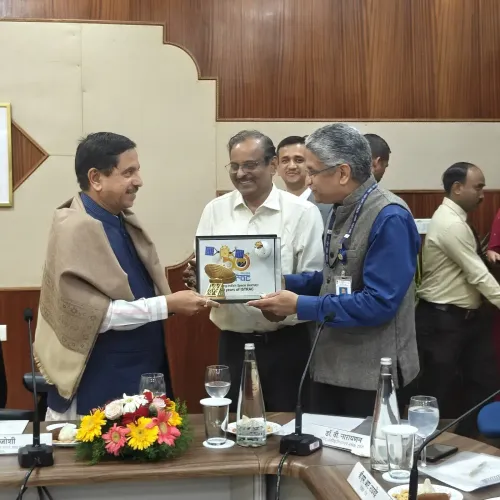
Union Consumer Affairs Minister Pralhad Joshi visited RRSL Bengaluru on 16 July 2026 to review the 'One Nation, One Time' initiative.
The initiative is led by the Department of Consumer Affairs in collaboration with ISRO and CSIR–NPL .
The goal is a uniform, secure, and highly accurate Indian Standard Time (IST) that reduces dependence on foreign time sources such as GPS.
Sectors targeted include financial markets, banking, telecom, digital payments, power systems, AI, IoT and 5G .
ISRO's NavIC constellation, operational since 2018 , provides the indigenous satellite timing backbone for the scheme.
The initiative is framed as reinforcing India's 'time sovereignty' and securing critical digital infrastructure.
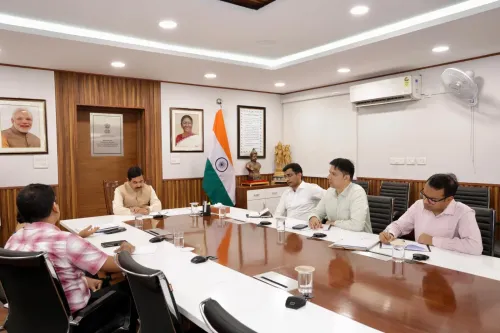
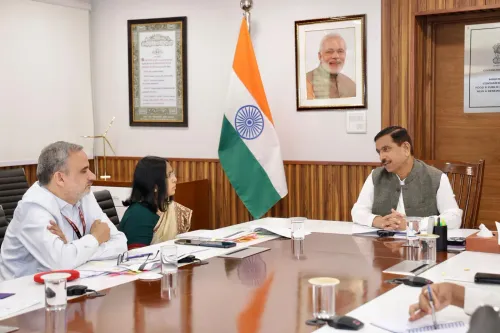
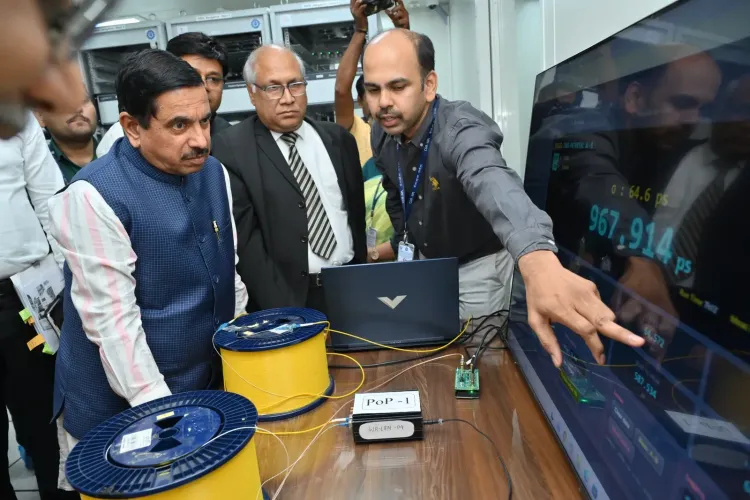
Union Consumer Affairs Minister Pralhad Joshi visited the Regional Reference Standard Laboratory (RRSL) in Bengaluru on 16 July 2026 to review progress on the 'One Nation, One Time' initiative, a government effort to establish a uniform, sovereign Indian Standard Time across the country.
Context
Posting on X in both English and Kannada, Minister Joshi described the initiative as being led by the Department of Consumer Affairs in collaboration with ISRO and CSIR–NPL. In his words, the scheme will 'establish a uniform, secure and highly accurate Indian Standard Time (IST) across the country,' providing 'a single trusted time reference' for critical sectors. The Kannada portion of the post — ಒಂದು ದೇಶ, ಒಂದು ಸಮಯ (One Nation, One Time) — underscored the initiative's national scope for his home-state audience.
The RRSL Bengaluru functions under the Legal Metrology wing of the Department of Consumer Affairs and handles calibration, standards dissemination, and time-frequency measurements. The minister's visit signals active ministerial oversight of an initiative that spans multiple scientific agencies.
Policy Backdrop
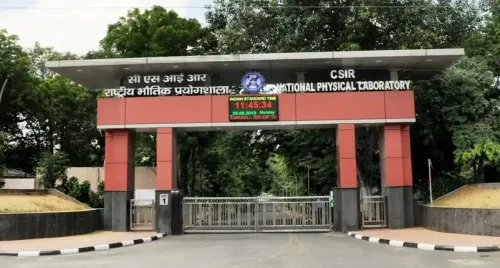
CSIR–NPL, India's National Physical Laboratory, has maintained the country's primary atomic time scale and disseminated IST traceable to Coordinated Universal Time (UTC) since the 1950s. Despite this long history, India has remained partially dependent on foreign Global Navigation Satellite Systems — chiefly the US-operated GPS — for precision timing signals used in telecommunications, banking, and power grids.
ISRO's NavIC satellite constellation, which became operational in 2018, supplies indigenous navigation and timing signals independent of foreign GNSS systems. The 'One Nation, One Time' initiative builds on NavIC's capabilities by integrating satellite-based dissemination with the ground-level standards infrastructure maintained by CSIR–NPL and the RRSL network. Together, the three agencies aim to make IST the definitive, tamper-resistant time reference for the entire country.
Stakeholders and Impact
Minister Joshi identified a wide range of sectors that stand to benefit: financial markets, banking, telecommunications, digital payments, power systems, digital governance, AI, IoT and 5G. Each of these sectors relies on precise time synchronisation — stock exchanges require microsecond-level timestamps for trade sequencing, while 5G networks and smart power grids depend on sub-millisecond synchronisation to function reliably.
A sovereign time reference also carries a security dimension. By reducing dependence on foreign time sources, the initiative limits the vulnerability of India's critical infrastructure to disruptions — accidental or deliberate — in foreign-operated satellite systems. The post explicitly frames this as strengthening 'India's time sovereignty and critical infrastructure,' placing the scheme within the broader national security conversation around digital self-reliance.
The initiative is also tagged to @jagograhakjago, the government's consumer-awareness handle, signalling that the Department of Consumer Affairs views accurate, accessible time as a consumer-protection issue as much as a technical one.
What's Next
Observers will watch for the rollout of additional RRSL nodes across India's regions, which would extend the precision time network beyond Bengaluru. Possible regulatory notifications requiring sectors such as banking and telecom to synchronise mandatorily with the new national reference are also anticipated. Integration announcements linking the upgraded IST scale directly with NavIC signals could further cement India's end-to-end sovereign timing architecture. The minister's review visit suggests that the initiative has moved well past the conceptual stage and is now in active implementation.
Point of View
One Time' initiative fits squarely into the Modi government's pattern of building indigenous alternatives to foreign-controlled critical infrastructure — a trajectory that runs from NavIC through data localisation to semiconductor manufacturing. Ministerial-level review visits to technical laboratories are relatively uncommon and signal that the Consumer Affairs Ministry is treating time sovereignty as a priority deliverable rather than a long-term research aspiration. The explicit invocation of sectors like AI, IoT, and 5G suggests the government is future-proofing the initiative against next-generation synchronisation demands, not merely upgrading legacy systems. If regulatory mandates follow, this could reshape procurement and compliance obligations for every major telecom operator, bank, and exchange in the country.
NationPress
16 Jul 2026
Frequently Asked Questions
What is the 'One Nation, One Time' initiative in India?
'One Nation, One Time' is an initiative led by India's Department of Consumer Affairs, in collaboration with ISRO and CSIR-NPL, to establish a single, uniform, and highly accurate Indian Standard Time across the country, reducing dependence on foreign satellite timing systems like GPS.
What is the role of ISRO and CSIR-NPL in the One Nation One Time scheme?
CSIR-NPL maintains India's primary atomic time scale and has disseminated IST since the 1950s, while ISRO contributes through its NavIC satellite constellation to provide indigenous satellite-based timing signals, together forming the backbone of the sovereign time reference.
Why is time sovereignty important for India?
A sovereign national time reference reduces India's vulnerability to disruptions in foreign-operated satellite systems like GPS, and ensures that critical sectors — including financial markets, 5G networks, digital payments, and power grids — run on a secure, tamper-resistant time standard.
What is the RRSL Bengaluru and what does it do?
The Regional Reference Standard Laboratory (RRSL) in Bengaluru operates under the Legal Metrology wing of the Department of Consumer Affairs and handles calibration, standards dissemination, and time-frequency measurements relevant to maintaining accurate national standards.
Which sectors will benefit from the One Nation One Time initiative?
The initiative is expected to benefit financial markets, banking, telecommunications, digital payments, power systems, digital governance, and emerging technologies including AI, IoT, and 5G, all of which require precise time synchronisation to function reliably.