Dr. Jitendra Singh Inaugurates India's First Indigenous Energy-Efficient Mobile MSS+ Mixing Plant

Synopsis
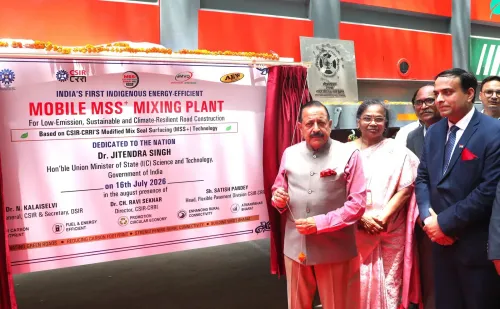
Union Science and Technology Minister Dr. Jitendra Singh inaugurated India's first indigenous Energy-Efficient Mobile MSS+ Mixing Plant on July 16, 2026, based on CSIR-CRRI's Modified Mix Seal Surfacing technology, advancing the country's push for low-emission, climate-resilient road infrastructure.
Key Takeaways
India's first indigenous Energy-Efficient Mobile MSS+ Mixing Plant was inaugurated on July 16, 2026 by Union Science and Technology Minister Dr.
The plant is built on CSIR-CRRI's Modified Mix Seal Surfacing (MSS+) Technology , designed for low-emission and climate-resilient road construction.
Senior CSIR leadership including Director General Dr.
Kalaiselvi and CSIR-CRRI Director Dr.
Ravi Sekhar were present at the inauguration.
The technology aligns with India's Make in India initiative and its 2070 net-zero emissions target.
Potential next steps include technology transfer to NHAI and state PWDs for wider field deployment.
The mobile form factor makes the plant suitable for diverse and remote highway project sites across India.
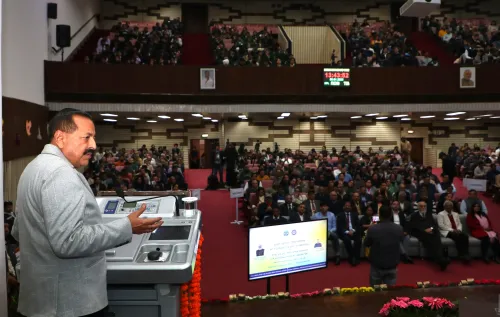
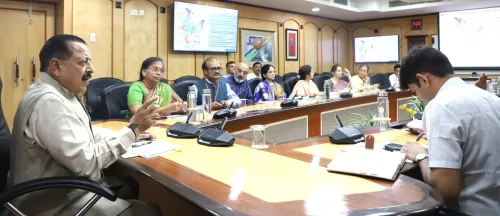
Union Science and Technology Minister Dr. Jitendra Singh on Thursday, July 16, 2026, inaugurated and walked through India's first indigenous Energy-Efficient Mobile MSS+ Mixing Plant, a landmark in low-emission, sustainable road construction built on CSIR-CRRI's Modified Mix Seal Surfacing (MSS+) Technology. The event was attended by senior scientific leadership including Director General of CSIR, Dr. N. Kalaiselvi, and Director of CSIR-CRRI, Dr. CH. Ravi Sekhar.
Context
The mobile mixing plant represents a significant milestone in India's push to develop climate-resilient road infrastructure using homegrown technology. Describing the development as 'a pioneering indigenous technology,' Dr. Jitendra Singh said it 'marks a significant step towards greener, energy-efficient road infrastructure, reinforcing India's commitment to innovation-driven and sustainable road development.' The inauguration was also attended by Head of the Flexible Pavement Division at CSIR-CRRI, Shri Satish Pandey, along with other distinguished delegates.
Policy Backdrop
CSIR-CRRI — the Council of Scientific and Industrial Research's Central Road Research Institute — is India's premier laboratory for road engineering, pavement design, and transport infrastructure research. The MSS+ (Modified Mix Seal Surfacing Plus) Technology is a CSIR-CRRI-developed road surfacing method engineered for greater durability, reduced carbon emissions, and resilience to climate extremes. The mobile plant operationalises this laboratory-developed technique into a field-deployable unit, making it suitable for deployment across diverse terrain and project sites.
The development aligns with the Make in India initiative, launched in 2014, which prioritises indigenous technology development across infrastructure sectors. India has been accelerating the development of low-carbon construction technologies to support its large-scale highway expansion programme while working towards its 2070 net-zero emissions target. CSIR laboratories have been specifically tasked with translating research into field-ready solutions for sectors including roads and highways.
Stakeholders and Impact
The technology holds direct relevance for road construction firms and highway authorities across the country. By making the MSS+ mixing process mobile and energy-efficient, the plant lowers the barrier for adoption on remote or large-scale highway projects where conventional fixed plants are impractical. The reduced emission profile of the process also positions it as a viable tool for contractors seeking to meet tightening environmental compliance requirements on public infrastructure contracts.
Dr. N. Kalaiselvi, as Director General of CSIR, has been central to the broader mandate of accelerating technology translation from CSIR labs to industry and public agencies. Her presence at the inauguration signals institutional backing for scaling the MSS+ ecosystem beyond the laboratory stage.
What's Next
The immediate focus will be on potential pilot deployments and technology transfer agreements with agencies such as the National Highways Authority of India (NHAI) or state Public Works Departments (PWDs), which manage the bulk of India's road network. Wider adoption would depend on field performance data and the ease of integrating the mobile plant into existing highway construction workflows. If scaled successfully, the MSS+ mobile plant could become a standard tool in India's green infrastructure toolkit, contributing measurably to emission reductions in one of the country's most carbon-intensive construction sectors.
Point of View
A shift the current government has actively pushed. For Dr. Jitendra Singh, the event reinforces his ministry's narrative of science serving national infrastructure goals, linking laboratory innovation directly to India's highway expansion ambitions. The emphasis on indigenisation also feeds into a broader political economy argument that India need not depend on imported green construction technologies. The real test, however, will be whether NHAI and state PWDs adopt the MSS+ system at scale, or whether the plant remains a showcase without a procurement pipeline.
NationPress
16 Jul 2026
Frequently Asked Questions
What is India's MSS+ Mobile Mixing Plant?
India's MSS+ Mobile Mixing Plant is the country's first indigenous, energy-efficient mobile unit for road construction based on CSIR-CRRI's Modified Mix Seal Surfacing (MSS+) Technology , designed to produce low-emission, climate-resilient road surfaces.
Who inaugurated the MSS+ Mixing Plant in 2026?
Union Science and Technology Minister Dr. Jitendra Singh inaugurated the plant on July 16, 2026 , alongside CSIR Director General Dr. N. Kalaiselvi and CSIR-CRRI Director Dr. CH. Ravi Sekhar .
What is CSIR-CRRI's Modified Mix Seal Surfacing (MSS+) Technology?
MSS+ (Modified Mix Seal Surfacing Plus) is a road surfacing technology developed by CSIR-CRRI that offers improved durability, reduced carbon emissions, and greater resilience to climate-related stress compared to conventional road surfacing methods.
How does the MSS+ plant support India's net-zero goals?
The MSS+ plant reduces emissions during road construction by using an energy-efficient mixing process, supporting India's broader commitment to achieving net-zero carbon emissions by 2070 while continuing large-scale highway development.
Will NHAI use the MSS+ Mobile Mixing Plant on national highways?
Potential technology transfer and pilot projects with NHAI and state PWDs are being watched as the next likely step, though no formal agreements have been announced as of the inauguration date.