How is India’s Highway Infrastructure Evolving Towards a Bio-Driven Circular Economy?
Synopsis
India is making a revolutionary shift from fossil fuels to bio-driven solutions for its highway infrastructure, led by Union Minister Dr. Jitendra Singh. This innovative approach promises cost savings, sustainability, and reduced environmental impact, marking a new era in road construction. Join us as we explore this pivotal transformation.
Key Takeaways
India is transitioning to a bio-driven highway system.
Bio-bitumen technology reduces environmental pollution .
This initiative promises cost savings and enhanced road durability.
It aims to achieve economic self-reliance by cutting down imports.
The process is emission-free and future-ready.
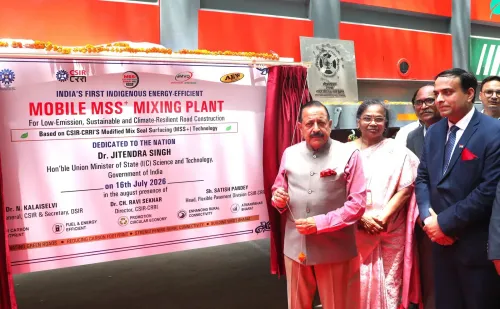
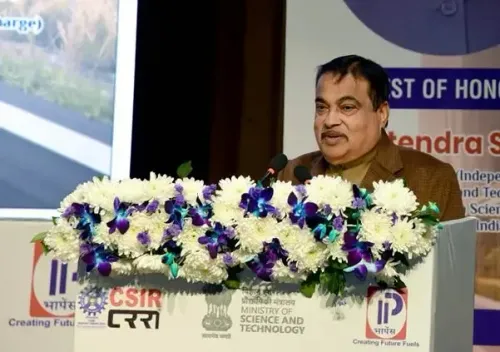
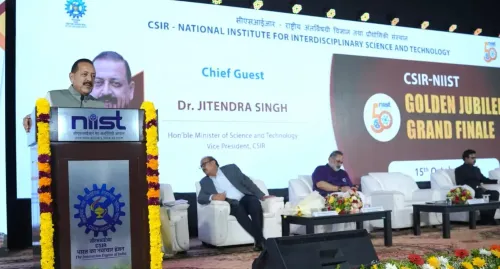
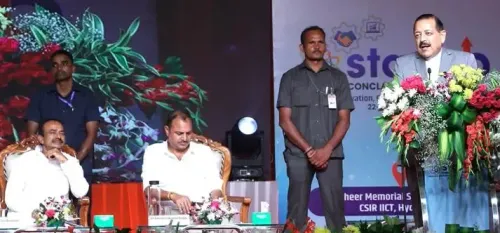
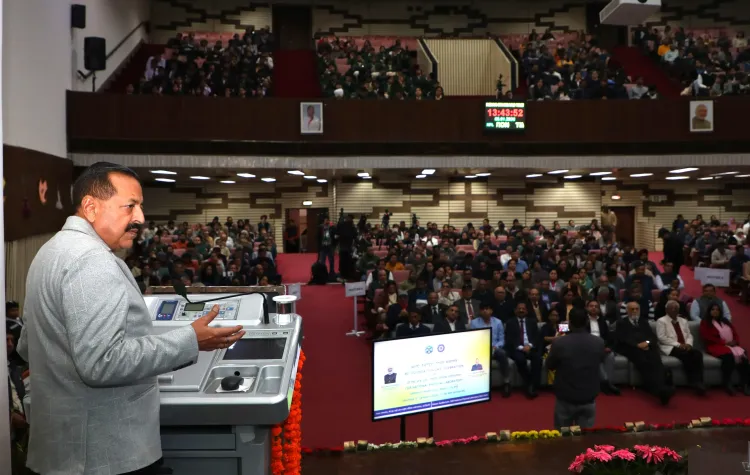
New Delhi, Jan 7 (NationPress) India's highway systems are undergoing a significant transformation, shifting away from fossil fuel reliance to embracing bio-driven, regenerative, and circular economy models. Union Minister of State (Independent Charge) for Science and Technology, Dr. Jitendra Singh, stated on Wednesday that roads developed using this innovative technology will be more cost-effective, possess an extended sustainable lifespan, and eliminate the risk of environmental pollution.
During the CSIR's ‘Technology Transfer’ ceremony, the minister remarked that this day marks a historical milestone.
He characterized the initiative as a ‘Whole-of-Science, Whole-of-Government, and Whole-of-Society’ endeavor, embodying the ‘Whole-of-Nation’ vision set by Prime Minister Narendra Modi for a ‘Viksit Bharat’.
Dr. Singh emphasized that advancements such as bio-bitumen exemplify how scientific research can directly contribute to national goals like cleanliness, Atmanirbhar Bharat, and economic self-sufficiency.
Highlighting the importance of communication and outreach, he stated that innovation must be conveyed in a way that enhances understanding and adoption among broader stakeholders.
Dr. Singh further pointed out that while each of CSIR’s 37 laboratories boasts impressive success stories, the past decade has been dedicated to making science accessible to citizens, industries, and states.
Addressing the waste-to-wealth strategy, he remarked that bio-bitumen tackles various challenges, from stubble management and environmental preservation to reducing import dependency.
He noted that India currently imports nearly 50% of its bitumen needs, and innovations like bio-bitumen can greatly decrease foreign reliance while bolstering domestic capabilities.
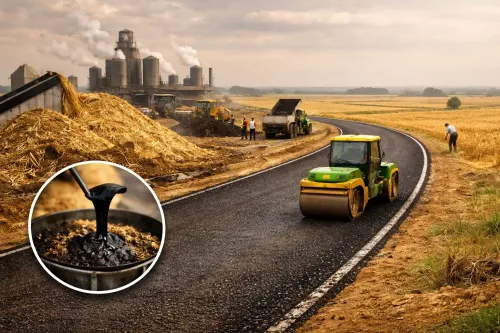
The event highlighted the industrial-scale transfer of bio-bitumen technology, derived from pyrolysis of agricultural waste. This process involves collecting post-harvest rice straw, palletizing, pyrolyzing to generate bio-oil, and subsequently blending it with traditional bitumen.
Laboratory validations have confirmed that 20–30% of conventional bitumen can be replaced safely without compromising performance.
Commending the CSIR team, the minister referred to the bio-bitumen innovation as a globally significant breakthrough, emphasizing the economic implications of substituting imported bitumen valued at Rs 25,000–Rs 30,000 crore annually while advocating for region-specific, resource-driven research.
N Kalaiselvi, Director General of CSIR and Secretary of DSIR, noted that India has become the first nation to scale bio-bitumen technology to industrial and commercial levels within the same year.
She elaborated that biomass pyrolysis generates multiple value streams, including bio-binders for roads, energy-efficient gaseous fuel, bio-pesticide fractions, and high-grade carbon suitable for batteries and advanced materials, rendering the process emission-free, cost-effective, and ready for the future. She also suggested policy-level integration of bio-bitumen to facilitate nationwide deployment.
Point of View
India's shift towards bio-driven highway infrastructure represents a significant step in addressing both economic and environmental challenges. The government's commitment to utilizing innovative technologies like bio-bitumen reflects a forward-thinking approach that aligns with global sustainability goals. This initiative not only enhances self-reliance but also sets a precedent for other nations.
NationPress
3 Oct 2026
Frequently Asked Questions
What is bio-bitumen?
Bio-bitumen is a sustainable alternative to traditional bitumen, produced from agricultural waste through pyrolysis, making it eco-friendly and reducing reliance on imports.
How does this transition benefit the environment?
This transition helps in minimizing environmental pollution by utilizing biodegradable materials, thus contributing to cleaner roads and promoting sustainability.
What are the economic implications of using bio-bitumen?
By replacing imported bitumen with bio-bitumen, India can save approximately Rs 25,000–Rs 30,000 crore annually, enhancing the economy and fostering self-sufficiency.
Is bio-bitumen effective compared to conventional bitumen?
Yes, laboratory tests indicate that 20–30% of conventional bitumen can be safely replaced with bio-bitumen without compromising road performance.
How does the government plan to implement this technology?
The government plans to promote policy-level blending of bio-bitumen across India, ensuring widespread deployment and accessibility.