Can Agricultural Waste Be Transformed into a Valuable National Resource?
Synopsis
Union Minister Nitin Gadkari has highlighted the potential of converting agricultural waste into a national asset, underscoring innovations like bio-bitumen that promise economic and environmental benefits. Discover how this initiative can transform rural economies and contribute to sustainable development in India.
Key Takeaways
Agricultural waste can be converted into valuable resources.
Bio-bitumen offers a sustainable alternative to petroleum-based products.
This initiative promotes circular economy practices.
It has the potential to empower farmers and stimulate rural economies.
Investment in bioenergy can significantly reduce India's fossil fuel imports .
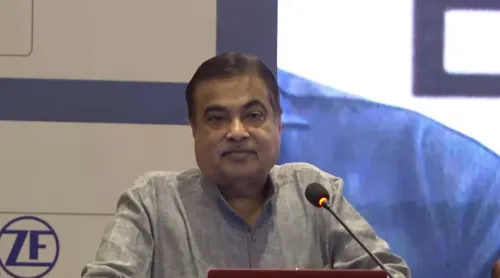
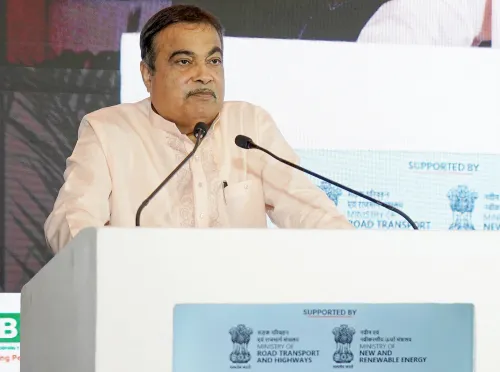
New Delhi, Jan 7 (NationPress) Union Minister Nitin Gadkari emphasized on Wednesday that agricultural waste could be transformed into a significant national asset.
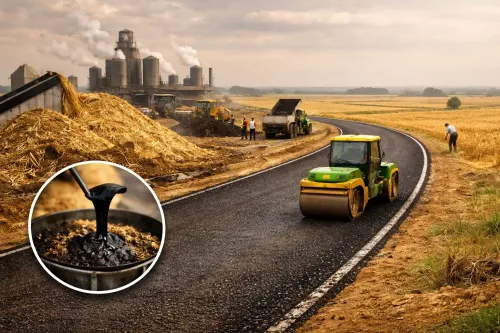
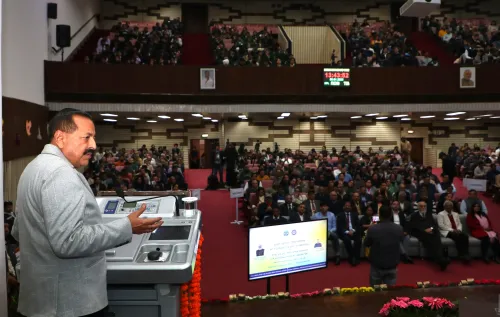
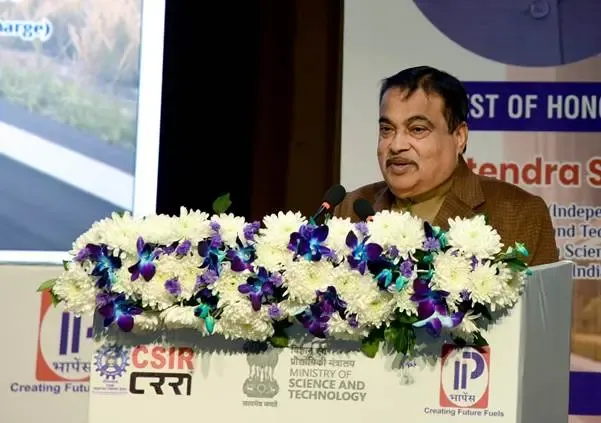
During the CSIR’s 'Technology Transfer Ceremony', he highlighted that bio-bitumen represents a crucial advancement towards realizing the vision of ‘Viksit Bharat 2047’.
This approach not only mitigates pollution stemming from crop burning but also enhances the circular economy. With a 15 percent blend, India could potentially save around Rs 4,500 crore in foreign exchange while significantly lessening its reliance on imported crude oil.
“Today is a landmark moment for India’s road infrastructure, marking the nation as the first globally to commercially produce bio-bitumen,” stated Gadkari, extending his congratulations to CSIR and its devoted scientists, and acknowledging Union MoS Jitendra Singh for his unwavering support in reaching this groundbreaking milestone.
He added that this innovation will empower farmers, create rural jobs, and invigorate the rural economy.
According to Gadkari, bio-bitumen reflects the commitment of the PM Modi government to sustainable development, self-sufficiency, and environmentally friendly growth, paving the path for a cleaner and greener future.
He pointed out the successful trials of bio-bitumen made from rice straw, which outperformed petroleum-based bitumen and aids in reducing stubble burning.
It is time to convert agricultural waste, crop residue, bamboo, and biomass into green fuel and advanced products.
At an event last year, Gadkari underscored the urgent necessity to reduce India’s Rs 22 lakh crore fossil fuel import bill and the pollution caused by burning crop waste and vehicle emissions. “India must transition from being an energy importer to becoming an energy exporter, achievable through sustainable bioenergy initiatives,” he asserted.
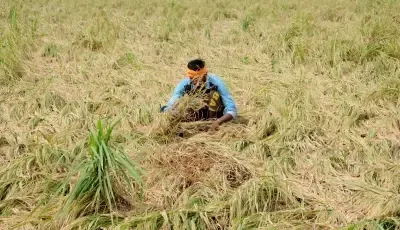
Furthermore, the 7.3 million tonnes of paddy straw currently being incinerated by farmers can be transformed into compressed biogas and bioethanol, potentially saving Rs 1,600 crore in foreign exchange on energy imports while also curbing pollution, as noted by the Indian Biogas Association (IBA) recently. This policy is projected to attract investments of Rs 37,500 crore and facilitate the establishment of 750 CBG projects across the country by 2028-29, it stated.
Point of View
I believe that the initiatives discussed by Minister Gadkari represent a pivotal moment for India's agricultural sector. By harnessing agricultural waste, we are not only addressing environmental concerns but also empowering rural communities and fostering economic growth. The commitment to innovation and sustainability is crucial for our nation's progress.
NationPress
19 Sept 2026
Frequently Asked Questions
What is bio-bitumen?
Bio-bitumen is a sustainable alternative to traditional petroleum-based bitumen, made from agricultural waste like rice straw.
How can agricultural waste benefit the economy?
Transforming agricultural waste can save foreign exchange, reduce pollution, and create jobs in rural areas.
What are the environmental benefits of using bio-bitumen?
Bio-bitumen helps reduce pollution caused by crop burning and supports the circular economy.
What does 'Viksit Bharat 2047' mean?
'Viksit Bharat 2047' refers to the vision of a developed India by the year 2047, marking 100 years of independence.
How much can India save by blending bio-bitumen?
India could save approximately Rs 4,500 crore in foreign exchange with a 15 percent blend of bio-bitumen.