India Innovates: Transforming Crop Waste into Sustainable Bio-Bitumen for Roads
Synopsis
India is embracing sustainability by converting crop waste into bio-bitumen, a revolutionary material for road construction. This innovation addresses pollution and supports farmers, marking a significant step towards a greener future.
Key Takeaways
Innovative Technology: India is converting crop waste into bio-bitumen.
Environmental Impact: This approach reduces pollution from stubble burning.
Sustainable Infrastructure: Bio-bitumen serves as a renewable alternative for road construction.
Support for Farmers: Provides practical use for agricultural waste.
Broader Applications: Potential for pest control and advanced materials.
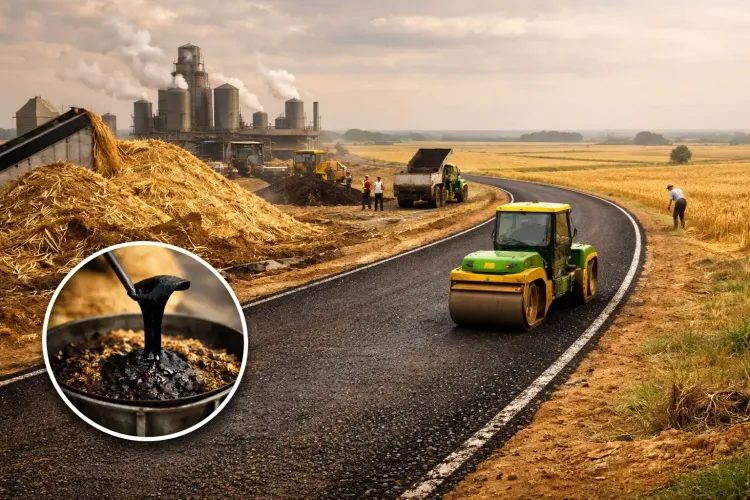
New Delhi, April 1 (NationPress) India has made a significant advancement in sustainable infrastructure with the introduction of a revolutionary technology that transforms agricultural waste into bio-bitumen, an essential component for road construction, according to a recent report.
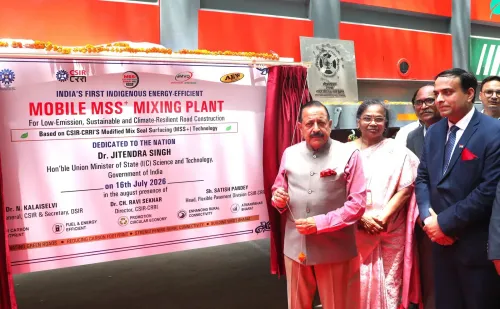
This groundbreaking innovation, developed by researchers at the Council of Scientific and Industrial Research (CSIR), is set to decrease the nation's reliance on imported petroleum-based bitumen while addressing the ongoing issue of stubble burning, as reported by Devdiscourse.
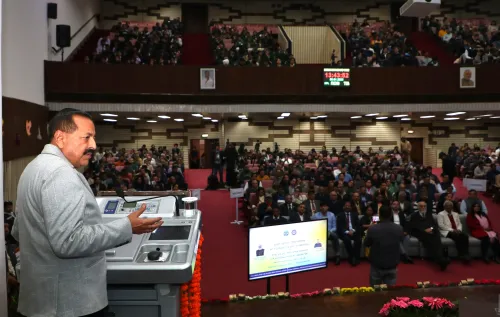
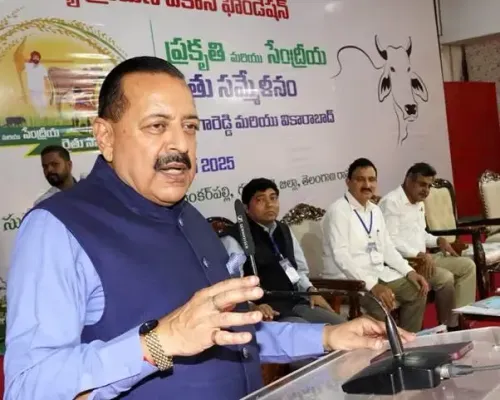
Union Minister Dr. Jitendra Singh emphasized the significance of this innovation, stating that crop residues like rice straw can now be converted into a valuable binding substance through a method known as pyrolysis.
During this process, biomass is heated without oxygen, resulting in a renewable and environmentally friendly alternative to conventional bitumen. Initial trials of this technology have yielded promising outcomes, igniting hopes for its widespread application in road construction.
This innovation emerges at a time when stubble burning continues to contribute to severe air pollution across various regions of India. By providing farmers with a practical solution for managing agricultural waste, this novel approach could greatly diminish the necessity for burning excess crop material, ultimately leading to improved air quality and enhanced environmental results.
N Kalaiselvi, the Director General of CSIR, pointed out that industries are already expressing interest in this technology. Steps are being taken to facilitate the transfer of this technology to companies for larger-scale implementation.
Beyond road construction, this process may pave the way for additional applications, including solutions for pest control and advanced materials based on carbon, as noted in the report.
Experts assert that the advent of bio-bitumen symbolizes a dual advantage for India. It promotes sustainable infrastructure development while simultaneously aiding farmers, curbing pollution, and fortifying the nation’s economic resilience against global supply chain challenges.
Point of View
This development highlights India's commitment to sustainable practices. The transition to bio-bitumen not only promises reduced environmental impact but also offers economic benefits for farmers and the nation as a whole, aligning with a nation-first approach.
NationPress
1 Oct 2026
Frequently Asked Questions
What is bio-bitumen?
Bio-bitumen is a renewable material derived from agricultural waste, used as a binding substance in road construction.
How does the pyrolysis process work?
Pyrolysis involves heating biomass in the absence of oxygen, converting it into bio-bitumen and other valuable products.
Why is this technology important for India?
This technology reduces reliance on imported petroleum-based bitumen, addresses stubble burning, and helps improve air quality.
What are the potential applications of bio-bitumen?
Besides road construction, bio-bitumen can be used in pest control solutions and the development of advanced carbon-based materials.
Who developed this bio-bitumen technology?
The technology was developed by scientists from the Council of Scientific and Industrial Research (CSIR).