Dr. Jitendra Singh Launches CSIR-CRRI Platinum Jubilee, 16-Town Tech Rollout
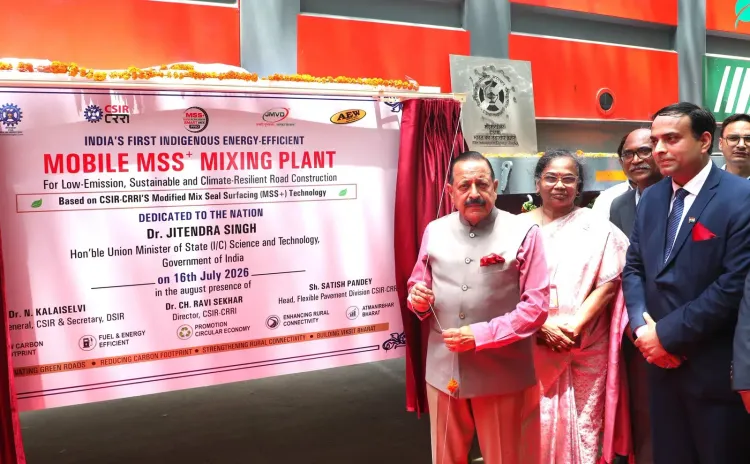
Synopsis
Union Science and Technology Minister Dr. Jitendra Singh on 16 July 2026 inaugurated CSIR-CRRI's Platinum Jubilee in New Delhi and launched a nationwide first-phase rollout of indigenous road technologies — including an AI-enabled survey vehicle, MSS+ mixing plant, and PATCH-FILL pothole repair system — across 16 locations.
Key Takeaways
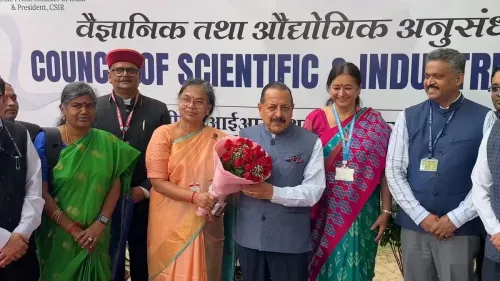
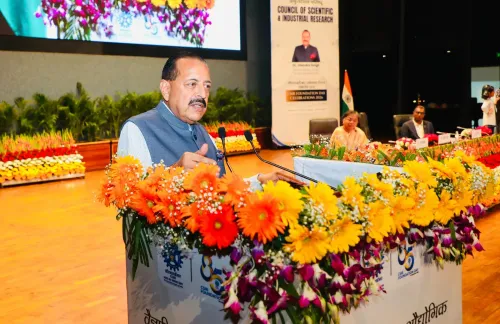
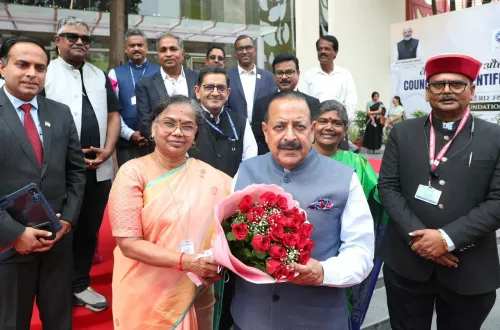
Jitendra Singh inaugurated the year-long Platinum Jubilee Celebrations of CSIR-CRRI in New Delhi on 16 July 2026 .
A nationwide first-phase deployment of indigenous road infrastructure technologies was launched across 16 towns and locations .
The Automatic Modified Mix Seal Surfacing (MSS+) Smart Mix Pro Mixing Plant was unveiled for large-scale road surfacing implementation.
An AI-enabled Network Survey Vehicle (NSV) was inaugurated for comprehensive, data-driven road condition assessment.
The PATCH-FILL pothole repair technology was dedicated, targeting smarter and more sustainable road maintenance.
CSIR-CRRI is part of India's 37-laboratory CSIR network established in 1942 to drive indigenous R&D for national development.
Union Science and Technology Minister Dr. Jitendra Singh on Thursday, 16 July 2026 inaugurated the year-long Platinum Jubilee Celebrations of the CSIR-Central Road Research Institute (CSIR-CRRI) in New Delhi, marking 75 years of the country's premier road research body, and simultaneously launched the first phase of a nationwide deployment of indigenous road infrastructure technologies across 16 towns and locations across India.
Context
The minister inaugurated the platinum jubilee event at CSIR-CRRI's New Delhi campus, describing the institute as the country's premier body dedicated to developing and implementing the latest technologies for road construction and infrastructure. The first-phase rollout across 16 locations is designed to demonstrate and scale up innovative, sustainable road construction and maintenance technologies that CSIR-CRRI has developed through strategic collaborations with industry and implementing agencies.
Dr. Jitendra Singh also reviewed a range of indigenous technologies developed by the institute spanning road engineering, pavement technologies, intelligent transportation systems, road safety, and sustainable construction materials.
Policy Backdrop
CSIR — the Council of Scientific and Industrial Research — was established in 1942 as India's largest public research and development network, comprising 37 laboratories including CRRI. The institute has historically served as the technical backbone for India's road and highway planning, providing scientific inputs to both national and state-level infrastructure programmes.
The emphasis on indigenous technology transfer from laboratory to field aligns with the government's sustained push to leverage CSIR institutions for core infrastructure development, reducing dependence on foreign technologies in public works.
Technologies Launched
Three specific technology platforms were unveiled at the event. First, the Automatic Modified Mix Seal Surfacing (MSS+) Smart Mix Pro Mixing Plant — a facility designed for large-scale implementation of CSIR-CRRI's indigenous MSS+ road surfacing technology. Second, the AI-enabled Network Survey Vehicle (NSV), which enables comprehensive, data-driven assessment of road infrastructure condition across networks. Third, the PATCH-FILL pothole repair technology, aimed at faster and more environmentally sustainable pothole remediation on existing roads.
Together, the three platforms address the full lifecycle of road infrastructure — from new surface construction and network monitoring to maintenance — using tools developed domestically by CSIR-CRRI researchers.
Stakeholders and Impact
The primary beneficiaries of the rollout include state highway authorities, national road construction agencies, and the commuting public across the 16 pilot locations. Successful demonstration at these sites is expected to build the evidence base needed for wider adoption through formal integration into national and state highway programmes.
The AI-enabled survey vehicle in particular signals a shift toward data-led road asset management, a domain where India's highway network — one of the world's largest — has historically relied on manual inspection methods.
What's Next
Attention will now turn to the rollout of subsequent phases beyond the initial 16 locations and whether the technologies demonstrated at CSIR-CRRI will be formally embedded into procurement and maintenance standards used by agencies such as the National Highways Authority of India and state public works departments. The year-long Platinum Jubilee programme provides a sustained platform for further technology launches and industry partnerships through 2026-27.
Point of View
Deployment-ready products — the MSS+ plant, the AI survey vehicle, and PATCH-FILL — the ministry is moving beyond ceremonial anniversaries toward measurable field outcomes. This fits a broader pattern under Dr. Jitendra Singh's tenure of using CSIR milestones as launchpads for technology transfer rather than retrospective celebrations. The real test will come in whether state highway agencies absorb these tools into standard procurement, a step that has historically been the bottleneck in India's science-to-infrastructure pipeline.
NationPress
15 Oct 2026
Frequently Asked Questions
What is CSIR-CRRI and why is it celebrating its Platinum Jubilee?
CSIR-Central Road Research Institute (CSIR-CRRI) is India's premier government laboratory for road engineering and infrastructure technology, established 75 years ago as part of the Council of Scientific and Industrial Research. Its Platinum Jubilee marks 75 years of research in pavement design, road safety, and sustainable construction materials.
What is the MSS+ Smart Mix Pro technology launched by Dr. Jitendra Singh?
The Automatic Modified Mix Seal Surfacing (MSS+) Smart Mix Pro Mixing Plant is an indigenously developed facility designed for large-scale implementation of CSIR-CRRI's MSS+ road surfacing technology, enabling faster and more consistent application of advanced surface treatments on Indian roads.
What does the AI-enabled Network Survey Vehicle (NSV) do?
The AI-enabled Network Survey Vehicle (NSV) launched at CSIR-CRRI conducts comprehensive, automated assessments of road infrastructure condition across entire road networks, replacing or supplementing manual inspection methods with data-driven analysis.
What is PATCH-FILL pothole repair technology?
PATCH-FILL is an indigenous pothole repair technology developed by CSIR-CRRI aimed at providing faster, smarter, and more environmentally sustainable repair of potholes on existing roads, contributing to safer road conditions for commuters.
Which 16 locations will receive the new CSIR-CRRI road technologies?
The specific names of the 16 towns and locations selected for the first-phase rollout have not been officially confirmed in the public domain at this stage; the government has indicated these sites span multiple parts of the country to demonstrate and scale up CSIR-CRRI's indigenous technologies.