CM Bhajan Lal Chairs Pre-Monsoon Preparedness Meet in Rajasthan
Synopsis
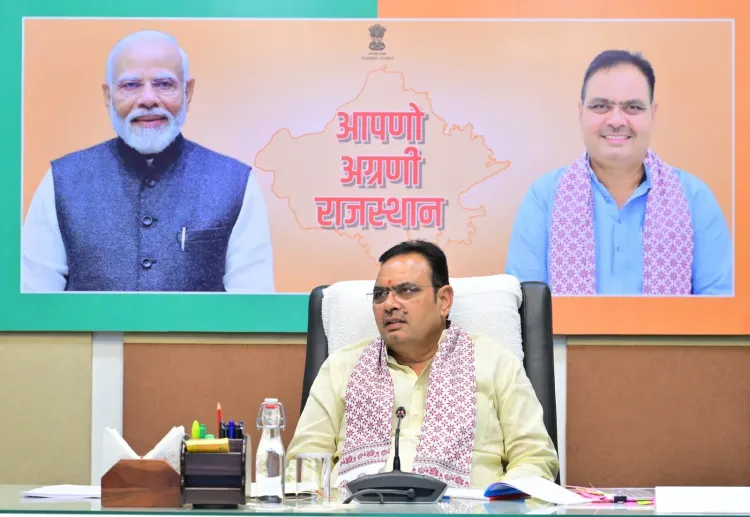
Rajasthan Chief Minister Bhajan Lal Sharma chaired a pre-monsoon coordination meeting on 16 July 2026, directing all departments to tackle waterlogging, drainage failures, and damaged roads, and to ensure swift post-monsoon repairs — framing public safety and uninterrupted movement as the government's top priorities.
Key Takeaways
CM Bhajan Lal Sharma chaired a pre-monsoon preparedness review meeting with senior officials on 16 July 2026 .
Officials were directed to ensure residents face no inconvenience due to waterlogging, drainage failures, or damaged roads during the monsoon season.
All departments were instructed to work in 'complete coordination' to handle emergencies effectively.
Post-monsoon road repairs must begin immediately after the season ends, with regular field inspections mandated.
All works are to be completed in a 'time-bound and quality-assured' manner.
Resident safety, uninterrupted movement, and swift relief delivery were stated as the government's 'highest priority.'
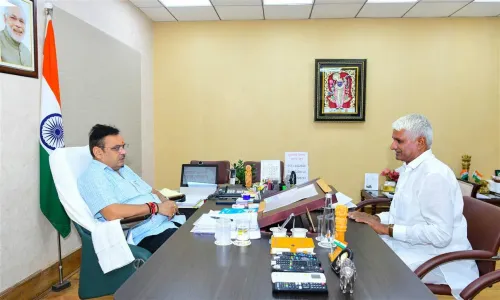
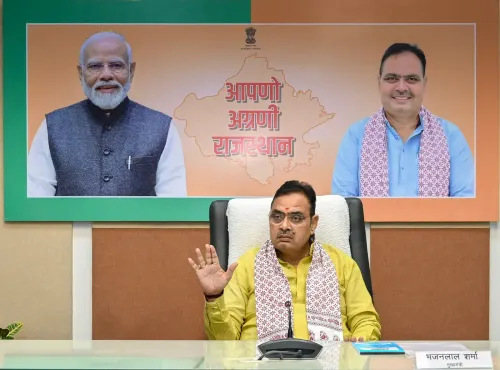
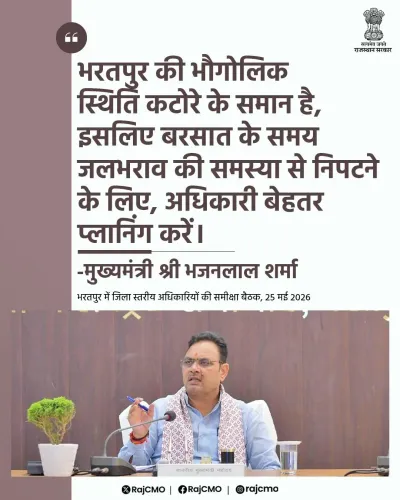
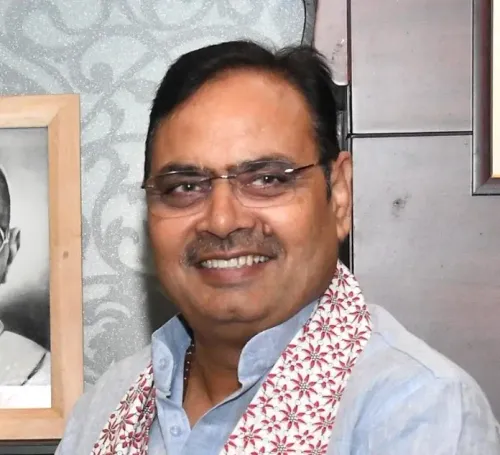
Rajasthan Chief Minister Bhajan Lal Sharma on Thursday, 16 July 2026, chaired a high-level meeting with senior officials to review pre-monsoon preparations and post-rain road repair plans across the state. The CM directed all departments to ensure that residents face no inconvenience during the monsoon season, with particular focus on waterlogging, drainage, and damaged roads.
Context
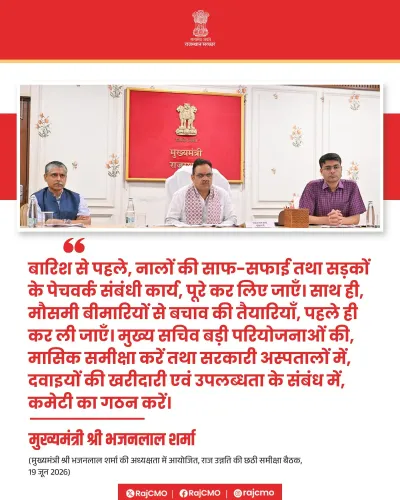
Posting on X, CM Sharma stated — 'वर्षा ऋतु के मद्देनजर आज संबंधित अधिकारियों के साथ बारिश से पूर्व की तैयारियों एवं वर्षा उपरांत सड़क मरम्मत कार्यों से संबंधित बैठक की' — ('In view of the rainy season, a meeting was held today with concerned officials regarding pre-rain preparations and post-rain road repair works'). He emphasised that all departments must work in full coordination to effectively handle waterlogging, drainage, damaged roads, and other emergency situations. The CM also stressed that the 'safety of residents, uninterrupted movement, and swift relief when needed is our highest priority.'
Policy Backdrop
Rajasthan, a largely arid and semi-arid state, experiences intense and often concentrated monsoon rainfall that routinely causes waterlogging and significant road damage, particularly in low-lying urban areas and rural stretches. State governments have conducted annual pre-monsoon inter-departmental coordination meetings for decades, a practice institutionalised under the Disaster Management Act, 2005. These reviews typically bring together the Public Works Department, municipal bodies, and disaster management agencies to align on drainage clearance, emergency response protocols, and infrastructure repair timelines.
Across Indian states and party lines, such seasonal reviews are standard administrative practice before the arrival of the southwest monsoon. The emphasis on post-monsoon road repair — a recurring pain point for commuters — reflects a pattern seen in previous Rajasthan administrations as well.
Stakeholders and Impact
The directives issued at the meeting are aimed squarely at the general public and daily commuters who bear the brunt of waterlogged roads and damaged infrastructure during the monsoon months. CM Sharma specifically called for 'swift repair of damaged roads as soon as the rainy season ends,' alongside regular field inspections and time-bound, quality-assured completion of all works. Residents in flood-prone districts and urban centres with poor drainage infrastructure stand to benefit most if the coordination directives translate into on-ground action.
The instruction for departments to maintain 'complete coordination' signals an attempt to cut through the inter-agency delays that have historically slowed emergency response and post-monsoon repair tendering in the state.
What's Next
The key test will be whether the directives issued at Thursday's meeting result in measurable outcomes — including timely release of repair tenders by the Public Works Department, field inspection reports, and expedited drainage clearance before peak monsoon weeks. Observers will watch for any related allocations or action-plan notifications from the state government in the coming days. Progress on post-monsoon road repair and the speed of relief deployment during heavy-rain events will be the practical benchmarks against which CM Sharma's preparedness push will be judged.
Point of View
As monsoon mismanagement — particularly potholed roads and urban flooding — has historically been a flashpoint for public discontent in Rajasthan. By personally chairing the review and posting about it publicly, CM Sharma is signalling administrative ownership of a perennially sensitive issue ahead of peak monsoon weeks. The explicit emphasis on post-monsoon road repair timelines suggests the government is aware that visible infrastructure deterioration, not just emergency response, is what voters remember. Whether the coordination directives translate into faster tendering and field action will determine whether this meeting is remembered as governance or optics.
NationPress
16 Jul 2026
Frequently Asked Questions
Why did Rajasthan CM Bhajan Lal Sharma hold a monsoon preparedness meeting?
CM Bhajan Lal Sharma held the meeting on 16 July 2026 to review pre-monsoon preparations and direct officials to handle waterlogging, drainage, damaged roads, and emergencies during the rainy season without disrupting public life.
What did CM Bhajan Lal Sharma instruct officials at the monsoon meeting?
He directed all departments to work in full coordination to manage waterlogging and drainage, begin road repairs swiftly after the monsoon ends, conduct regular field inspections, and complete all works in a time-bound and quality-assured manner.
What is Rajasthan's policy on pre-monsoon preparedness?
Rajasthan, like other Indian states, follows an annual pre-monsoon inter-departmental coordination practice institutionalised under the Disaster Management Act, 2005, involving the Public Works Department, municipal bodies, and disaster management agencies.
How does monsoon affect roads in Rajasthan?
Despite being largely arid, Rajasthan experiences intense seasonal monsoon rainfall that causes waterlogging in urban areas and significant road damage across rural and urban stretches, making pre-monsoon coordination critical each year.
What is the Rajasthan government's top priority during the monsoon season?
According to CM Bhajan Lal Sharma, the government's highest priority is the safety of residents, ensuring uninterrupted movement, and providing swift relief whenever needed during the monsoon season.