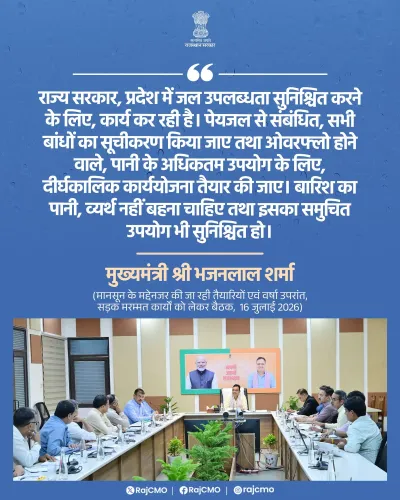
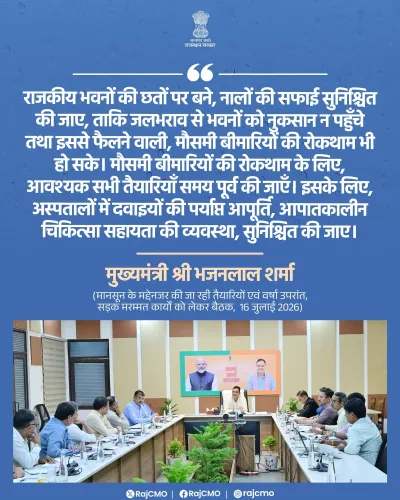
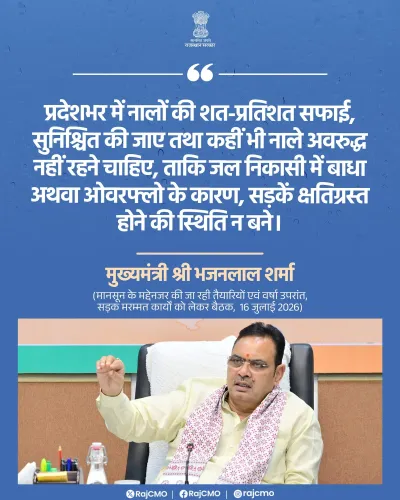
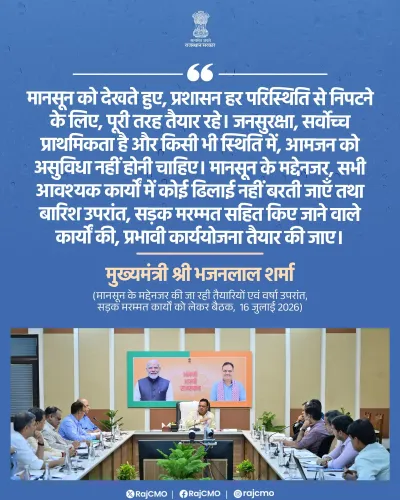
CM Bhajanlal Directs Bharatpur Officials on Waterlogging
Synopsis
The Rajasthan CMO on 26 May 2026 directed Bharatpur district officials to improve waterlogging preparedness before the 2026 monsoon, citing the district's bowl-shaped geography that causes seasonal flooding affecting residents, farmers, and the ecologically sensitive Keoladeo wetland.
Key Takeaways
The Rajasthan CMO issued a public directive on 26 May 2026 calling on Bharatpur officials to plan better for seasonal waterlogging.
Bharatpur's bowl-shaped topography, fed by the Gambhir and Banganga rivers, makes it structurally prone to monsoon flooding.
The Rajasthan State Water Policy 2010 had already flagged Bharatpur as a priority district for drainage and flood mitigation.
CM Bhajan Lal Sharma has been in office since December 2023 and has linked administrative efficiency to climate-resilient infrastructure under the 'Aapno Agrani Rajasthan' vision.
The Keoladeo National Park , a Ramsar wetland inside Bharatpur, means drainage decisions carry ecological as well as civic consequences.
District-level tenders and pre-monsoon review meetings are expected before the 2026 rainy season as a direct follow-up to the directive.
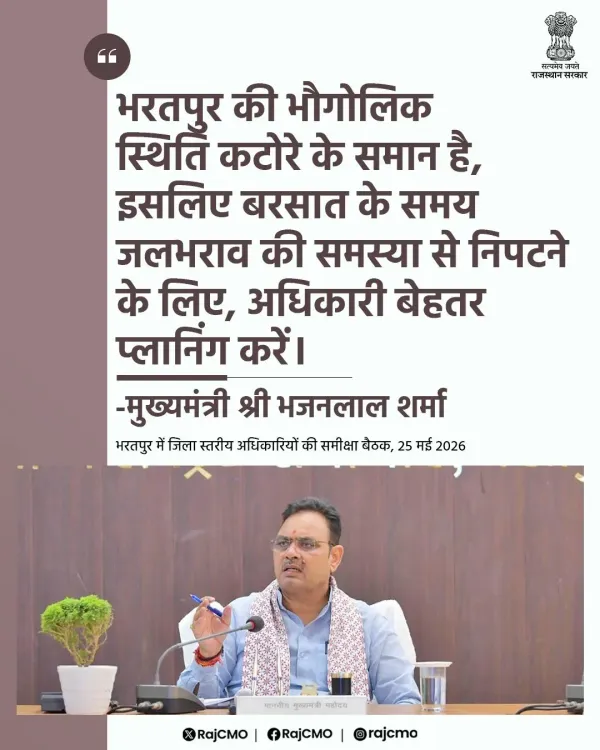
The Chief Minister's Office of Rajasthan on Tuesday, 26 May 2026 issued a public directive calling on district officials in Bharatpur to plan more effectively for seasonal waterlogging, citing the city's distinctive bowl-shaped geography as a recurring vulnerability ahead of the monsoon.
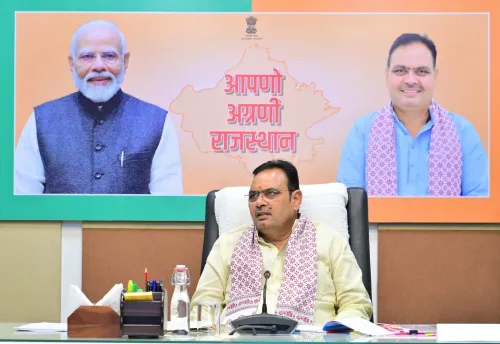
Posting on X under the hashtag #आपणो_अग्रणी_राजस्थान ('Our Leading Rajasthan'), the CMO addressed Chief Minister Bhajan Lal Sharma directly, stating: 'Bharatpur's geographical position is like a bowl, so officers must plan better to deal with the problem of waterlogging during the rainy season.'
Context
Bharatpur, located in eastern Rajasthan, sits in a natural depression fed by rivers including the Gambhir and the Banganga. This topography means that heavy monsoon rainfall has nowhere to drain quickly, causing streets, residential colonies, and agricultural land to remain submerged for days at a stretch. The problem is not new — residents and farmers in the district have raised waterlogging concerns with successive administrations for years. The directive comes weeks before the 2026 southwest monsoon is expected to reach Rajasthan, making pre-monsoon preparedness a time-sensitive administrative priority.Policy Backdrop
The Rajasthan State Water Policy 2010 had already identified low-lying districts, including Bharatpur, as priority zones for improved drainage infrastructure and flood mitigation planning. Despite that policy framework, Rajasthan has repeatedly witnessed urban waterlogging in topographically depressed districts during heavy monsoon spells, with state governments issuing administrative instructions for pre-monsoon drainage upgrades season after season. Chief Minister Bhajan Lal Sharma, who assumed office in December 2023, has positioned the state's infrastructure agenda under the 'Aapno Agrani Rajasthan' ('Our Leading Rajasthan') vision, which links administrative efficiency to climate-resilient urban planning. Tuesday's directive is consistent with that framing, placing the onus on district-level officers to translate policy intent into on-ground action before the rains arrive. The Keoladeo National Park, a Ramsar-designated wetland within Bharatpur, adds ecological sensitivity to the district's drainage decisions. Water management choices upstream directly affect inflows into the park, meaning that any drainage engineering must balance flood relief for residents with the regulated water requirements of one of India's most significant bird sanctuaries.Stakeholders and Impact
The most immediate beneficiaries of better drainage planning are Bharatpur's residents and farmers, who bear the direct costs of flooded homes and damaged crops each monsoon. Urban waterlogging also disrupts road connectivity, delays emergency services, and raises public-health risks from stagnant water. Local civic bodies and the district administration are now under explicit instruction from the state's highest office to produce actionable plans. The public nature of the CMO's post on X signals that the directive carries political accountability — officials are aware the Chief Minister's Office is watching and that progress, or the lack of it, is on record.What's Next
District-level drainage project tenders and pre-monsoon review meetings are expected to be scheduled before the 2026 rainy season. The CMO's directive effectively sets a deadline: planning must be in place before the monsoon, not after. Whether Bharatpur officials translate this instruction into funded, tendered, and executable drainage works within the available window will be the key measure of follow-through. Observers will watch for district-level action plans and budget allocations in the coming weeks.Point of View
Creating a visible accountability trail ahead of the monsoon. Rajasthan's repeated cycle of post-flood directives without lasting infrastructure fixes has eroded public confidence, and the current government appears to be using social media visibility to demonstrate proactive governance. The mention of 'better planning' rather than new funding suggests the immediate ask is administrative coordination, not fresh capital outlay — a lower bar that could either produce quick wins or expose deeper structural gaps. With the Keoladeo wetland in the frame, any drainage overhaul will also draw scrutiny from environmental regulators and conservationists, adding a layer of complexity to what might otherwise seem a routine civic task.
NationPress
10 Oct 2026
Frequently Asked Questions
Why does Bharatpur face waterlogging every monsoon?
Bharatpur's terrain sits in a natural bowl-shaped depression fed by the Gambhir and Banganga rivers, which means rainwater accumulates faster than it can drain, causing seasonal flooding in residential and agricultural areas.
What did the Rajasthan CMO say about Bharatpur waterlogging?
On 26 May 2026, the Rajasthan CMO posted on X directing district officials to plan better for waterlogging, explicitly citing Bharatpur's bowl-shaped geography as the root cause of the recurring seasonal problem.
Who is Bhajan Lal Sharma and what is his role in this directive?
Bhajan Lal Sharma is the Chief Minister of Rajasthan since December 2023. The CMO's post was addressed to him, signalling that the directive carries the weight of the Chief Minister's Office and that officials are expected to act before the 2026 monsoon.
How does Bharatpur waterlogging affect Keoladeo National Park?
Keoladeo National Park, a Ramsar-designated wetland inside Bharatpur, depends on regulated water inflows. Poorly managed drainage can either flood or deprive the park of the water levels its ecosystem requires, making district drainage decisions ecologically sensitive.
What policy framework exists for Bharatpur flood management?
The Rajasthan State Water Policy 2010 identified low-lying districts including Bharatpur as priority zones for improved drainage and flood mitigation, though implementation has been incremental and the district continues to face seasonal waterlogging.