Rajasthan CM Bhajanlal directs officials to inspect sites, speed up work
Synopsis
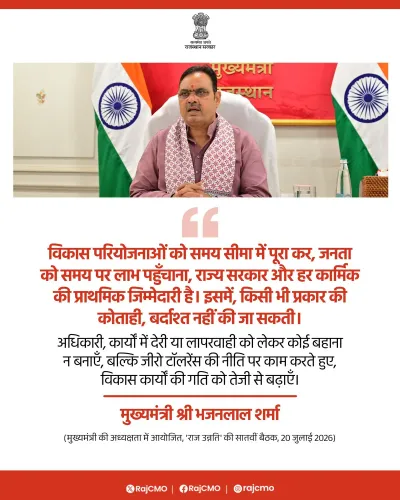
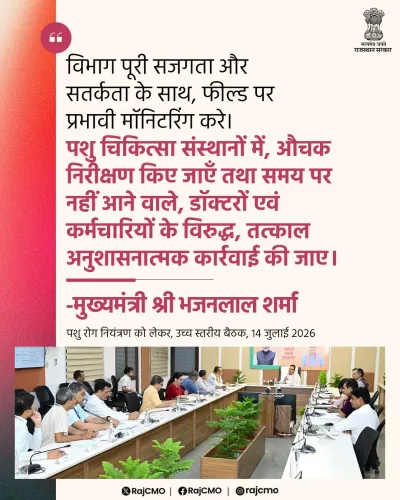
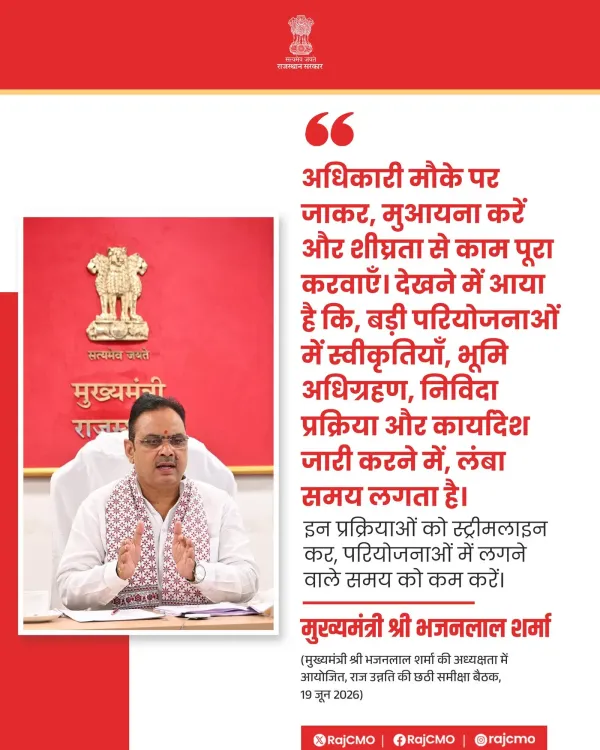
The Chief Minister's Office of Rajasthan on 20 June 2026 directed state officials to conduct on-site inspections and expedite completion of pending works, reinforcing the BJP government's push for field-level bureaucratic accountability under CM Bhajan Lal Sharma.
Key Takeaways
The Chief Minister's Office of Rajasthan issued a public directive on 20 June 2026 instructing officials to inspect project sites and complete work swiftly.
The instruction was addressed to Chief Minister Bhajan Lal Sharma via his official X handle, signalling a formal administrative communication from the CMO.
The directive was posted under the hashtag #आपणो_अग्रणी_राजस्थान ('Our Leading Rajasthan'), the state government's development campaign branding.
The BJP government in Rajasthan has prioritised time-bound project execution since winning the December 2023 assembly elections.
The public nature of the directive places civic pressure on the bureaucracy and signals that administrative accountability is visible beyond internal channels.
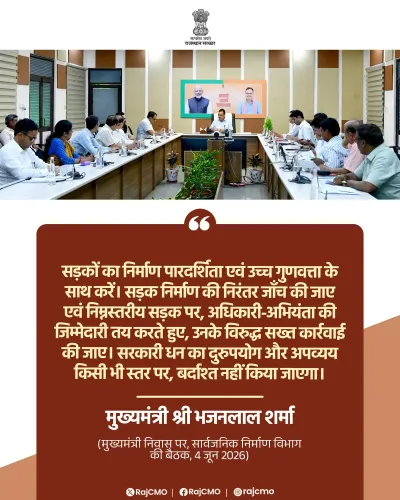
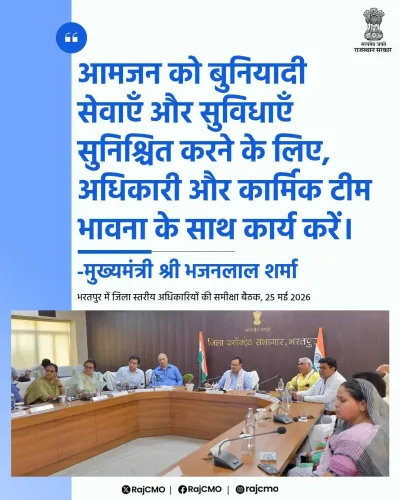
The Chief Minister's Office of Rajasthan, on behalf of Chief Minister Bhajan Lal Sharma, issued a directive on Saturday, 20 June 2026, instructing government officials to conduct on-site inspections and ensure the swift completion of pending works across the state.
Context
The post, shared under the hashtag #आपणो_अग्रणी_राजस्थान ('Our Leading Rajasthan'), carries a pointed administrative instruction: 'अधिकारी मौके पर जाकर, मुआयना करें और शीघ्रता से काम पूरा करवाएँ' — 'Officials should go to the site, conduct inspections, and get the work completed quickly.' The directive is addressed directly to Chief Minister Bhajan Lal Sharma via his official X handle, signalling that the message originates from the CMO as a formal administrative communication.
The hashtag references the state government's broader campaign branding Rajasthan as a frontrunner in development and governance — a framing the BJP government has consistently used since assuming office in December 2023.
Policy Backdrop
Following the December 2023 assembly election victory, the Rajasthan government has emphasised time-bound execution of development and welfare projects as a core administrative priority. Directives for field-level inspections by senior officials are a well-established tool in Indian state governance, used to cut through bureaucratic delays and ensure last-mile delivery.
Such instructions are particularly common in the months following a new government's formation, when political leadership seeks to demonstrate tangible progress on infrastructure, public works, and welfare schemes. The BJP-led administration in Rajasthan has followed patterns seen in other states where chief ministers use public communication channels to reinforce accountability within the bureaucracy.
Stakeholders and Impact
The directive is aimed squarely at state government officials across departments responsible for ongoing projects. By making the instruction public via the official CMO account, the government signals that accountability is not merely internal — it is visible to citizens and civil society.
For project beneficiaries — residents awaiting completion of roads, public buildings, drainage systems, or welfare infrastructure — the directive represents a formal push to accelerate timelines. The public nature of the communication also creates a measure of civic pressure on the bureaucracy to respond visibly and promptly.
What's Next
Political observers and administrative watchers will look for follow-up actions from the CMO, including departmental review meetings, field inspection reports, or the issuance of formal administrative orders specifying project timelines. Whether individual departments issue compliance updates in response to this directive will be a measure of how effectively the instruction translates into ground-level action.
The broader implication is clear: the Rajasthan government is using public-facing communication to reinforce bureaucratic accountability, a strategy that keeps administrative performance in the public eye and ties official conduct directly to the state's development narrative under Chief Minister Bhajan Lal Sharma.
Point of View
The government simultaneously pressures the bureaucracy and signals responsiveness to citizens, reinforcing the 'Our Leading Rajasthan' brand narrative. This pattern of chief ministerial offices issuing field-accountability directives through official X accounts has become increasingly common across BJP-governed states as a way to bridge the gap between policy intent and ground-level delivery. The real test will be whether follow-up inspections and compliance reports materialise, or whether the directive remains a symbolic gesture.
NationPress
19 Sept 2026
Frequently Asked Questions
What did the Rajasthan CMO direct officials to do on 20 June 2026?
The Rajasthan CMO directed state officials to visit project sites, conduct on-ground inspections, and ensure that pending works are completed quickly, as communicated through an official post on X.
Who is the Chief Minister of Rajasthan in 2026?
Bhajan Lal Sharma is the Chief Minister of Rajasthan, having been sworn in after the BJP's victory in the December 2023 state assembly elections.
What is the meaning of #आपणो_अग्रणी_राजस्थान?
The hashtag translates to 'Our Leading Rajasthan' and is used by the state government as campaign branding to highlight its development and governance agenda.
Why do Indian chief ministers issue site inspection directives publicly?
Public directives serve a dual purpose: they hold bureaucrats accountable by making instructions visible to citizens, and they signal the government's commitment to on-ground delivery of infrastructure and welfare projects.
What should we watch for after this Rajasthan CMO directive?
Follow-up actions to watch include departmental review meetings, field inspection reports, and any formal administrative orders specifying project timelines issued by the Rajasthan government.