Rajasthan CM Bhajan Lal Directs Officials to Ensure Basic Services
Synopsis
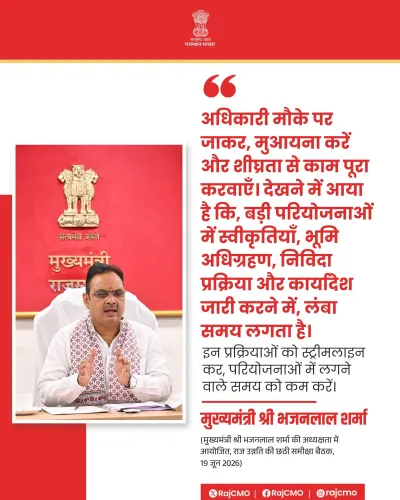
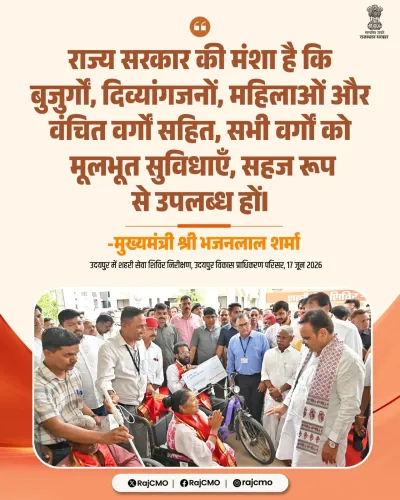
Chief Minister Bhajan Lal Sharma, through the Rajasthan CMO, directed all state officials and personnel on 26 May 2026 to work with team spirit to ensure basic services and facilities reach ordinary citizens, invoking the 'Aapno Agrani Rajasthan' governance campaign.
Key Takeaways
The Chief Minister's Office of Rajasthan issued a governance directive on 26 May 2026 in the name of CM Bhajan Lal Sharma .
Officials and government personnel were asked to work with 'team spirit' to ensure basic services and facilities reach common citizens.
The directive was shared under the campaign hashtag #आपणो_अग्रणी_राजस्थान ('Our Leading Rajasthan').
The BJP government has made administrative efficiency a stated priority since winning the December 2023 assembly elections .
Key sectors implicated include water supply, electricity distribution, and sanitation — areas where last-mile delivery gaps are most visible.
District-level performance reviews are expected to be a critical follow-up mechanism for this directive.
The Chief Minister's Office of Rajasthan, on behalf of Chief Minister Bhajan Lal Sharma, issued a governance directive on Tuesday, 26 May 2026, calling on state officials and personnel to work with a spirit of teamwork to ensure basic services and facilities reach ordinary citizens.
Context
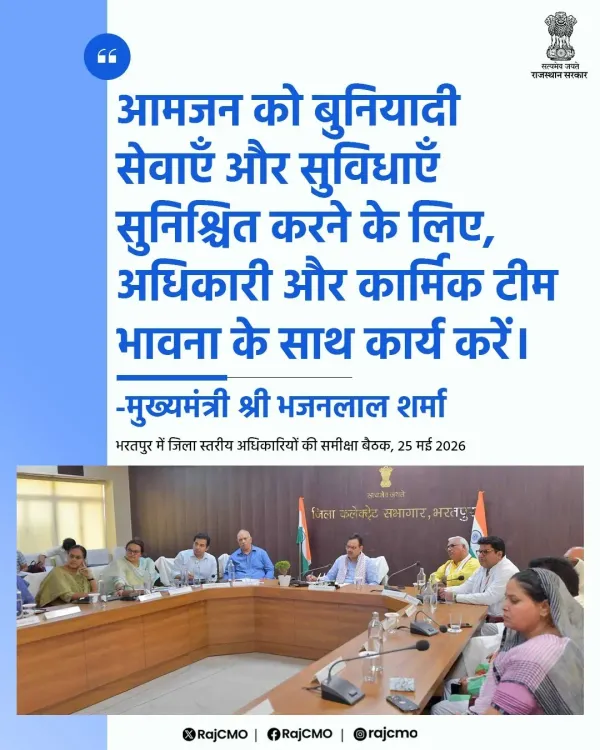
The post, shared under the hashtag #आपणो_अग्रणी_राजस्थान ('Our Leading Rajasthan'), quotes CM Bhajan Lal Sharma directly: 'आमजन को बुनियादी सेवाएँ और सुविधाएँ सुनिश्चित करने के लिए, अधिकारी और कार्मिक टीम भावना के साथ कार्य करें' — 'For ensuring basic services and facilities to the common people, officers and personnel should work with a team spirit.' The directive is addressed to the administrative machinery of the state government and underscores the administration's stated focus on citizen-centric delivery.
Policy Backdrop
The BJP government in Rajasthan, which came to power after the December 2023 assembly elections, has consistently flagged administrative efficiency and improved public service delivery as core governance priorities. This directive fits within a broader national pattern of BJP-ruled state governments emphasising inter-departmental coordination since 2014, particularly in areas such as water supply, electricity distribution, and sanitation. Rajasthan has followed similar patterns under successive administrations, reinforcing the principle that frontline officials bear direct responsibility for last-mile service delivery.
The hashtag #आपणो_अग्रणी_राजस्थान has been used by the Chief Minister's Office to brand a wider campaign around making Rajasthan a leading state in governance outcomes. The phrase signals an aspirational benchmark the administration has set for itself in public communications.
Stakeholders and Impact
The directive is aimed squarely at state officials and government personnel across departments responsible for delivering water, power, sanitation, and other foundational civic services. For Rajasthan's residents — particularly those in rural and semi-urban areas where service gaps tend to be most acute — consistent inter-departmental coordination can translate directly into improved access to utilities and welfare schemes. District-level officers are implicitly expected to align their teams around this mandate.
Civil society observers note that such directives carry weight when accompanied by performance-review mechanisms at the district level. The emphasis on 'team spirit' suggests the administration is signalling that siloed departmental functioning is a recognised bottleneck in service delivery across the state.
What's Next
Attention will now turn to whether the Chief Minister's Office follows this public directive with formal circulars, departmental review meetings, or accountability frameworks targeting specific service benchmarks. District-level performance reviews of departments handling water, electricity, and sanitation schemes are expected to be a key indicator of how seriously the directive is operationalised. The coming months will test whether this public message translates into measurable improvements in basic service delivery for Rajasthan's citizens.
Point of View
CM Bhajan Lal Sharma's office is projecting a collaborative rather than authoritarian governance style, which aligns with the broader 'Viksit Bharat' narrative of inclusive development. The 'Aapno Agrani Rajasthan' branding also signals that the administration is building a distinct state-level identity ahead of future electoral cycles. Whether this translates into structural reform or remains aspirational rhetoric will depend on the accountability mechanisms the government puts in place at the district level.
NationPress
20 Sept 2026
Frequently Asked Questions
What did Rajasthan CM Bhajan Lal Sharma say about basic services?
CM Bhajan Lal Sharma directed state officials and personnel to work with team spirit to ensure basic services and facilities are delivered to ordinary citizens, as communicated by the Chief Minister's Office on 26 May 2026.
What is the 'Aapno Agrani Rajasthan' campaign?
'Aapno Agrani Rajasthan' translates to 'Our Leading Rajasthan' and is a branding campaign used by the Rajasthan Chief Minister's Office to communicate governance goals and the state administration's aspiration to lead in public service delivery.
When did Bhajan Lal Sharma become Chief Minister of Rajasthan?
Bhajan Lal Sharma was sworn in as Chief Minister of Rajasthan following the BJP's victory in the December 2023 state assembly elections.
Which departments are covered under Rajasthan's basic services directive?
The directive broadly covers all state departments responsible for citizen-facing services, with water supply, electricity distribution, and sanitation being the key sectors where last-mile delivery gaps are most commonly reported.
What action is expected after the Rajasthan CMO governance directive?
District-level performance reviews of departments handling water, electricity, and sanitation schemes are expected to follow, with observers watching for formal circulars or accountability frameworks to operationalise the public directive.