CM Bhajanlal Reaffirms Basic Services for All in Rajasthan
Synopsis
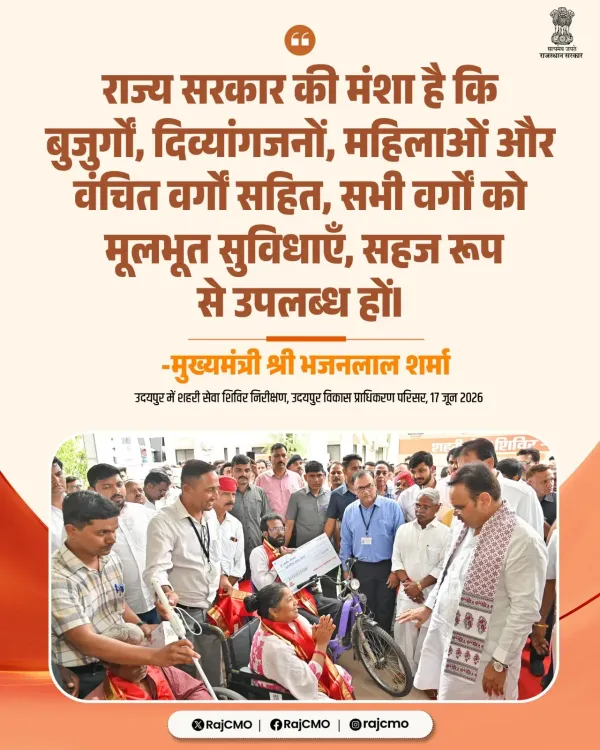
The Chief Minister's Office of Rajasthan, amplifying CM Bhajan Lal Sharma's message on 18 June 2026, declared that making basic facilities easily accessible to all sections of society is the state government's core intention, under the campaign hashtag #AapnoAgraniRajasthan.
Key Takeaways
The Chief Minister's Office of Rajasthan posted on 18 June 2026 reaffirming the government's intent to ensure basic services for all citizens.
CM Bhajan Lal Sharma , who took office in December 2023 , is the author of the statement amplified by the CMO.
The post uses the hashtag #आपणो_अग्रणी_राजस्थान , part of a broader state development branding campaign.
Key focus areas include drinking water, electricity, housing, and sanitation for rural households and marginalised communities .
Rajasthan participates in central schemes such as Jal Jeevan Mission alongside state-level welfare programmes.
State budget allocations for 2026-27 and assembly session updates are the next concrete benchmarks to watch.
The Chief Minister's Office of Rajasthan reaffirmed on Thursday, 18 June 2026 that the state government's core intent is to make essential services easily accessible to every section of society, amplifying a message from Chief Minister Bhajan Lal Sharma under the campaign hashtag #आपणो_अग्रणी_राजस्थान (Our Pioneering Rajasthan).
Context
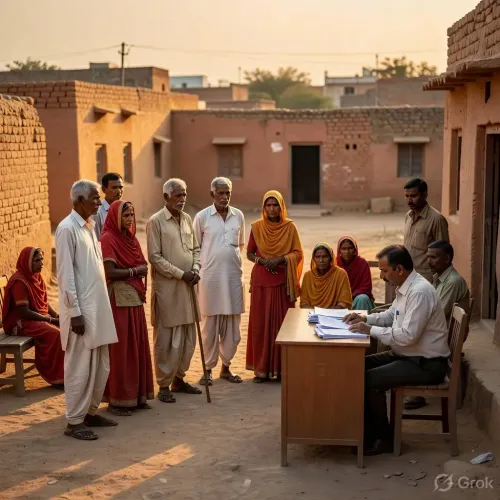
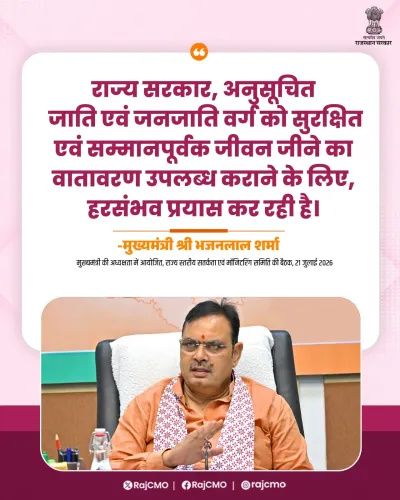
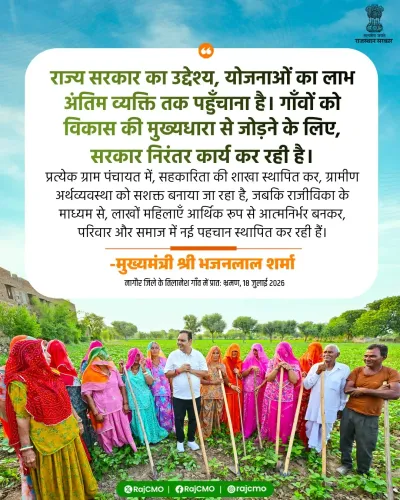
The post, shared from the official RajCMO handle, quotes the government's stated intent directly: 'सभी वर्गों को मूलभूत सुविधाएँ, सहज रूप से उपलब्ध हों, यही राज्य सरकार की मंशा है' — 'It is the intention of the state government that basic facilities are made easily available to all sections of society.' The message is attributed to CM Bhajan Lal Sharma, tagged as @BhajanlalBjp. The use of the hashtag #आपणो_अग्रणी_राजस्थान signals a broader branding effort around Rajasthan's development identity under the current administration.
Policy Backdrop
Bhajan Lal Sharma was elected Chief Minister of Rajasthan in December 2023 following the BJP's victory in the state assembly elections. Since assuming office, the administration has repeatedly emphasised last-mile delivery of basic services — including drinking water, electricity, housing, and sanitation — to rural households and marginalised communities across the state.
Rajasthan has historically been part of large central welfare programmes such as the Jal Jeevan Mission, which targets universal household tap-water connections, and various central and state housing schemes. The current government has continued this policy lineage while seeking to frame progress under its own developmental narrative. State budget allocations for 2026-27 and ongoing scheme rollouts remain key metrics for measuring delivery against these stated intentions.
Stakeholders and Impact
Rajasthan is among India's largest states by area, with a significant rural population and pockets of acute deprivation, particularly in desert and tribal belt districts. Rural households and marginalised communities — including Scheduled Castes, Scheduled Tribes, and economically weaker sections — stand as the primary intended beneficiaries of the government's universal basic-services agenda.
Welfare communication of this nature from a Chief Minister's Office typically precedes or accompanies scheme announcements, budget sessions, or district-level review meetings. The messaging reinforces accountability to citizens while also serving as a political signal ahead of any upcoming administrative or legislative milestones.
What's Next
Observers will watch Rajasthan's 2026-27 budget allocations and assembly session proceedings for concrete updates on how the government translates this stated intent into scheme funding and delivery targets. District-level reviews of ongoing basic-services programmes are also expected to provide a clearer picture of on-ground progress. If the administration backs this messaging with measurable targets and public dashboards, it could strengthen accountability mechanisms for welfare delivery across the state's 33 districts.
Point of View
Messaging around universal basic services serves a dual purpose: it aligns with the party's national 'sabka saath, sabka vikas' narrative and addresses Rajasthan's historically uneven service delivery record. The hashtag #AapnoAgraniRajasthan suggests a deliberate effort to build a state-specific brand around progress, echoing similar campaigns by other BJP-ruled states. The real test will come when budget allocations and scheme completion data are placed in the public domain.
NationPress
16 Sept 2026
Frequently Asked Questions
What did the Rajasthan Chief Minister's Office post on 18 June 2026?
The Rajasthan CMO shared a statement by CM Bhajan Lal Sharma affirming that the state government's intention is to make basic facilities easily available to all sections of society, posted under the hashtag #AapnoAgraniRajasthan.
Who is Bhajan Lal Sharma and when did he become Rajasthan Chief Minister?
Bhajan Lal Sharma is a BJP politician who became Chief Minister of Rajasthan in December 2023 following the party's victory in the state assembly elections.
What does #AapnoAgraniRajasthan mean?
The Hindi hashtag translates to 'Our Pioneering Rajasthan' and is used by the current state government as a branding campaign to highlight development and progress in the state.
Which welfare schemes cover basic services in Rajasthan?
Rajasthan participates in central programmes such as the Jal Jeevan Mission for tap-water connectivity, alongside state-level schemes addressing electricity, housing, and sanitation for rural and marginalised populations.
What should citizens watch for next regarding basic services in Rajasthan?
Key milestones include Rajasthan's 2026-27 budget allocations for welfare schemes and updates from assembly sessions or district-level reviews on the rollout of basic-services programmes.