CM Bhajan Lal Sharma orders quick power restoration, solar push
Synopsis
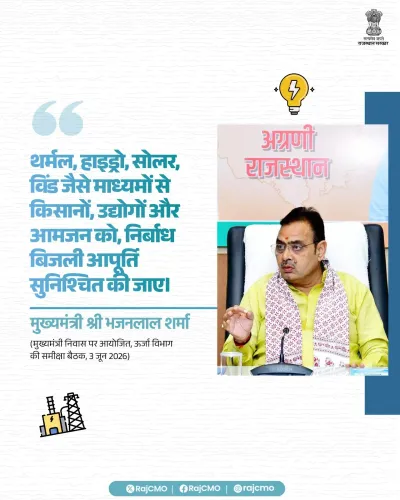
Rajasthan Chief Minister Bhajan Lal Sharma chaired a detailed review of the state's power sector, directing officials to ensure uninterrupted supply, expedite repairs to storm-damaged infrastructure and maximise the use of solar and renewable energy, with field-level accountability for transformer and line replacement.
Key Takeaways
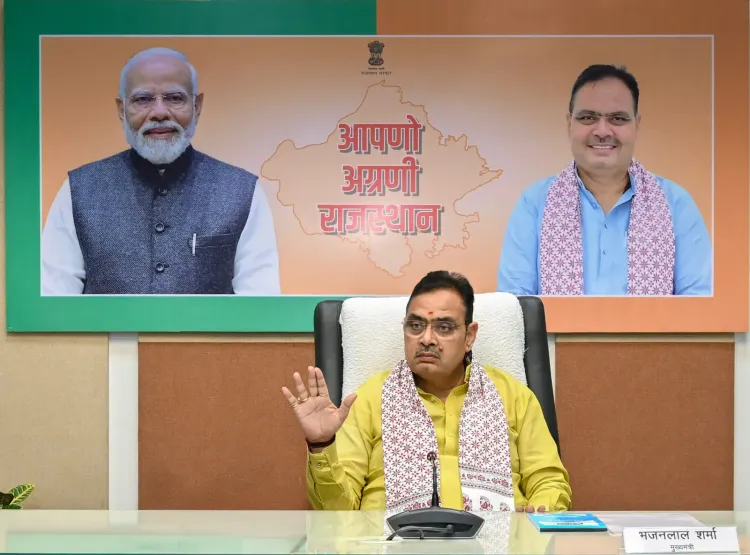
CM Bhajan Lal Sharma reviewed power generation, transmission, distribution and renewable projects at his Jaipur residence.
Officials directed to ensure uninterrupted electricity supply across Rajasthan.
Quick repair of storm-damaged power infrastructure ordered, with field-level accountability for transformer and line replacement.
Push for maximum use of solar and renewable energy and strengthening of energy infrastructure.
Regular monitoring of transmission and investment projects mandated.
CM said no negligence in providing uninterrupted power to citizens will be tolerated.
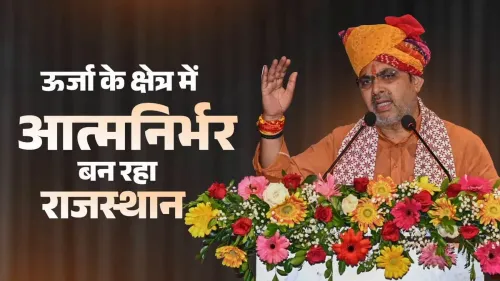
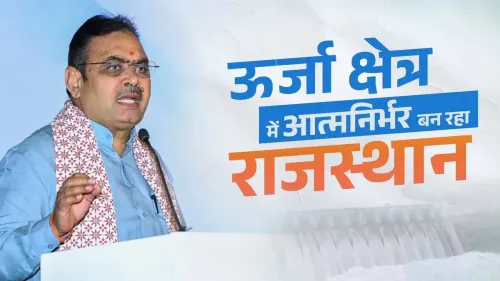
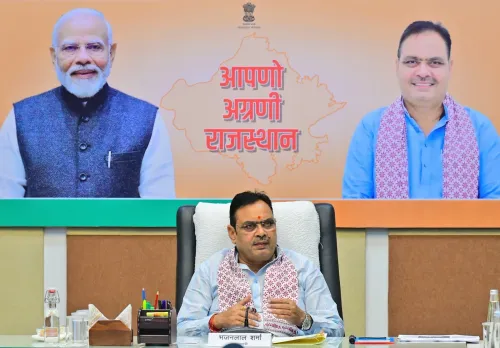
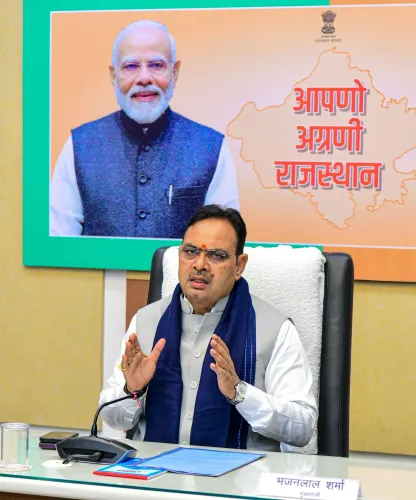
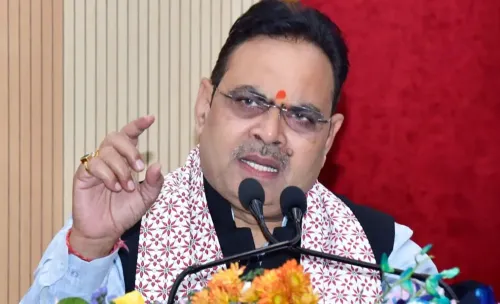
Rajasthan Chief Minister Bhajan Lal Sharma on Wednesday chaired a detailed review meeting with senior officials of the state energy department at the Chief Minister's residence in Jaipur, examining electricity generation, transmission, distribution and the progress of renewable energy projects. He directed officers to ensure uninterrupted power supply and to expedite repairs to electricity infrastructure damaged in recent storms, warning that lapses in restoring supply to affected households would not be tolerated.
Context
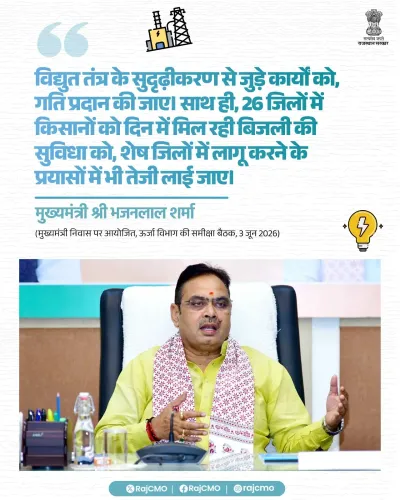
In his post on X, the Chief Minister said the meeting covered the 'status of power generation, transmission, distribution and supply in the state, along with the progress of renewable energy projects'. He instructed officials that 'प्रभावित क्षेत्रों में तत्काल आपूर्ति बहाल कर आमजन को राहत पहुंचाई जाए' (immediate supply must be restored in affected areas to bring relief to citizens) and that field-level accountability be fixed for the replacement of damaged transformers and lines.
The review came against the backdrop of recurring storm-related disruptions that typically affect rural feeders in Rajasthan during the pre-monsoon and monsoon months. Sharma underlined that the energy sector is the 'foundation of the state's development' and that no negligence in providing uninterrupted electricity to the public would be accepted.
Policy backdrop
Rajasthan holds among the highest solar potentials in India and hosts the Bhadla Solar Park in Jodhpur district, considered the world's largest solar park, developed in phases since 2015 under central and state renewable programmes. The Rajasthan Solar Energy Policy 2019 set a target of 30 GW of renewable capacity by 2024-25, with incentives for utility-scale parks and rooftop solar.
These state-level efforts feed directly into India's National Solar Mission, first launched in 2010 and revised in 2015, and into the country's 500 GW non-fossil capacity target for 2030. Sharma's instruction for 'maximum use of solar and renewable energy', strengthening of energy infrastructure and 'regular monitoring of transmission and investment projects' aligns with that trajectory.
Stakeholders and impact
For consumers in storm-hit pockets — particularly farmers dependent on agricultural feeders and small businesses in semi-urban belts — the directive on quick restoration of supply and replacement of damaged transformers is the most immediate takeaway. Field engineers and discom staff have been put on notice that lapses will be tracked at the local level.
For renewable developers and transmission contractors, the emphasis on 'regular monitoring of transmission and investment projects' signals continued state attention to clearance bottlenecks. Rajasthan's grid integration of variable solar generation depends on timely commissioning of evacuation corridors, an area the state has flagged repeatedly in review meetings.
What's next
The energy department is expected to firm up timelines for completing repair work in storm-affected districts and report back on the pace of transformer and line replacements. Quarterly progress on renewable project commissioning, along with any fresh transmission corridor tenders or investment agreements, will indicate how closely the directives translate into measurable outcomes.
For Sharma's government, balancing immediate supply reliability with the longer-term renewable build-out remains a defining test — one that ties Rajasthan's domestic power management directly to India's national clean energy commitments.
Point of View
Where storm-season disruptions and the renewable build-out routinely share the same agenda. By pairing a sharp directive on field-level accountability with a renewed emphasis on solar and transmission monitoring, Sharma is signalling that reliability and the clean-energy transition must move in tandem — not sequentially. The political stakes are tangible: power outages in rural belts have historically cost ruling parties dearly. How quickly transformer replacements and evacuation corridors materialise will shape both consumer perception and Rajasthan's contribution to India's 500 GW non-fossil target.
NationPress
18 Oct 2026
Frequently Asked Questions
What did CM Bhajan Lal Sharma review in the energy meeting?
He reviewed Rajasthan's power generation, transmission, distribution and supply, along with the progress of renewable energy projects, at a meeting with energy department officials at the Chief Minister's residence.
What did the Rajasthan CM order on storm-damaged power infrastructure?
Sharma directed officials to expedite repairs to storm-damaged electricity infrastructure, restore supply immediately in affected areas and ensure field-level accountability for replacing damaged transformers and lines.
What is Rajasthan's renewable energy target?
Under the Rajasthan Solar Energy Policy 2019, the state set a target of 30 GW of renewable capacity by 2024-25, contributing to India's broader 500 GW non-fossil goal for 2030.
Where is the Bhadla Solar Park located?
The Bhadla Solar Park, considered the world's largest solar park, is located in Jodhpur district of Rajasthan and has been developed in phases since 2015.
Who is Bhajan Lal Sharma?
Bhajan Lal Sharma is the Chief Minister of Rajasthan and a BJP leader who assumed office in December 2023 after the state assembly elections.