Dr. Jitendra Singh tours RISE Conclave 2026 in Bengaluru
Synopsis
Union Science and Technology Minister Dr. Jitendra Singh toured the RISE Conclave 2026 in Bengaluru on 13 June, joined by the heads of CSIR and ISRO. The two-day exhibition showcased cutting-edge innovations in Aerospace, AI and Food Technology, reflecting India's push for an innovation-driven, self-reliant economy.
Key Takeaways
Jitendra Singh , Union Science and Technology Minister, personally toured the RISE Conclave 2026 exhibition in Bengaluru on 13 June 2026 .
He was accompanied by CSIR Director General Dr.
Kalaiselvi and ISRO Chairman Dr.
Narayanan , alongside other senior officials.
The two-day exhibition focused on three thematic pillars: Aerospace , Artificial Intelligence and Food Technology .
The conclave aims to foster synergy between research institutions , startups and industry , in line with the government's self-reliance agenda.
The initiative connects to the Startup India (2016) and Atmanirbhar Bharat Abhiyan (2020) policy frameworks promoting lab-to-market technology transfer.
The next Union Budget is expected to be a key indicator of revised R&D expenditure targets and fresh technology-transfer guidelines.
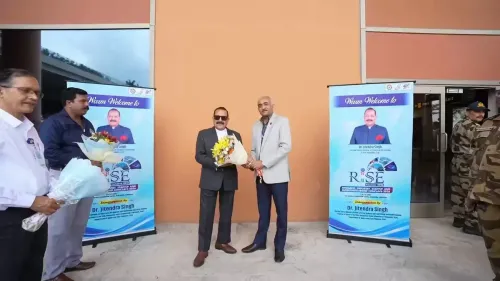
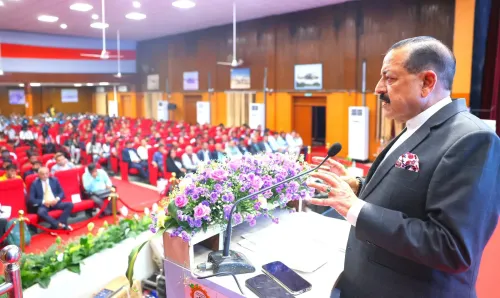
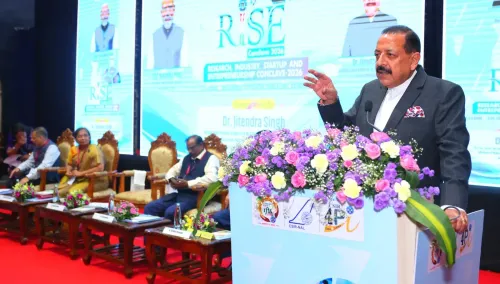
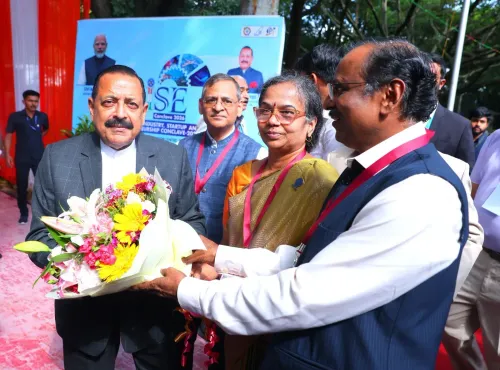
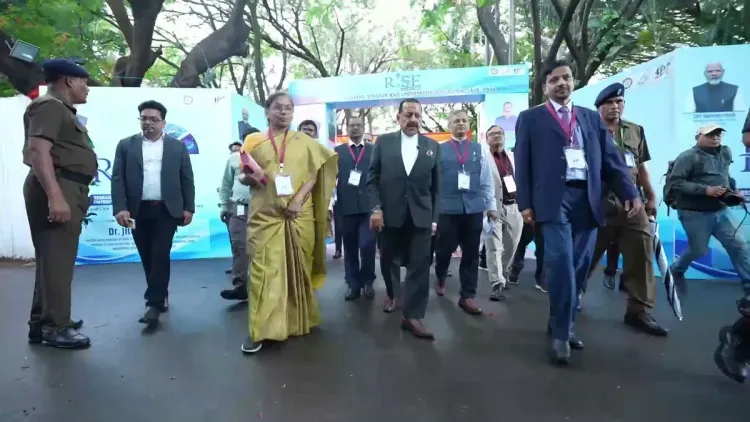
Union Science and Technology Minister Dr. Jitendra Singh walked through the two-day exhibition of the RISE Conclave 2026 — the Research, Industry, StartUp, Entrepreneurship Conclave — in Bengaluru on Saturday, 13 June 2026, accompanied by the heads of CSIR and ISRO and other senior officials.
Context
The minister toured the exhibition alongside Director General of CSIR Dr. N. Kalaiselvi, Chairman of ISRO Dr. V. Narayanan, Director of CSIR-NAL Dr. Abhay A. Pashilkar, and Director of CSIR-CFTRI Dr. Giridhar Parvatam. The conclave brought together researchers, industry players and startups under one roof, with focused themes spanning Aerospace, Artificial Intelligence and Food Technology.
Dr. Jitendra Singh described witnessing 'the growing synergy between research, entrepreneurship and industry' as encouraging, and linked the initiative to the vision of Prime Minister Narendra Modi to build 'an innovation-driven, self-reliant India.'
Policy Backdrop
The RISE Conclave sits within a long policy lineage aimed at bridging India's laboratory output and commercial markets. The Startup India initiative, launched in 2016, first formalised the architecture for linking public research institutions with entrepreneurs and industry. The Atmanirbhar Bharat Abhiyan, announced in 2020, added dedicated technology self-reliance verticals that gave fresh urgency to lab-to-market transfers from bodies such as CSIR and ISRO.
The choice of Bengaluru as the venue is itself a policy signal. India's primary technology and aerospace cluster hosts major public laboratories, defence public-sector units and a dense startup ecosystem, making it the natural anchor for an event that seeks to convert R&D outputs into commercial products.
The three thematic pillars of the conclave — Aerospace, AI and Food Technology — mirror sectoral priorities visible in the National AI Mission (built on the National Strategy for AI released in 2018) and the ongoing Gaganyaan human spaceflight programme, in which both ISRO and CSIR-NAL play critical roles.
Stakeholders and Impact
CSIR, India's largest publicly funded R&D network under the Ministry of Science and Technology, and ISRO, the national space agency, are the two institutional anchors whose presence at the conclave signals high-level governmental commitment. Their directors' participation alongside the minister underscores that the event is positioned as more than a ceremonial showcase.
Startups and early-stage entrepreneurs stand to benefit most directly from such conclaves, which typically facilitate technology-transfer agreements and investor introductions. Food-technology firms gain visibility alongside aerospace and AI companies, reflecting a deliberate effort to diversify the innovation agenda beyond traditional high-tech sectors.
What's Next
The broader policy community will watch the next Union Budget for revised R&D expenditure targets and any fresh guidelines on lab-to-market technology transfers that may follow from the conclave's outcomes. If the RISE Conclave 2026 produces formal technology-transfer agreements or startup-funding announcements, those details are expected to be disclosed in the weeks ahead. The sustained focus on aerospace, AI and food technology suggests these three verticals will remain central to India's science and innovation agenda through the remainder of the decade.
Point of View
AI and Food Technology are not accidental: they map directly onto flagship programmes such as Gaganyaan, the National AI Mission and agricultural self-sufficiency goals, signalling that the Modi government's innovation agenda is consolidating rather than expanding into new territory. The conclave format — bringing research, startups and industry under one roof — has become the preferred instrument for converting lab outputs into commercial products, and its recurrence suggests the government views this model as institutionally validated.
NationPress
27 Oct 2026
Frequently Asked Questions
What is the RISE Conclave 2026?
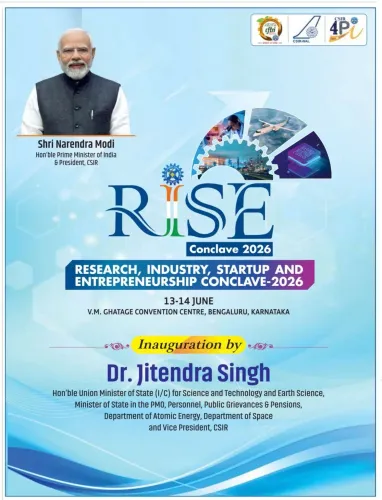
RISE Conclave 2026 stands for Research, Industry, StartUp, Entrepreneurship Conclave 2026. It is a two-day event held in Bengaluru to showcase cutting-edge innovations and facilitate synergy between research institutions, startups and industry, with focused themes of Aerospace, AI and Food Technology.
Who attended the RISE Conclave 2026 from the government?
Union Science and Technology Minister Dr. Jitendra Singh attended the conclave along with CSIR Director General Dr. N. Kalaiselvi, ISRO Chairman Dr. V. Narayanan, CSIR-NAL Director Dr. Abhay A. Pashilkar and CSIR-CFTRI Director Dr. Giridhar Parvatam.
What is CSIR and what role does it play in India's R&D?
CSIR, the Council of Scientific and Industrial Research, is India's largest publicly funded R&D network, operating under the Ministry of Science and Technology. It runs dozens of national laboratories and is central to the government's efforts to transfer technology from labs to commercial markets.
How does the RISE Conclave relate to Atmanirbhar Bharat?
The conclave directly reflects the Atmanirbhar Bharat Abhiyan, launched in 2020, which set up dedicated technology self-reliance verticals to boost indigenous R&D and manufacturing. Events like RISE are part of the broader policy architecture to convert public research outputs into commercially viable Indian products.
Why was the RISE Conclave 2026 held in Bengaluru?
Bengaluru is India's primary technology and aerospace cluster, home to major public laboratories, defence public-sector units and a dense startup ecosystem. Hosting the conclave there aligns with the government's policy of clustering high-value R&D activity near existing industrial and academic infrastructure.