RISE Conclave 2026: India pushes ease of research, innovation for industry
Synopsis
At RISE Conclave 2026 in Bengaluru, Science Minister Dr Jitendra Singh drew a clear line: India's research era is over if labs keep working in silos. With 800-plus technologies listed on the CSIR portal and a lithium battery facility producing 1,000 cells a day, the government is signalling that public science must now earn its keep through commercial outcomes — and industry must come in at day one, not after the fact.
Key Takeaways
Dr Jitendra Singh addressed the RISE Conclave 2026 industry session in Bengaluru on 14 June 2026 .
The CSIR Technology Showcase Portal currently lists more than 800 technologies available for industry adoption.
The minister called for industry collaboration to begin at the conceptualisation stage of research, not after technologies mature.
A lithium battery manufacturing facility with a capacity of 1,000 cells per day was cited as a model of public scientific infrastructure serving industry.
Dedicated incubation mechanisms are being developed for startups in frontier technology domains.
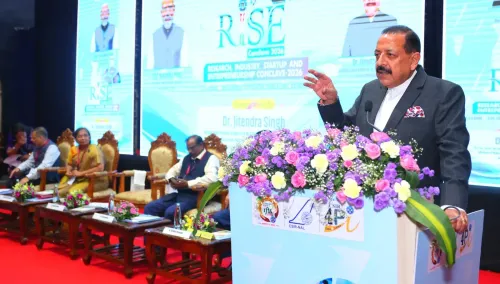
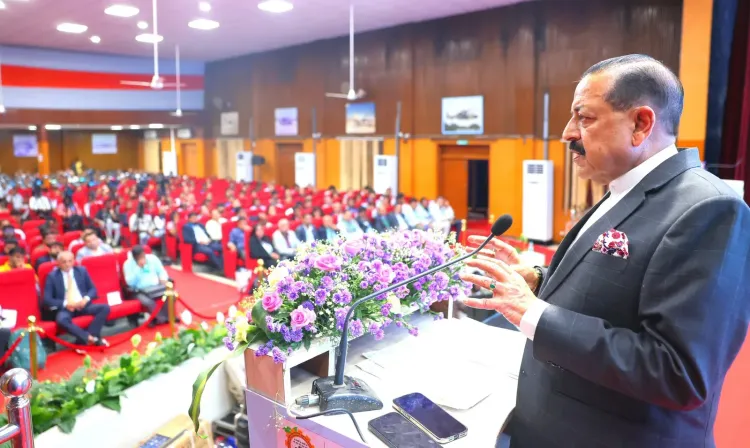
Union Minister of State (Independent Charge) for Science and Technology Dr Jitendra Singh on 14 June 2026 called for a fundamental shift in how India approaches scientific research — one where innovation is measured not just by laboratory output but by its societal and economic impact at scale. Speaking at an industry interaction session on the sidelines of the RISE Conclave 2026 in Bengaluru, he urged industry representatives to openly articulate the barriers they face when engaging with publicly funded research institutions.
Key Developments at RISE Conclave 2026
Dr Singh underscored that the government is committed to building an enabling innovation ecosystem that bridges the gap between research and real-world deployment. He stressed that collaboration between laboratories, academic institutions, and industry must begin at the conceptualisation stage of research projects — not after technologies have already matured — so that scientific pursuits align with market requirements from the outset.
He informed participants that the CSIR Technology Showcase Portal currently hosts more than 800 technologies, offering industries, entrepreneurs, and startups a ready platform to identify solutions suited to their needs and accelerate technology adoption.
Leveraging Public-Funded Infrastructure
The minister cited examples from CSIR laboratories to illustrate how sophisticated facilities built through public investment should increasingly function as common platforms accessible to innovators and emerging-sector industries. One such example was a lithium battery manufacturing facility with a production capacity of around 1,000 cells per day, demonstrating how scientific infrastructure can support both established industries and new enterprises in developing indigenous technological capabilities.
He also highlighted that dedicated incubation mechanisms are being developed to nurture startups operating in frontier technology domains — a signal that the government sees deep-tech startups as critical vehicles for translating research into national development outcomes.
Why Early Industry Engagement Matters
Dr Singh argued that early industry involvement in research projects would help facilitate technology transfer, improve commercial success rates, and ensure that innovations move beyond the proof-of-concept stage to reach end users at scale. This comes amid broader government efforts to improve access to indigenous technologies developed through public-funded research, with the CSIR portal serving as a key digital bridge between researchers and industry.
Notably, India's push to link scientific output to economic outcomes mirrors global trends where research funding bodies increasingly demand demonstrable impact metrics alongside academic outputs.
What Comes Next
The government's direction suggests that public research institutions will face growing expectations to co-develop projects with industry partners from inception. Startups and entrepreneurs are being actively encouraged to engage with the CSIR Technology Showcase Portal to identify commercially viable technologies. Deeper integration between research institutions, industry, and the startup ecosystem is expected to be a recurring policy theme in the months ahead.
Point of View
Patents, peer review — not commercial milestones. Asking them to co-develop with industry from day one requires not just policy intent but a reworking of faculty incentives, IP-sharing norms, and procurement rules. The CSIR portal's 800-plus technologies are a useful catalogue, but the real bottleneck is rarely discovery — it is the legal and financial friction of actually transferring technology from a government lab to a private entity. Until that friction is addressed with binding timelines and dispute mechanisms, the exhortations risk remaining aspirational.
NationPress
19 Sept 2026
Frequently Asked Questions
What is the RISE Conclave 2026?
The RISE Conclave 2026 is an industry and research interaction event held in Bengaluru where government officials, scientists, and industry representatives discuss strategies to accelerate technology commercialisation and innovation in India.
What is the CSIR Technology Showcase Portal?
The CSIR Technology Showcase Portal is a government-run digital platform that currently hosts more than 800 technologies developed through public-funded research. It allows industries, entrepreneurs, and startups to identify and adopt indigenous solutions suited to their requirements.
Why is the government pushing for early industry engagement in research?
The government argues that involving industry at the conceptualisation stage of research projects helps align scientific work with market needs, facilitates smoother technology transfer, and improves the chances of commercial success — ensuring innovations move beyond proof-of-concept to reach end users at scale.
What was the lithium battery facility example cited by Dr Jitendra Singh?
Dr Singh cited a lithium battery manufacturing facility established through public investment with a production capacity of around 1,000 cells per day as an example of how scientific infrastructure can support both established industries and emerging enterprises in building indigenous technological capabilities.
Who is affected by these policy directions?
Industries, startups, entrepreneurs, and academic and research institutions across India are directly affected. Startups in frontier technology domains stand to benefit from dedicated incubation mechanisms, while established industries are encouraged to engage with the CSIR portal for technology adoption.