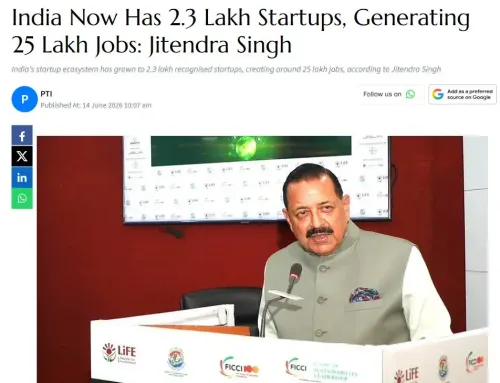
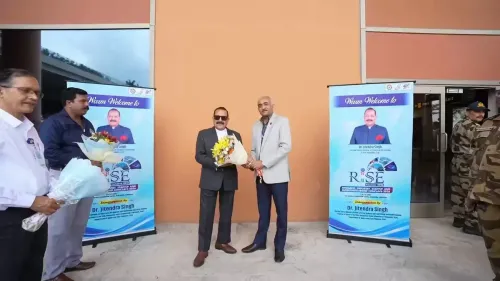
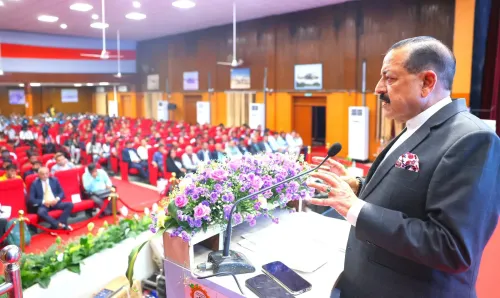
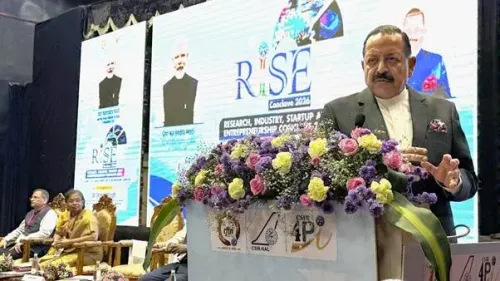
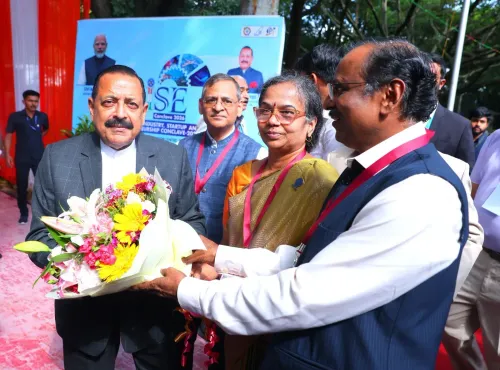
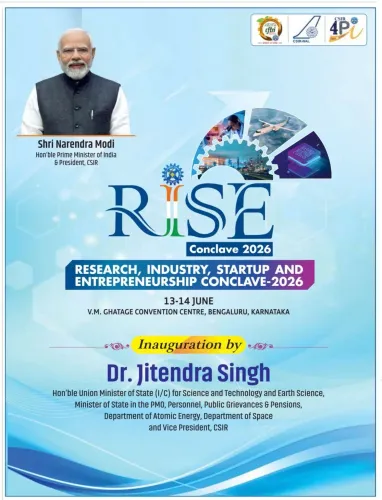
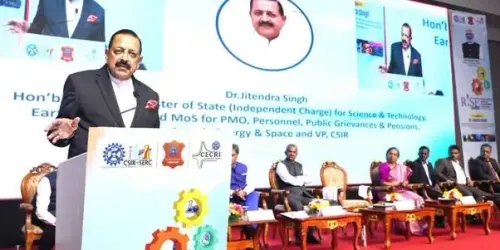
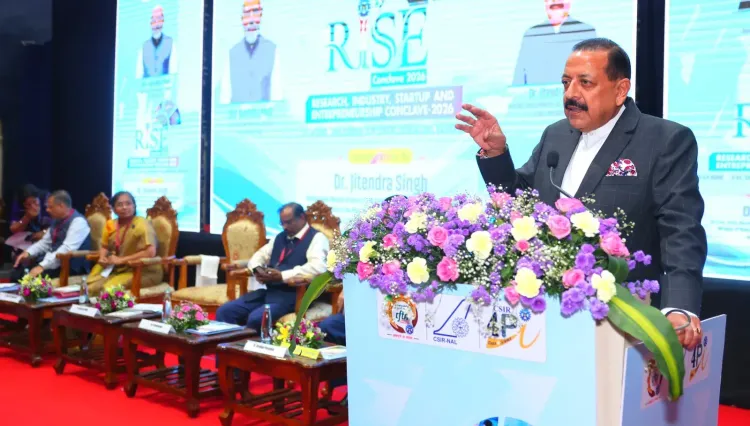
Dr. Jitendra Singh addresses RISE Conclave 2026 in Bengaluru
Synopsis
Union Science and Technology Minister Dr. Jitendra Singh inaugurated the RISE Conclave 2026 in Bengaluru, highlighting India's rise to 2.3 lakh startups and 24 lakh jobs, geographic spread into Tier-2 and Tier-3 cities, and the government's push to deepen public-private partnerships in space and biotech.
Key Takeaways
Jitendra Singh delivered the inaugural address at the RISE Conclave 2026 in Bengaluru on 13 June 2026 .
India's startup ecosystem has grown from 350–400 startups in 2014 to nearly 2.3 lakh startups , making it the world's third-largest .
The ecosystem now generates over 24 lakh jobs across the country.
50 per cent of India's startups are now originating from Tier-2 and Tier-3 cities .
The government is expanding PPP models in space and biotech sectors to accelerate economic growth.
The RISE Conclave aims to unite Research, Industry, Startups and Entrepreneurship stakeholders on a single collaborative platform.
Union Science and Technology Minister Dr. Jitendra Singh delivered the inaugural address at the RISE Conclave 2026 — standing for Research, Innovation, StartUp and Entrepreneurship — held in Bengaluru on Saturday, 13 June 2026, calling for deeper collaboration among startups, industry, investors, academia and policymakers.
Context
Speaking at the conclave, Dr. Singh outlined the core objective of the event: 'The basic objective of the RISE Conclave is to bring together the four pillars of Research, Industry, Start-ups and Entrepreneurship on one platform, to facilitate collaborations among startups, industry, investors, academia and policymakers for long-term sustainability.' The conclave was convened in Bengaluru, India's foremost technology and startup hub, to serve as a convergence point for key stakeholders across the innovation economy.
Dr. Singh highlighted a dramatic transformation in India's startup landscape, noting that the country's ecosystem comprised only around 350–400 startups in 2014 but has since expanded to nearly 2.3 lakh startups, making India the world's third-largest startup ecosystem generating over 24 lakh jobs. He attributed this surge to Prime Minister Narendra Modi's call from the Red Fort, which galvanised entrepreneurial momentum across the country.
Policy Backdrop
The growth trajectory Dr. Singh described aligns with the Startup India initiative, formally launched in January 2016 following the Prime Minister's Red Fort address. The flagship scheme simplified registration procedures, extended tax benefits and improved funding access for new ventures, helping catalyse the ecosystem's expansion over the past decade.
The minister also pointed to the government's accelerated push into sectors historically underexplored by private capital. He cited space and biotech as two sectors that have witnessed rapid economic growth following the expansion of the Public-Private Partnership (PPP) model. The Indian National Space Promotion and Authorisation Centre (IN-SPACe), created in 2020, has been central to opening the space sector to private players, while similar frameworks have been extended to biotechnology.
'The government is also very forthcoming in engaging the private sector in a big way, because an integrated approach is essential for achieving global standards,' Dr. Singh said, underscoring that state-led and market-led efforts must work in tandem to sustain India's competitive position globally.
Stakeholders and Impact
One of the most significant data points highlighted by the minister was the geographic spread of India's startup growth. 50 per cent of India's startups are now emerging from Tier-2 and Tier-3 cities, signalling that entrepreneurship is no longer the preserve of metropolitan centres like Bengaluru, Mumbai or Delhi.
Dr. Singh emphasised that entrepreneurship is now 'accessible to individuals with commitment, passion and technological aptitude, regardless of their location or formal educational qualification.' This framing positions the startup ecosystem as an inclusive economic engine, with the potential to absorb talent from smaller towns and reduce urban migration pressures. Startup founders, small-city entrepreneurs and private sector investors stand as the primary beneficiaries of the policy architecture the minister described.
What's Next
The RISE Conclave 2026 is expected to generate actionable recommendations on deepening collaboration between research institutions and private enterprise, particularly in deep-tech domains. Attention will now turn to whether the government translates the conclave's outcomes into updated PPP guidelines for sectors such as space and biotech, and whether fresh fiscal or regulatory measures in the 2026-27 Union Budget provide further momentum to the startup ecosystem.
With India already the world's third-largest startup ecosystem, the government's stated priority of integrating research, industry and entrepreneurship on a single platform suggests the next phase of policy will focus on quality, global competitiveness and sectoral depth — not just headline numbers.
Point of View
This event could mark the beginning of a more targeted, sector-specific phase of India's startup policy.
NationPress
13 Sept 2026
Frequently Asked Questions
What is the RISE Conclave 2026?
The RISE Conclave 2026 is a national-level event held in Bengaluru that brings together stakeholders from Research, Industry, Startups and Entrepreneurship on a single platform to foster collaboration among founders, investors, academia and policymakers.
How many startups does India have in 2026?
According to Union Minister Dr. Jitendra Singh's address at the RISE Conclave 2026, India has nearly 2.3 lakh startups, making it the world's third-largest startup ecosystem.
How many jobs has India's startup ecosystem created?
Dr. Jitendra Singh stated at the RISE Conclave 2026 that India's startup ecosystem has generated over 24 lakh jobs across the country.
Are startups growing in smaller Indian cities?
Yes. Dr. Jitendra Singh highlighted that 50 per cent of India's startups are now emerging from Tier-2 and Tier-3 cities, reflecting a significant geographic expansion of the entrepreneurship ecosystem beyond major metros.
What sectors is India focusing on under the PPP model for startups?
Dr. Jitendra Singh specifically cited the space and biotech sectors as two areas where the government has accelerated the Public-Private Partnership model, citing rapid economic growth in both domains.