Pralhad Joshi Speaks at ISA SHINE Centre and Academy Launch

Synopsis
Union Minister Pralhad Joshi spoke live at the launch of the International Solar Alliance's Global Capability Centre SHINE and ISA Academy on November 4, 2026, marking a new phase of technical capacity building for the intergovernmental solar body headquartered in Gurugram.
Key Takeaways
Union Minister Pralhad Joshi addressed the launch of the ISA Global Capability Centre SHINE and ISA Academy live on November 4, 2026 .
The International Solar Alliance was co-launched by India and France at COP21 in Paris in 2015 and is headquartered in Gurugram, India .
SHINE and the ISA Academy are designed to close the technical and institutional capability gap for ISA member nations, particularly in the Global South .
India's solar push traces back to its National Solar Mission of 2010 , with the ISA serving as the multilateral extension of that domestic ambition.
Rollout timelines and founding partnerships announced at the event are the key details to watch as the centres begin operations.
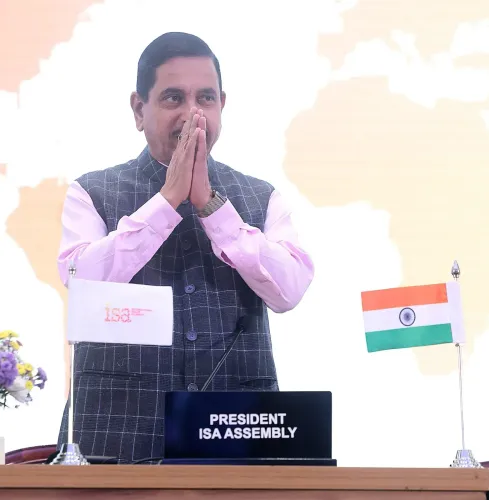
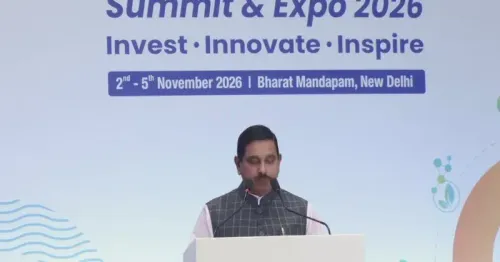
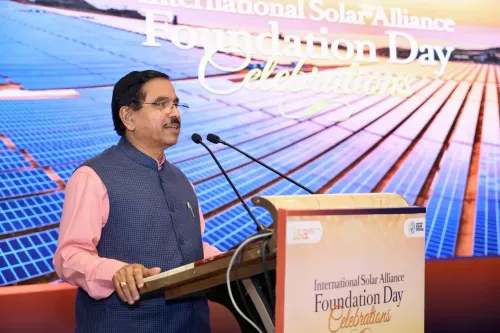
Two new pillars of global solar diplomacy went live on Wednesday, November 4, 2026, as Union Minister of New and Renewable Energy Pralhad Joshi addressed the launch of the International Solar Alliance's Global Capability Centre SHINE and the ISA Academy — institutions designed to sharpen the technical and institutional muscle of the world's most ambitious clean-energy alliance.
What SHINE and the ISA Academy bring to the table
The International Solar Alliance (ISA), born from a joint initiative by India and France at COP21 in Paris in November 2015, was built on a single audacious premise: bring the sun-rich nations of the tropical belt together to slash the cost of solar and accelerate deployment at scale. Its headquarters in Gurugram, India, has since grown into a nerve centre for intergovernmental solar cooperation spanning over 100 member countries.
The Global Capability Centre SHINE and the ISA Academy represent the alliance's next gear — moving from policy frameworks and diplomatic pledges into hands-on technical capacity building and institutional knowledge transfer for member nations. The specifics of their mandates, partnerships, and rollout timelines were the focus of Wednesday's launch event, where Joshi spoke live.
Joshi's role at the intersection of renewables and global solar governance
Pralhad Joshi holds the renewables brief in the Union Cabinet, making him India's principal voice on platforms like the ISA. His presence at the launch underscores the political weight New Delhi continues to place on the alliance — an institution India conceived, hosts, and has used as a vehicle to project climate leadership to the Global South.
India's domestic solar story runs in parallel: the country's solar capacity additions have consistently ranked among the largest in the world, backed by the National Solar Mission first announced in 2010. The ISA, in this frame, is not just foreign policy — it is an extension of that domestic ambition onto a multilateral stage.
Why capability centres matter for ISA's next phase
For many ISA member countries — particularly smaller economies across Africa, the Pacific, and Southeast Asia — the gap between signing a solar agreement and actually deploying panels at scale is a capability gap. Institutions like SHINE and the ISA Academy are engineered to close precisely that distance: training engineers, financing specialists, and policy planners who can take solar projects from blueprint to grid.
Rollout timelines, founding partnerships, and the first cohort of countries set to benefit from these centres are the numbers to watch as the launch details emerge from Wednesday's event.
The world's solar alliance just handed its members a new set of tools — now comes the harder work of using them.
Point of View
Embedding New Delhi at the centre of global solar governance rather than merely participating in it. For Joshi, whose portfolio spans both domestic renewables and the ISA relationship, the launch is a chance to demonstrate that India's climate commitments have institutional depth, not just headline ambition. The capability-centre model also signals a maturing of the ISA from a declaration-signing forum into an operational body, a shift that could significantly expand its relevance with smaller member economies. Watch whether SHINE attracts co-funding from multilateral development banks — that would be the clearest sign the initiative has genuine traction beyond the launch optics.
NationPress
4 Nov 2026
Frequently Asked Questions
What is the ISA Global Capability Centre SHINE?
SHINE is a new Global Capability Centre launched by the International Solar Alliance to build technical and institutional capacity among its member countries, particularly those in the developing world. Specific details of its mandate and partnerships were announced at the November 4, 2026 launch event.
What is the ISA Academy?
The ISA Academy is a training and knowledge institution launched alongside SHINE under the International Solar Alliance, aimed at equipping engineers, policy planners, and finance specialists in member nations to accelerate solar energy deployment.
What is the International Solar Alliance and where is it based?
The International Solar Alliance is an intergovernmental organisation launched by India and France at COP21 in Paris in November 2015. It is headquartered in Gurugram, India, and brings together over 100 member countries to promote solar energy in tropical nations.
What is Pralhad Joshi's role in India's renewable energy sector?
Pralhad Joshi is India's Union Minister of New and Renewable Energy, as well as Minister of Consumer Affairs, Food and Public Distribution. As the renewables minister, he is India's principal government voice on platforms like the International Solar Alliance.
How does the ISA relate to India's domestic solar ambitions?
India's solar push began with its National Solar Mission in 2010. The ISA, which India co-founded and hosts, functions as the multilateral extension of that ambition — using diplomatic and technical cooperation to scale solar energy across the Global South while reinforcing India's climate leadership credentials.