CM Yogi Hits Back at Akhilesh Over 'Revenge' Remark
Synopsis
UP Chief Minister Yogi Adityanath rebuked SP president Akhilesh Yadav over an alleged 'next generation will take revenge' remark, invoking the 2014 national mandate and BJP's 2017 UP victory as proof that democracy delivers change — not vendetta.
Key Takeaways
CM Yogi Adityanath publicly countered a reported statement by Samajwadi Party president Akhilesh Yadav in which Yadav allegedly said the next generation would avenge 'every lathi and every wound.' Yogi addressed Akhilesh as 'SP ke babua' and argued that in a democracy, the public delivers change — not revenge.
He cited the 2014 general elections and the 2017 Uttar Pradesh assembly elections as examples of voter-driven transformation.
The 2017 UP elections ended the Samajwadi Party's five-year government and brought Yogi Adityanath to power as Chief Minister.
The exchange is widely seen as early positioning ahead of the 2027 Uttar Pradesh assembly elections .
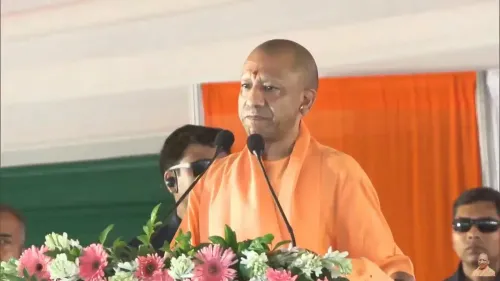
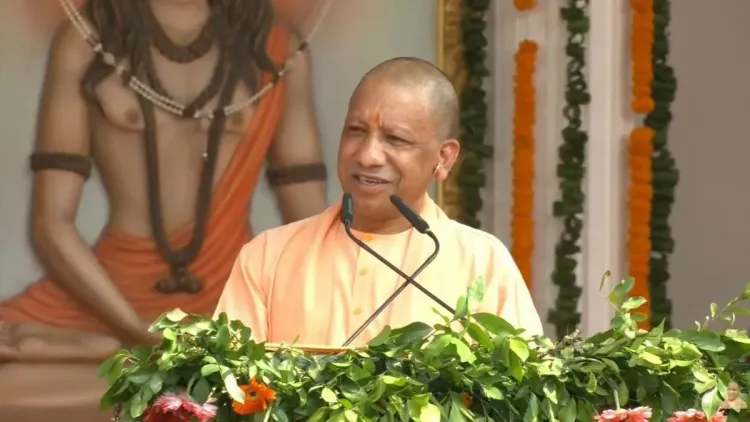
A single word — badla (revenge) — has reignited one of Uttar Pradesh's most combustible political rivalries. Uttar Pradesh Chief Minister Yogi Adityanath fired back at Samajwadi Party president Akhilesh Yadav on Wednesday, 4 November 2026, after Yadav reportedly declared that the next generation would avenge 'every lathi blow and every wound' — a statement the Chief Minister wasted no time in turning into a political teachable moment.
Posting on X, CM Yogi addressed Akhilesh with a pointed jab, calling him 'Samajwadi Party ke babua' — a colloquial term roughly meaning 'the SP's young heir' — and said, 'In a democracy, the public doesn't take revenge; they bring change.' He then cited two elections to make his case: the 2014 general elections, when voters swept out the decade-long Congress-led UPA government at the national level, and the 2017 Uttar Pradesh assembly elections, when the BJP ended Samajwadi Party's five-year rule in the state and installed Yogi Adityanath as Chief Minister.
The 'Revenge' Remark That Started It
According to CM Yogi's post, the SP chief told supporters that the 'next generation will settle the score for every lathi and every wound.' The statement — emotionally charged and openly combative — handed the BJP an opening it seized immediately. By framing Akhilesh's words as a threat and contrasting them with democratic norms, Yogi recast the exchange from a political grievance into a question of democratic values. The move is a classic BJP counter-narrative pivot: shift from the opposition's emotional register to an institutional one.
2014 and 2017 as BJP's Rhetorical Anchors
The two elections Yogi invoked are not random. 2014 was the year the BJP under Narendra Modi delivered a decisive national mandate that ended UPA rule — a moment BJP leaders return to repeatedly as proof that the electorate, not the party, drives transformation. 2017 was the year UP voters handed the BJP a historic majority, ending the Samajwadi Party government led by Akhilesh Yadav and setting up Yogi Adityanath's tenure. Together, they form the BJP's core argument: that change in India is bottom-up, not engineered by dynastic promise or inter-generational score-settling.
What This Signals Ahead of 2027
The sharpness of this exchange matters because Uttar Pradesh assembly elections are due in 2027. Both parties are already positioning — the SP attempting to build emotional solidarity around a narrative of grievance, the BJP countering with a governance-and-mandate frame. With India's most populous state at stake, this verbal skirmish on X is a preview of the battle lines that will define the next campaign season. Watch for the SP's formal response and whether this escalates into a larger war of rallies and counter-rallies in the weeks ahead.
Point of View
Reframe it as an affront to democratic norms rather than engaging on its merits. By invoking 2014 and 2017 — both BJP landmarks — the CM simultaneously neutralised Akhilesh's grievance narrative and planted an early 2027 election-cycle benchmark. The 'babua' jibe also carries a deliberate subtext, reinforcing the BJP's long-running messaging that the SP is a family dynasty rather than a democratic outfit. With UP elections still over a year away, the intensity of this exchange suggests both sides are treating the pre-campaign window as already open.
NationPress
4 Nov 2026
Frequently Asked Questions
What did Akhilesh Yadav say about the next generation taking revenge?
According to CM Yogi Adityanath's post, SP president Akhilesh Yadav reportedly said that the next generation would take revenge for 'every lathi blow and every wound.' The SP has not independently verified this characterisation.
Why did CM Yogi call Akhilesh 'babua'?
'Babua' is a colloquial Hindi term for a young heir or scion. Yogi used it pointedly to reinforce BJP's narrative that the Samajwadi Party is run as a family dynasty rather than a democratic political organisation.
What happened in the 2017 UP elections that CM Yogi referenced?
In the 2017 Uttar Pradesh assembly elections , the BJP won a decisive majority, ending the Samajwadi Party government led by Akhilesh Yadav and paving the way for Yogi Adityanath to become Chief Minister.
What is the significance of this political spat for the 2027 UP elections?
Uttar Pradesh assembly elections are scheduled for 2027 . The sharp exchange signals that both BJP and SP are already testing their campaign narratives — the SP around emotional grievance, and the BJP around democratic legitimacy and governance record.
What was the BJP's argument about 'change versus revenge' in UP politics?
CM Yogi argued that in a democracy, it is the public — not a political dynasty or its next generation — that drives change, citing the 2014 national elections and the 2017 UP elections as proof of voter-led mandates.