CM Yogi Hits Congress Over Emergency Legacy
Synopsis
Uttar Pradesh Chief Minister Yogi Adityanath accused Congress of hypocrisy, saying the party that imposed the 1975 Emergency has no standing to lecture India on democratic values. The post renews a long-running BJP counter-narrative against opposition criticism.
Key Takeaways
CM Yogi Adityanath posted on 4 November 2026 accusing Congress of hypocrisy on democracy.
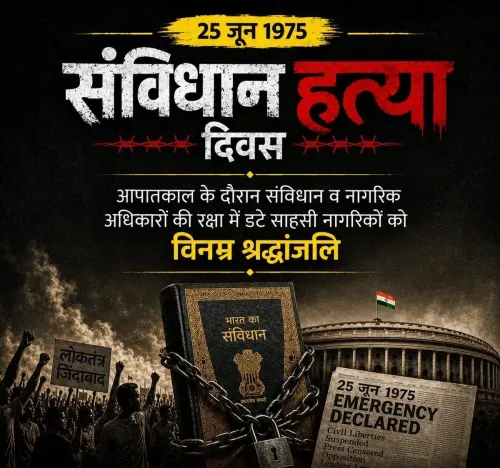
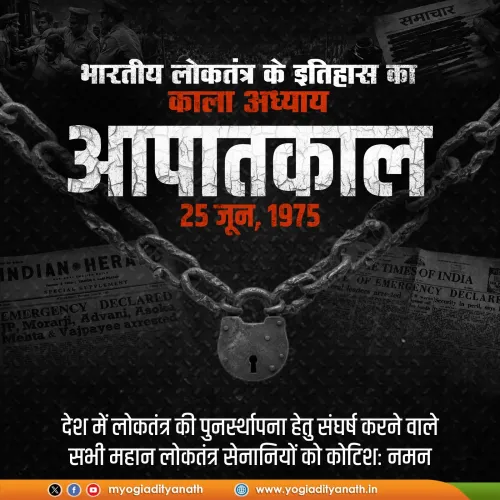
He cited the Emergency declared on 25 June 1975 under Prime Minister Indira Gandhi, which lasted until March 1977 .
The post was in Hindi and accompanied by a video, amplifying its reach.
BJP leaders have long used the Emergency reference to counter Congress criticism of democratic norms under the current dispensation.
Yogi Adityanath serves as Chief Minister of Uttar Pradesh , India's most populous state, giving his statements national electoral weight.
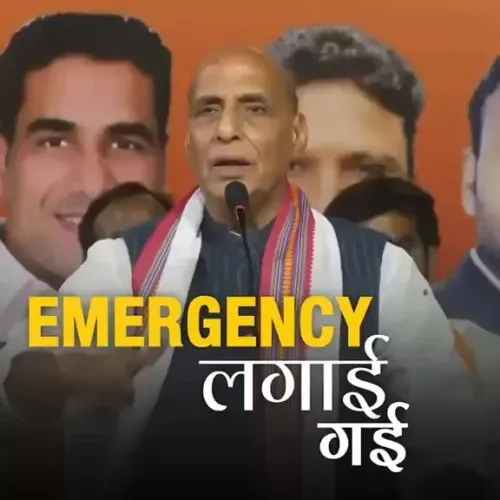
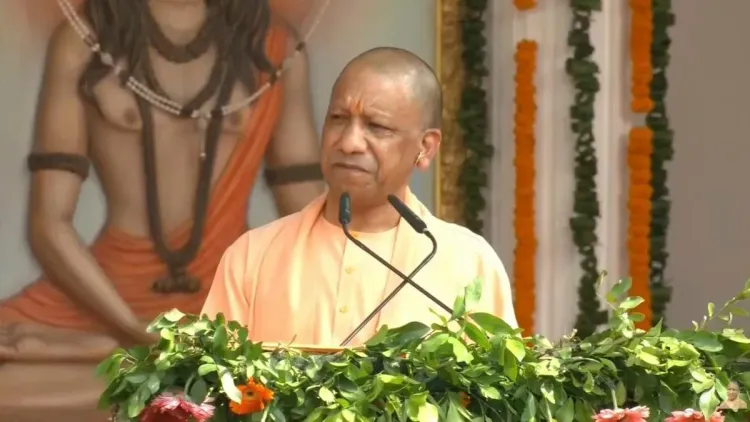
Half a century after suspending the Constitution, the party that imposed the Emergency of 1975 is now lecturing India on democracy — that, in blunt terms, is Uttar Pradesh Chief Minister Yogi Adityanath's charge against the Indian National Congress in a post on Wednesday, 4 November 2026.
Posting in Hindi, the Chief Minister wrote: 'देश पर आपातकाल थोपने वाली कांग्रेस आज लोकतंत्र पर लोगों को उपदेश देती हुई दिखाई दे रही है…' — 'The Congress, which imposed the Emergency on the country, is today seen lecturing people on democracy…' The ellipsis is deliberate. The implication hangs in the air.
The Emergency shadow that never fully lifts
The charge has a specific historical anchor. Prime Minister Indira Gandhi declared the Emergency on 25 June 1975, suspending civil liberties, jailing political opponents, and muzzling the press for 21 months until March 1977. It remains the single most contested chapter in post-independence Indian governance — a wound both sides of the aisle have poked at ever since.
For the BJP, referencing 1975 is not merely nostalgia; it is a standing rhetorical counter. Whenever Congress accuses the ruling dispensation of weakening institutions or democratic norms, BJP leaders reach for the Emergency as Exhibit A of the opposition's own record. The move is well-worn but consistently effective with a voter base that lived through it or inherited its memory.
A BJP playbook, sharpened for 2026
Yogi Adityanath's formulation follows a recognisable pattern — but the timing and the attached video suggest it is calibrated for a current political moment, even if the precise trigger remains unclear. The Chief Minister commands one of India's most electorally significant states and is among the BJP's most prominent second-tier voices after the Prime Minister. When he speaks, the message carries weight beyond Lucknow.
Congress has consistently rejected the Emergency framing as a distraction — its spokespersons argue the comparison is used to deflect from present-day governance questions. That counter-narrative is likely to follow swiftly. The exchange represents one of Indian politics' most durable loops: each side holding up the other's past as a mirror.
Point of View
The party pivots to 1975 as a legitimacy disqualifier. The strategy has endured because the Emergency is a verifiable historical event with broad public memory. What makes this iteration notable is the medium — a video-backed social post from a Chief Minister with national ambitions, suggesting the message is aimed at a wider audience than UP alone. Congress faces the perennial challenge of separating its present identity from its Emergency-era past without appearing to minimise it.
NationPress
4 Nov 2026
Frequently Asked Questions
What did CM Yogi Adityanath say about Congress and democracy?
CM Yogi Adityanath said that Congress, which imposed the Emergency on the country, is today seen lecturing people on democracy — calling out what he described as hypocrisy on the part of the opposition party.
What was the Emergency declared by Indira Gandhi?
The Emergency was an authoritarian period declared by Prime Minister Indira Gandhi on 25 June 1975 . Civil liberties were suspended, political opponents were jailed, and the press was muzzled for 21 months until March 1977 .
Why do BJP leaders often bring up the 1975 Emergency?
BJP leaders use the Emergency as a counter-argument whenever Congress criticises the ruling party on democratic norms or institutional autonomy. It is a recurring rhetorical device that holds up Congress's own governance record as evidence of hypocrisy.
What is Yogi Adityanath's position in Indian politics?
Yogi Adityanath is the Chief Minister of Uttar Pradesh , India's most populous state, and a senior BJP leader. He also heads the Gorakhnath Math , a prominent religious institution.
How has Congress typically responded to Emergency-era criticism?
Congress spokespersons have generally argued that BJP raises the Emergency to deflect from present-day governance questions, maintaining that the comparison is a political distraction rather than a substantive critique.