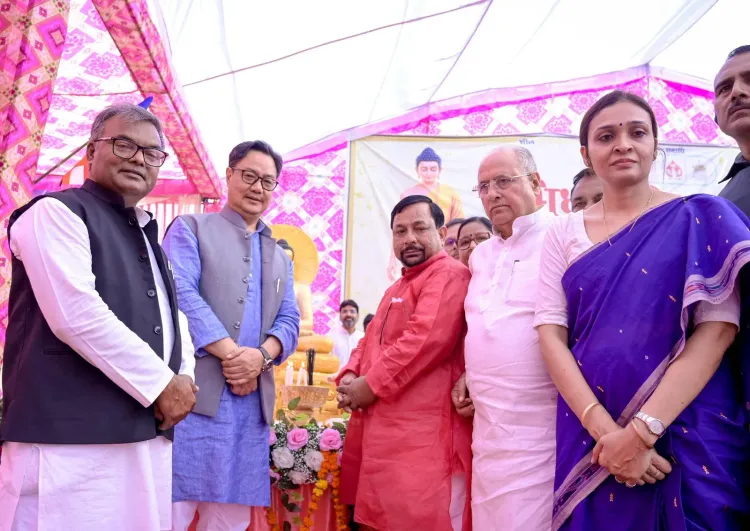
Rijiju attends Abhidhamma Mahotsav at Sankisa Buddhist Stupa
Synopsis
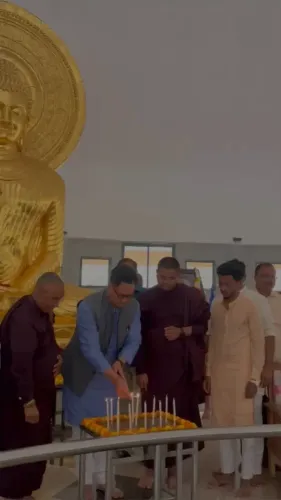
Union Minister Kiren Rijiju attended the Abhidhamma Mahotsav at Sankisa Buddhist Stupa and the Mainpuri Youth Buddhist Society Centre in Uttar Pradesh on October 27, offering prayers at one of Buddhism's eight great Mahasthanas and reflecting on Lord Buddha's message of peace and compassion.
Key Takeaways
Kiren Rijiju , Union Minister of Parliamentary Affairs and Minority Affairs, attended the Abhidhamma Mahotsav on October 27, 2026 .
The festival was held at two venues: Sankisa Buddhist Stupa and the Youth Buddhist Society Centre, Mainpuri , both in Uttar Pradesh.
Sankisa is one of the eight Mahasthanas (great sacred sites) of Buddhism, traditionally identified as the site of Lord Buddha's descent from Trayastrimsa heaven after teaching his mother Queen Mahamaya.
Rijiju offered prayers at the stupa and described internalising Buddha's message of peace, compassion, and human welfare .
The visit aligns with a broader pattern of central ministers attending Buddhist heritage events, reinforcing India's role as custodian of Buddhist civilisational legacy.
The Swadesh Darshan scheme (2014-15) designated the Buddhist Circuit, including Sankisa, as a priority development corridor under the Ministry of Tourism.
Union Parliamentary Affairs Minister Kiren Rijiju visited the ancient Sankisa Buddhist Stupa in Uttar Pradesh on Tuesday, October 27, 2026, attending the Abhidhamma Mahotsav — a festival centred on the philosophical teachings of the Abhidhamma — and offering prayers at one of Buddhism's most venerated descent sites.
Why Sankisa holds a singular place in Buddhist geography
Sankisa is not simply another stupa on the Buddhist Circuit map. According to canonical Buddhist scriptures and centuries of tradition, it marks the precise spot where Lord Buddha descended to earth after spending time in Trayastrimsa heaven — the heaven of the thirty-three gods — imparting the Abhidhamma teachings to his mother, Queen Mahamaya. That singular narrative elevates Sankisa into one of the eight Mahasthanas: the eight great sacred sites of Buddhism, a circuit that stretches across the Indian subcontinent and draws pilgrims from across Asia.
Rijiju, posting in Hindi on X, described the visit as a moment of profound privilege — 'sौभाग्य प्राप्त हुआ' (the fortune of being present) — and spoke of internalising Lord Buddha's message of peace, compassion, and human welfare. The descent episode, he noted, stands as a symbol of Buddha's dedication to the spread of compassion, wisdom, and spiritual knowledge.
Abhidhamma Mahotsav — from Sankisa to Mainpuri
The day's programme spanned two venues: the Sankisa Stupa itself, where the minister offered prayers, and the Youth Buddhist Society Centre in Mainpuri, where the Abhidhamma Mahotsav was formally held. The Abhidhamma — the third and most philosophical 'basket' of the Pali Canon — deals with the systematic analysis of mind and matter, and festivals in its name draw monks, scholars, and lay devotees together for teaching sessions and religious observance.
Central ministers at Buddhist heritage sites — a deliberate pattern
Rijiju's presence is part of a consistent pattern: senior central government figures attending events at Buddhist heritage locations to reinforce India's custodianship of the Buddhist legacy. The Swadesh Darshan scheme, initiated in 2014-15 by the Ministry of Tourism, placed the Buddhist Circuit among its priority development corridors, channelling infrastructure investment into sites including Sankisa, Bodh Gaya, Sarnath, and Kushinagar. For a minister who also holds the Minority Affairs portfolio, visible engagement with Buddhist communities carries domestic cultural weight alongside its soft-power dimension with Buddhist-majority nations across Southeast and East Asia.
Uttar Pradesh, which contains the majority of the eight Mahasthanas, has positioned Buddhist pilgrimage as a key plank of its heritage tourism drive. Sankisa — quieter and less internationally known than Bodh Gaya or Sarnath — is a site where infrastructure upgrades and visibility efforts remain an ongoing conversation between state and central authorities.
For a senior minister from the Northeast — a region with its own deep Buddhist traditions — attending a festival at the very site tradition identifies as Buddha's return to earth carries a resonance that goes well beyond a diary entry.
Point of View
Multi-year strategy by the central government to deepen India's association with Buddhist heritage — both for domestic minority outreach and as a soft-power signal to Buddhist nations in Asia. As Minority Affairs minister, his physical presence at one of Buddhism's eight great sacred sites carries institutional weight beyond personal devotion. The Swadesh Darshan Buddhist Circuit investments have quietly positioned lesser-known sites like Sankisa alongside Bodh Gaya in the government's heritage tourism narrative. Expect continued ministerial-level engagement at Buddhist Circuit events as India courts greater people-to-people connectivity with Southeast and East Asian partners.
NationPress
27 Oct 2026
Frequently Asked Questions
Why is Sankisa significant in Buddhism?
Sankisa is one of the eight Mahasthanas — the great sacred sites of Buddhism. Tradition and Buddhist scriptures identify it as the place where Lord Buddha descended to earth after teaching the Abhidhamma to his mother, Queen Mahamaya, in Trayastrimsa heaven.
What is the Abhidhamma Mahotsav?
The Abhidhamma Mahotsav is a religious festival celebrating the Abhidhamma — the philosophical and analytical section of the Buddhist Pali Canon. It brings together monks, scholars, and devotees for teachings and prayers, and is held at sites associated with Buddha's Abhidhamma teachings.
Why did Kiren Rijiju attend a Buddhist festival?
Rijiju attended in his capacity as Union Minister of Parliamentary Affairs and Minority Affairs. Central ministers regularly participate in events at Buddhist heritage sites to affirm India's custodianship of the Buddhist legacy and to engage with Buddhist communities domestically and internationally.
Where is Sankisa located?
Sankisa is located in Uttar Pradesh, India. It is a recognised site on the Buddhist Circuit and one of the eight great pilgrimage locations (Mahasthanas) of Buddhism.
What is the Swadesh Darshan Buddhist Circuit?
The Swadesh Darshan scheme, launched in 2014-15 by India's Ministry of Tourism, designated a Buddhist Circuit as a priority tourism development corridor, funding infrastructure upgrades at major Buddhist pilgrimage sites including Sankisa, Bodh Gaya, Sarnath, and Kushinagar.