Are CSIR Labs Leading the Charge for Atmanirbhar Bharat Through Innovation and Indigenous Technology?
Synopsis
The CSIR labs in India are pivotal in pushing the Atmanirbhar Bharat agenda through innovative solutions and indigenous technologies. Union Minister Dr. Jitendra Singh emphasizes the importance of industry collaboration and technology transfer in achieving self-reliance in various sectors.
Key Takeaways
CSIR labs are at the forefront of innovation in India.
Industry partnerships are critical for translating research into practical applications.
Government support is vital for strengthening the scientific ecosystem.
Indigenous technologies enhance self-reliance.
Recent advancements span various sectors, from clean energy to biotechnology.
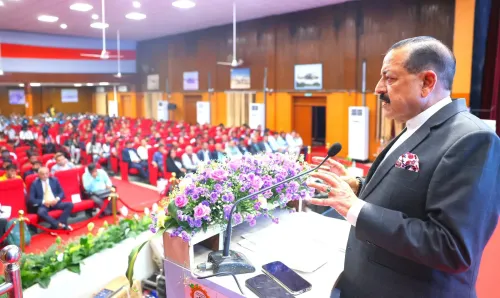
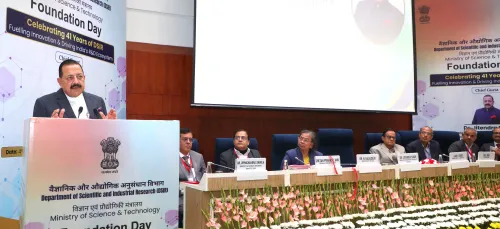
New Delhi, Dec 26 (NationPress) The nation's CSIR laboratories are spearheading the vision of Atmanirbhar Bharat via groundbreaking innovations and homegrown technologies, stated Dr. Jitendra Singh, Union Minister of State (Independent Charge) for Science and Technology, on Friday.
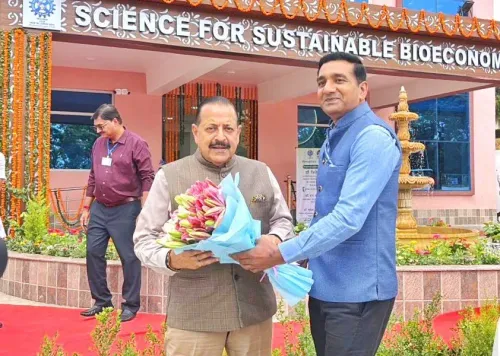
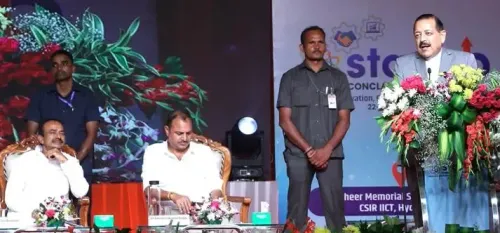
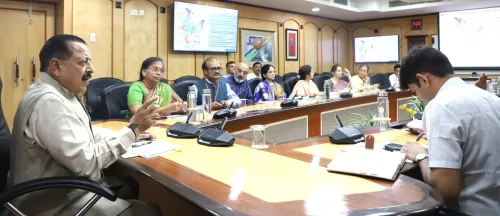
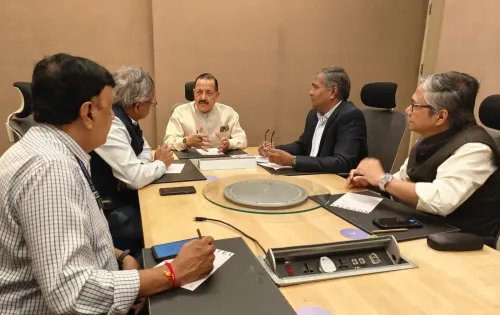
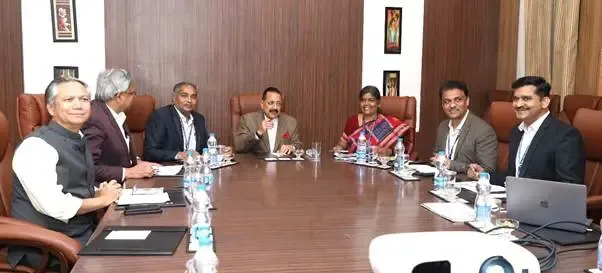
During a review of the scientific milestones and technological advancements made by the CSIR labs located in Chennai and Hyderabad, held in Tirupati, the Minister emphasized the urgency of enhancing technology transfer to elevate India's industrial involvement.
"Robust industry collaborations and the swift application of research findings into practical and commercial solutions are essential for constructing an Atmanirbhar Bharat," Singh remarked.
He added, "CSIR is integral in bolstering India’s scientific prowess and endorsing the Atmanirbhar Bharat vision."
The review meeting aimed to evaluate the recent successes of the laboratories and their alignment with national objectives, amidst the ongoing support from the Government of India to fortify the country's scientific and innovation landscape.
Directors from CSIR labs in Karaikudi, Hyderabad, and Chennai showcased their significant achievements and delineated future trajectories for impactful research, innovation, and industry partnerships.
Dr. K. Ramesha, Director of CSIR-CECRI, discussed the lab's contributions to electrochemical technologies, energy storage, and clean energy, highlighting indigenous initiatives in sodium-ion batteries, recovery of metals from used batteries, green hydrogen production, and CO₂ capture.
Dr. Prakash, Director of CSIR-NGRI, presented insights into CSIR-NGRI’s projects that provide geophysical data regarding Ladakh, geothermal energy exploration, critical mineral mapping, and developing strain maps of the Indian Plate. He also discussed mission-driven programs addressing Himalayan geo-hazards and heliborne surveys for the SLBC Tunnel initiative.
Dr. P. Thanikaivelan, Director of CSIR-CLRI, introduced developments such as the indigenous ‘Bha’ footwear sizing system, advanced defense gloves transitioned to industry, touch-sensitive gloves for the Indian Air Force, pan-India gait studies, and converting leather waste into value-added products.
Dr. N. Anandavalli, Director of CSIR-SERC, elaborated on CSIR-SERC’s focus on offshore renewable energy infrastructure, structural health monitoring, sustainable materials, and disaster-resilient construction technologies, featuring ERS, blast-resistant LSCC, and bullet-proof security booths.
Dr. Vinay Nandicoori, Director of CSIR-CCMB, highlighted CSIR-CCMB’s accomplishments in genomics, diagnostics, and biotechnology related to human health, animal welfare, and plant health. Dr. D. Srinivasa Reddy, Director of CSIR-IICT, discussed advances in pharmaceuticals, vaccine adjuvants, new-generation refrigerants like HFOs, and a strong focus on translational research and industry collaboration.
Point of View
We recognize the critical role that CSIR laboratories play in shaping India’s innovation landscape. Their efforts not only align with national goals but also showcase our commitment to self-reliance. The collaboration between industry and research institutions is vital for India’s growth trajectory.
NationPress
19 Sept 2026
Frequently Asked Questions
What is the role of CSIR labs in India's Atmanirbhar Bharat initiative?
CSIR labs are crucial in fostering innovation and developing indigenous technologies that support the Atmanirbhar Bharat vision, enhancing India's industrial capabilities.
Who is Dr. Jitendra Singh?
Dr. Jitendra Singh is the Union Minister of State (Independent Charge) for Science and Technology, overseeing initiatives that promote scientific research and technology in India.
What are some key achievements of CSIR labs?
CSIR labs have made significant advancements in areas such as clean energy, genomics, and sustainable materials, contributing to various sectors of the economy.
How do CSIR labs collaborate with industries?
CSIR labs work closely with industries to translate laboratory research into commercial applications, fostering partnerships that drive innovation.
What is the significance of indigenous technologies?
Indigenous technologies are essential for self-reliance, reducing dependence on foreign technologies, and promoting local innovation and manufacturing.