Why is Union Minister Nadda Calling for Enhanced Healthcare Infrastructure in Andhra Pradesh?

Synopsis
Union Minister J.P. Nadda emphasizes the urgent need for Andhra Pradesh to adopt the Public–Private Partnership model in healthcare. This call aims to enhance infrastructure, service delivery, and ensure equitable access to medical services across the state, amidst political opposition and ongoing campaigns against privatization.
Key Takeaways
Nadda advocates for the PPP model in healthcare.
The model aims to improve healthcare infrastructure and access in Andhra Pradesh .
The VGF Scheme supports up to 80% of project costs.
Political opposition highlights concerns about privatization .
Establishing a dedicated PPP Cell is recommended for effective implementation.
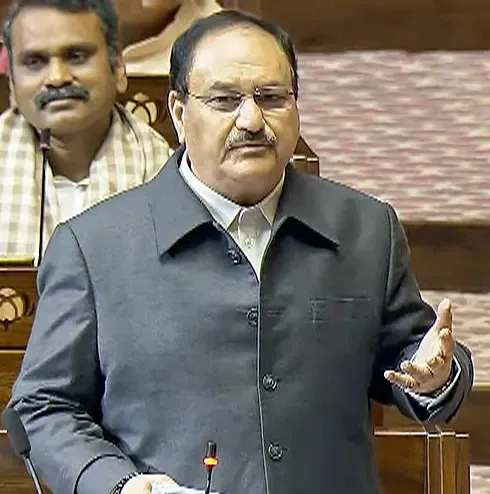
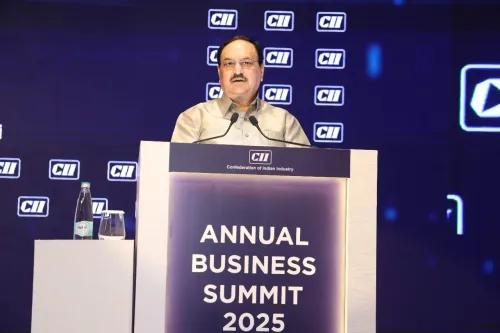
Amaravati, Dec 26 (NationPress) Union Minister for Health and Family Welfare, J.P. Nadda, made a significant appeal to the Andhra Pradesh government on Friday, urging it to embrace the Public–Private Partnership (PPP) model as a means to rapidly advance the state's healthcare infrastructure. This initiative aims to enhance the quality, efficiency, and accessibility of medical services across the region.
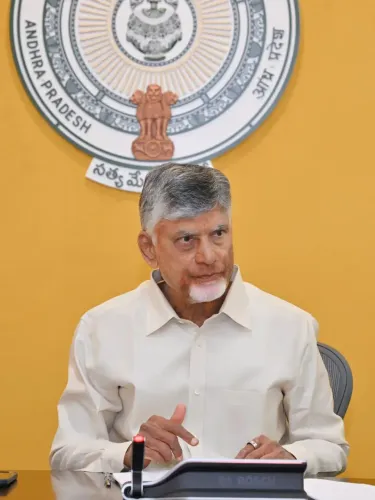
In a letter directed to Andhra Pradesh's Minister for Health, Medical Education and Family Welfare, Satya Kumar Yadav, Minister Nadda emphasized that PPP projects have proven to be effective mechanisms for drawing private investment, utilizing expertise, and improving service delivery in the infrastructure sectors nationwide.
This letter arrives in the context of recent criticisms from the Opposition YSR Congress Party (YSRCP), which has accused the NDA government in the state of pursuing the privatization of medical colleges. The YSRCP has launched a state-wide campaign, successfully gathering one crore signatures to contest the privatization efforts.
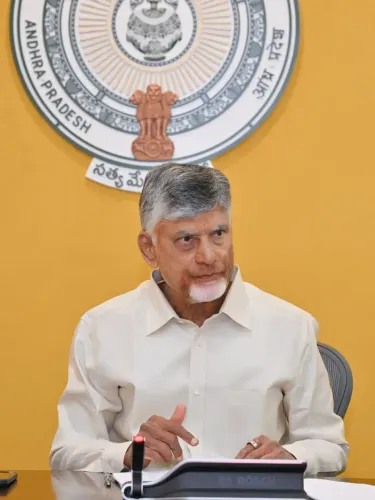
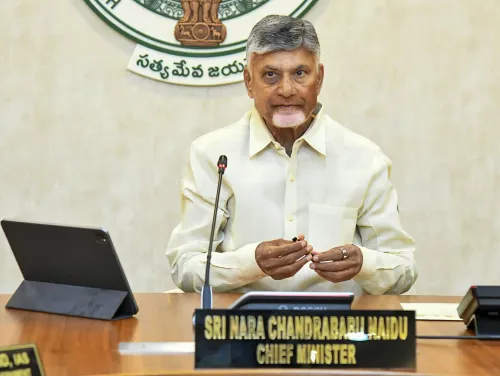
Despite this opposition, Chief Minister N. Chandrababu Naidu has defended the PPP approach for developing medical colleges within the state.
Union Minister Nadda underscored the urgent need for bolstering healthcare infrastructure, asserting that the PPP model could significantly transform district hospitals, establish new medical colleges, expand diagnostic and dialysis services, and implement advanced technology solutions in public healthcare facilities, particularly in underserved and aspirational areas.
He highlighted that the Union government is providing substantial financial assistance for PPP health projects through the Viability Gap Funding (VGF) Scheme, which can offer up to 80% of the project cost and up to 50% support for operational expenses in the initial five years.
The VGF support is designed to be equitably shared between the Central and state governments.
Moreover, Minister Nadda drew attention to the India Infrastructure Project Development Fund (IIPDF) Scheme, which allocates financial assistance of up to Rs 5 crore per project for development activities, including feasibility studies and technical advisory services, aimed at enabling states to create bankable and sustainable PPP projects.
To ensure the effective execution of PPP initiatives, he advised the Andhra Pradesh government to form a dedicated PPP Cell within the Health Department, collaborating closely with the PPP Cell in the Ministry of Health and Family Welfare.
Expressing optimism, Union Minister Nadda believes that proactive involvement from state leadership and the strategic implementation of the PPP model will lead to considerable enhancements in healthcare infrastructure, service delivery, and patient outcomes in Andhra Pradesh, ensuring equitable access to quality healthcare for all societal groups.
Point of View
The emphasis on the PPP model in healthcare represents a proactive approach to address the pressing challenges of medical service delivery. While the political landscape is complex, the potential benefits of improved infrastructure and accessibility are crucial for enhancing public health.
NationPress
28 Sept 2026
Frequently Asked Questions
What is the Public–Private Partnership model?
The Public–Private Partnership (PPP) model is a cooperative arrangement between public and private sectors aimed at providing public services or infrastructure, leveraging expertise and investment from the private sector.
How can the PPP model benefit healthcare in Andhra Pradesh?
By adopting the PPP model, Andhra Pradesh can enhance healthcare infrastructure, improve service delivery, and expand access to quality medical services, particularly in underserved regions.
What financial support is available for PPP projects?
The Union government offers substantial financial support through the Viability Gap Funding (VGF) Scheme, covering up to 80% of project costs and 50% of operational expenses for the first five years.
Why is there opposition to privatization of medical colleges?
Opposition parties, like the YSR Congress Party, argue that privatization leads to decreased access and quality of education and healthcare for the public, prompting campaigns against such initiatives.
What role does the IIPDF scheme play in PPP projects?
The India Infrastructure Project Development Fund (IIPDF) provides financial assistance for project development activities, including technical advisory services, helping states to create sustainable PPP projects.