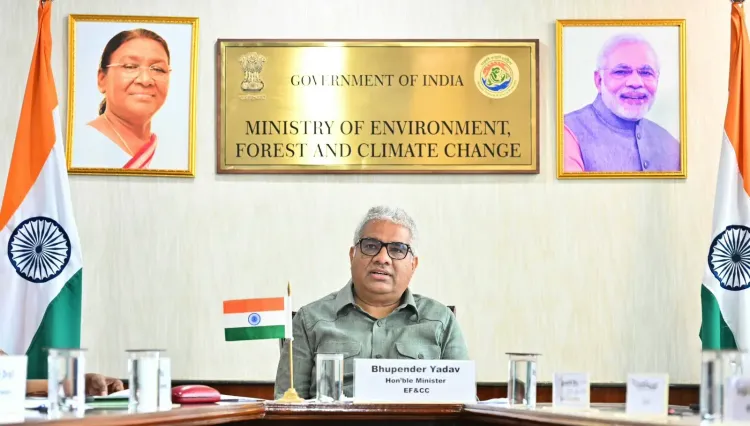
Bhupender Yadav Chairs LeadIT Industry Meet in New Delhi
Synopsis
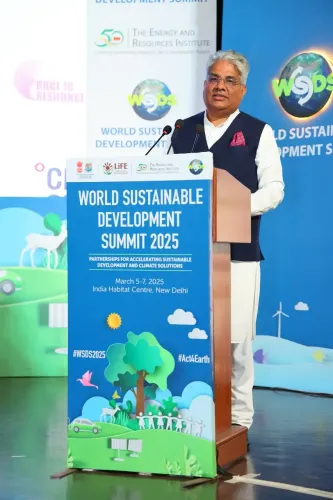
Union Environment Minister Bhupender Yadav chaired a LeadIT interaction in New Delhi on 12 November 2026, reinforcing India's push to decarbonise heavy industry through the India-Sweden co-led platform that now counts 19 countries and 33 companies.
Key Takeaways
Bhupender Yadav chaired the LeadIT member-company interaction in New Delhi on 12 November 2026 .
LeadIT was co-launched by India and Sweden at the UN Climate Action Summit in September 2019 .
The platform currently spans 19 countries and 33 companies , including 13 Indian companies .
Yadav reaffirmed PM Modi's government commitment to LeadIT and low-carbon industrial partnerships.
LeadIT targets hard-to-abate sectors — steel, cement, chemicals — that are central to India's 2070 net-zero roadmap.
The initiative complements India's broader climate architecture including the International Solar Alliance and Mission Innovation .
India's industrial decarbonisation ambitions moved from pledge to partnership on Thursday, 12 November 2026, as Union Environment Minister Bhupender Yadav chaired a high-level interaction with member companies and project partners of LeadIT — the Leadership Group for Industry Transition — in New Delhi, reaffirming the government's commitment to building a low-carbon industrial future.
What LeadIT Is — and Why Heavy Industry Is the Hard Part
Jointly launched by India and Sweden at the UN Climate Action Summit in September 2019, LeadIT was designed to do precisely what conventional climate diplomacy tends to avoid: tackle the hard-to-abate sectors — steel, cement, chemicals, aluminium — that cannot simply swap in a solar panel and call it clean. The platform now brings together 19 countries and 33 companies, of which 13 companies are Indian, making India one of the most heavily represented nations in the coalition.
That weight is deliberate. India's manufacturing base is growing fast, and the carbon intensity of heavy industry is one of the most consequential variables in whether the country's 2070 net-zero pledge — announced at COP26 in Glasgow in 2021 — lands on schedule or slips.
Yadav's Message to the Room: Modi Government Is All-In
At the interaction, Yadav 'reaffirmed the strong commitment of the Government led by PM Narendra Modi to LeadIT, with a clear focus on building impactful partnerships for a low-carbon industrial future.' The framing was pointed — this was not a courtesy call. It was a signal to global industry partners and technology holders that India expects the initiative to generate real pilots, real technology transfers, and bankable project pipelines, not just communiqués.
LeadIT sits alongside India's other multilateral climate architecture — the International Solar Alliance and Mission Innovation — but it occupies a distinct lane: the unglamorous, capital-intensive work of retooling furnaces, kilns, and chemical reactors that have no easy green alternative today.
India-Sweden Climate Axis and What Comes Next
The India-Sweden co-leadership of LeadIT reflects a broader bilateral clean-technology axis that has deepened since 2019. Sweden brings advanced green steel technology — its own HYBRIT hydrogen-based steelmaking project is a global reference point — while India brings scale, a large industrial base, and the geopolitical weight to pull other emerging economies into the decarbonisation conversation.
With COP sessions and bilateral India-Sweden engagements on the near-term calendar, the outcomes from today's New Delhi meeting — which projects advance, which technology pilots get funded, and which Indian companies step up as first movers — will be the real measure of whether LeadIT's ambitions translate into industrial action.
The minister chaired the meeting. The scorecard gets written in the factory, not the conference room.
Point of View
Not merely a diplomatic branding exercise — a shift that matters as global pressure mounts on emerging economies to show concrete industrial transition plans ahead of climate negotiations. For the Modi government, championing heavy-industry decarbonisation allows it to reconcile the Make in India manufacturing push with its net-zero commitments, countering narratives that growth and climate action are incompatible. The 13 Indian companies in the coalition are a strategic asset: if they pilot hydrogen-based or carbon-capture processes at scale, India gains both climate credibility and first-mover industrial advantage. The real test is whether this ministerial reaffirmation unlocks the technology-transfer and financing pipelines that hard-to-abate sectors need to actually move.
NationPress
12 Nov 2026
Frequently Asked Questions
What is LeadIT and what does it do?
LeadIT — the Leadership Group for Industry Transition — is a global platform co-led by India and Sweden, launched in 2019, to accelerate decarbonisation in heavy, hard-to-abate industrial sectors like steel, cement, and chemicals. It currently brings together 19 countries and 33 companies.
When and why was LeadIT launched?
LeadIT was launched in September 2019 at the UN Climate Action Summit by India and Sweden to address the specific challenge of reducing carbon emissions from heavy industries that cannot easily switch to renewable energy.
How many Indian companies are part of LeadIT?
13 Indian companies are members of LeadIT, making India one of the most heavily represented nations in the 33-company coalition.
What is India's net-zero target and how does LeadIT relate to it?
India announced a net-zero emissions target by 2070 at COP26 in 2021. LeadIT directly supports this goal by focusing on decarbonising heavy industries, which are among the hardest and most critical sectors to transition.
What did Bhupender Yadav say at the LeadIT meeting in New Delhi?
Yadav reaffirmed the Modi government's strong commitment to LeadIT and emphasised building impactful partnerships for a low-carbon industrial future, signalling India's intent to move from pledges to concrete project outcomes.