Andhra Pradesh defends Ramayapatnam Port PPP model amid YSRCP criticism
Synopsis
Andhra Pradesh has put its weight behind the PPP model for Ramayapatnam Port, pointing out that 91% of India's non-major ports already operate the same way. With Phase A 80.5% complete, a ₹4,929.39 crore project on the line, and YSRCP firing political salvos, the state's ability to land a credible global port operator will be the real verdict on its strategy.
Key Takeaways
The Andhra Pradesh government has launched a transparent bidding process for Ramayapatnam Port under the PPP model , inviting international players.
108 of 119 non-major ports in India — nearly 91 per cent — already operate under the PPP framework, the government noted.
Phase A of Ramayapatnam Port has a sanctioned cost of ₹4,929.39 crore and has achieved 80.50 per cent physical completion.
The concessionaire must pay an upfront premium of ₹1,500 crore and a Minimum Guaranteed Revenue starting at ₹10 crore annually , scaling to ₹150 crore .
The APMB retains a 12 per cent non-dilutable equity stake across all phases; concession period is 30 years , extendable by 20 years .
All three ports — Ramayapatnam, Machilipatnam , and Mulapeta — are targeted for completion by December 2026 .
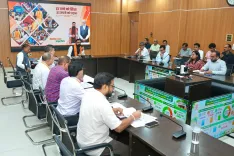
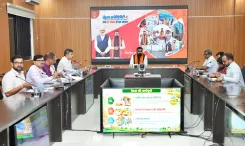
The Andhra Pradesh government on Wednesday, 15 July defended its decision to operate and maintain Ramayapatnam Port under the Public-Private Partnership (PPP) model, asserting that a transparent bidding process has been launched to attract international players. The move comes amid sharp criticism from the YSR Congress Party (YSRCP), which has opposed handing over port operations to private entities.
Government's Case for PPP
In an official release, the state government argued that the PPP model is neither new nor unique to Andhra Pradesh. Of the 119 non-major ports in India that are either operational or under development, 108 — nearly 91 per cent — are being developed and operated under the PPP framework. States including Karnataka, Odisha, and Puducherry operate all their non-major ports under this model, while Gujarat runs nearly 90 per cent of its non-major ports through PPP arrangements. The government noted that even the Centre follows the same approach for ports under the Ministry of Ports, Shipping, and Waterways.
Key Project Details
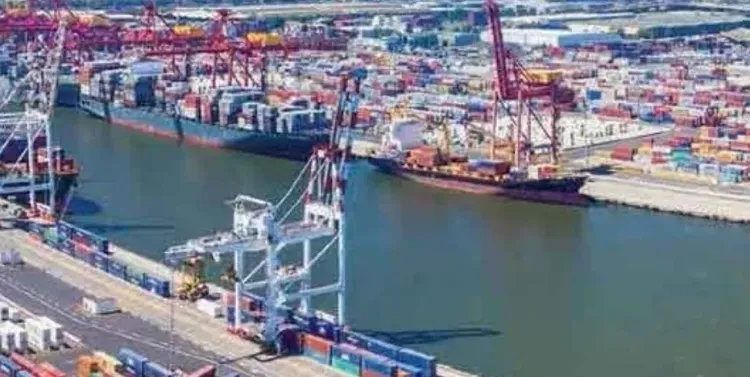
Ramayapatnam Port is being developed by the Andhra Pradesh Maritime Board (APMB) in Prakasam district on a design, build, finance, operate, and transfer (DBFOT) basis. The port will span 2,538.42 acres and feature 19 berths at full build-out across four phases (A–D), including one captive BPCL liquid berth. The master plan targets a capacity of 138.54 million tonnes per annum with a basin depth of 20.2 metres CD.
Phase A — sanctioned at ₹4,929.39 crore — has achieved 80.50 per cent physical completion and 73.95 per cent financial progress. It is designed to handle ships of 80,000 deadweight tonnage (DWT) and carry 34.04 million tonnes per annum. The APMB will retain a 12 per cent non-dilutable equity stake across all phases.
Financial Structure and Bidding Terms
The concession period is set at 30 years, extendable by an additional 20 years at the concessionaire's request. The selected operator must pay an upfront premium of ₹1,500 crore in two tranches — 50 per cent at fulfilment of conditions precedent and the remaining 50 per cent at the commercial operation date (COD).
Revenue share will serve as the key bid parameter. Starting from the 20th year of COD, the revenue share payable to the authority will increase by 1 per cent every three years, capped at 25 per cent. A Minimum Guaranteed Revenue (MGR) mechanism kicks in if revenue share falls below specified thresholds — starting at ₹10 crore annually and scaling up to ₹150 crore over time. The land lease fee is set at ₹1 per acre per year.
Operational Obligations on the Concessionaire
The winning bidder must operationalise at least one fully mechanised container berth under Phase A, either with participation from a top global container operator or through a binding MoU with global shipping lines within five years of COD or Phase B1 trigger. The port is designed as a multi-cargo facility handling bulk, container, liquid, and gas cargo.
Construction Progress Across Ports
The coalition government also highlighted broader infrastructure momentum, stating it has achieved 80.50 per cent physical progress at Ramayapatnam Port, 58.91 per cent at Machilipatnam Port, and 76.02 per cent at Mulapeta Port. All three ports are targeted for completion by December 2026.
With the bidding process now underway, the government's next test will be whether it can attract credible international port operators — and whether the revenue-sharing terms prove competitive enough to draw top-tier global interest.
Point of View
929.39 crore project in a state where port infrastructure has long been a patronage flashpoint. The real question mainstream coverage sidesteps is whether the revenue-share and MGR terms are structured tightly enough to prevent the concessionaire from under-declaring cargo throughput — a well-documented risk in Indian port PPPs. The ₹1 per acre per year land lease fee, in particular, warrants scrutiny against market benchmarks.
NationPress
14 Oct 2026
Frequently Asked Questions
What is the PPP model being used for Ramayapatnam Port?
Ramayapatnam Port is being developed on a design, build, finance, operate, and transfer (DBFOT) basis, where a private concessionaire finances and operates the port while the Andhra Pradesh Maritime Board retains a 12 per cent non-dilutable equity stake. The concession period is 30 years, extendable by 20 years.
Why is the YSRCP opposing the Ramayapatnam Port PPP decision?
The YSR Congress Party has criticised the coalition government's decision to hand over the operation and maintenance of Ramayapatnam Port to private players. The government has defended the move by pointing out that 91 per cent of India's non-major ports already operate under the same model.
How far along is the construction of Ramayapatnam Port?
Phase A of Ramayapatnam Port has achieved 80.50 per cent physical completion and 73.95 per cent financial progress, against a sanctioned cost of ₹4,929.39 crore. The government aims to complete all three ports — Ramayapatnam, Machilipatnam, and Mulapeta — by December 2026.
What are the financial obligations for the private operator at Ramayapatnam Port?
The selected concessionaire must pay an upfront premium of ₹1,500 crore in two tranches linked to project milestones. A Minimum Guaranteed Revenue starting at ₹10 crore per year and rising to ₹150 crore applies if revenue share falls below specified thresholds, with the land lease fee set at ₹1 per acre per year.
What will Ramayapatnam Port look like at full capacity?
At full build-out across four phases, Ramayapatnam Port will span 2,538.42 acres with 19 berths and a master plan capacity of 138.54 million tonnes per annum at a basin depth of 20.2 metres CD, capable of handling ships up to two lakh deadweight tonnage.