CM Himanta bars polygamous households from Assam govt schemes
Synopsis
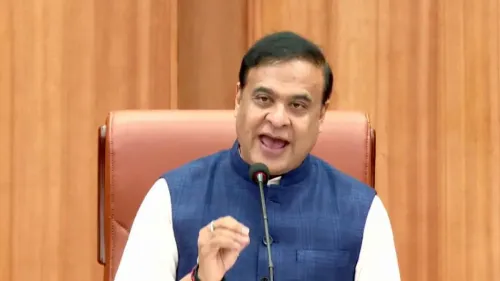
Assam Chief Minister Himanta Biswa Sarma declared on 15 July 2026 that polygamy will not be permitted in any form in Assam, and that those practising it will lose eligibility for all state government schemes and benefits, extending the BJP's UCC-aligned social policy push.
Key Takeaways
CM Himanta Biswa Sarma announced on 15 July 2026 that polygamy in any form will not be allowed in Assam .
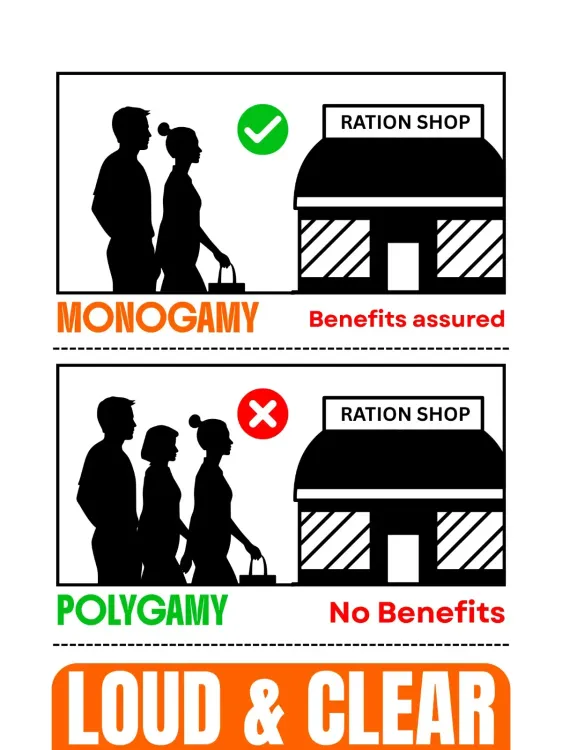
Individuals practising polygamy will be disqualified from all Assam state government schemes and benefits .
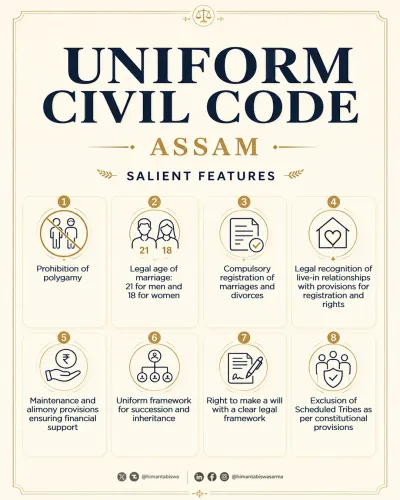
The move aligns with the BJP 's broader push for a Uniform Civil Code , which explicitly prohibits polygamy.
Uttarakhand enacted a statutory ban on polygamy linked to government schemes in February 2024 , serving as a precedent.
A formal government notification is awaited to specify which schemes are affected and how compliance will be verified.
The announcement may prompt similar moves in other BJP -governed states and intensify the national debate on the UCC .
Assam Chief Minister Himanta Biswa Sarma announced on Wednesday, 15 July 2026 that polygamy will not be tolerated in any form in Assam, and that those practising it will henceforth be disqualified from all state government schemes and benefits.
Context
In a direct post on X, CM Sarma stated: 'Polygamy in any form will not be allowed in Assam. Those indulging in it will henceforth not be eligible for any Govt schemes and benefits.' The announcement marks a significant escalation in Assam's social-policy posture, moving from discouragement of polygamy to an explicit bar on government entitlements for those who practise it.
The BJP-led state government has, since 2021, progressively linked eligibility for certain state benefits to family-planning norms. This latest directive extends that logic to the specific issue of polygamy, framing access to public welfare as contingent on compliance with a monogamous family structure.
Policy Backdrop
The move fits squarely within the BJP's broader national push for elements of a Uniform Civil Code (UCC) — a proposed framework that would replace religion-specific personal laws, including the prohibition of polygamy across all communities. Uttarakhand became the first Indian state to statutorily ban polygamy and link compliance to government schemes when it enacted its UCC in February 2024.
Assam's approach mirrors that template but arrives through executive announcement rather than legislation, at least at this stage. CM Sarma, who also serves as convenor of the North-East Democratic Alliance (NEDA), has consistently positioned Assam as a laboratory for social reforms that align with the BJP's national agenda on gender equality and demographic governance.
Stakeholders and Impact
The directive directly affects polygamous households currently receiving or seeking state benefits — ranging from housing and food security schemes to welfare transfers and livelihood programmes. The scale of impact will depend on a formal government notification specifying which schemes are covered and how compliance will be verified.
Advocates of gender equality have long argued that polygamy disproportionately disadvantages women, leaving co-wives with weakened legal and financial protections. Critics, however, are likely to raise concerns about due process, the absence of a statutory framework, and the potential for discriminatory enforcement targeting specific religious communities.
What's Next
The key immediate step is a formal government order detailing the list of affected schemes, the verification mechanism, and the effective date. Observers will also watch whether Assam moves to legislate the ban — as Uttarakhand did — or relies solely on executive action. Any such legislation would require passage in the Assam Legislative Assembly and could face constitutional challenge on grounds of personal law and fundamental rights.
The announcement is also likely to sharpen the political debate around the UCC in other BJP-governed states, with Assam now joining Uttarakhand as a reference point for state-level action ahead of any central legislation.
Point of View
The government sidesteps immediate legal challenge while achieving a similar deterrent effect. The echo of Uttarakhand's February 2024 UCC is unmistakable, suggesting a coordinated multi-state playbook. How Assam operationalises enforcement will determine whether this is durable governance or political signalling ahead of the next electoral cycle.
NationPress
15 Jul 2026
Frequently Asked Questions
What did Assam CM Himanta Biswa Sarma announce about polygamy?
CM Himanta Biswa Sarma announced on 15 July 2026 that polygamy in any form will not be allowed in Assam , and that those practising it will no longer be eligible for any state government schemes or benefits.
Which government schemes will polygamous people lose in Assam?
The announcement covers all state government schemes and benefits, but a specific formal notification listing the affected programmes is yet to be issued. The exact list and enforcement mechanism are expected in a subsequent government order.
Is polygamy already banned by law in Assam?
Polygamy is prohibited under the Hindu Marriage Act for Hindus, but personal law permits it for certain communities. Assam 's new directive targets welfare eligibility through executive action; a statutory ban like the one enacted by Uttarakhand in February 2024 under its UCC has not yet been legislated in Assam.
How does this relate to the Uniform Civil Code?
The Uniform Civil Code (UCC) proposes a single set of personal laws for all citizens, including a ban on polygamy. Assam 's move mirrors the approach taken by Uttarakhand , which became the first state to enact a UCC in February 2024 , and reflects the BJP 's multi-state push to implement UCC principles ahead of potential central legislation.
Will Assam pass a law to ban polygamy?
No legislation has been announced yet. CM Sarma 's directive is an executive announcement. Observers are watching whether Assam will follow Uttarakhand 's path and introduce a formal bill in the Assam Legislative Assembly , which could also face constitutional scrutiny.