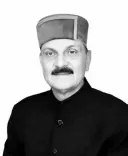
CM Rekha Gupta Flags India's 50%+ Non-Fossil Power Milestone

Synopsis
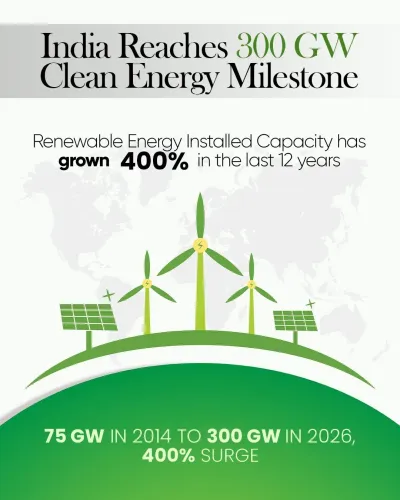
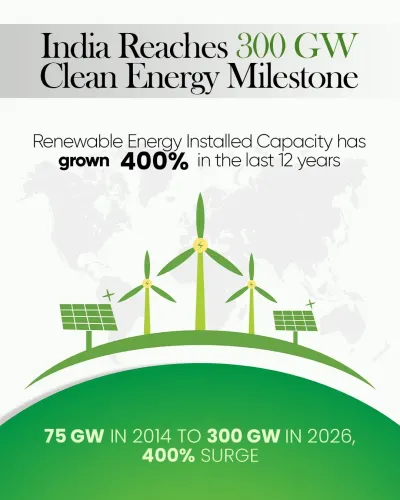
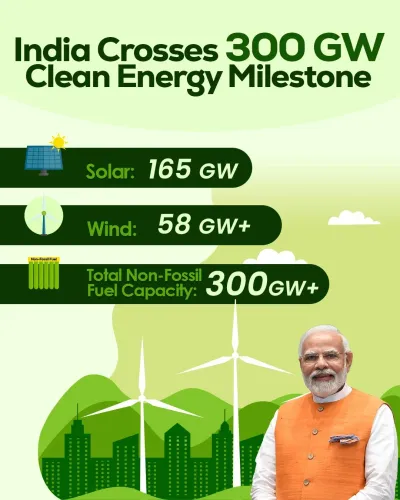
Delhi Chief Minister Rekha Gupta quoted Prime Minister Narendra Modi at the Bharat RE event, highlighting that over 50 per cent of India's installed electricity generation capacity now comes from non-fossil sources — a milestone aligned with India's COP26 pledge of 500 GW clean capacity by 2030.
Key Takeaways
PM Modi announced at the Bharat RE event that more than 50% of India's total installed electricity generation capacity is now from non-fossil sources.
Delhi CM Rekha Gupta amplified the statement on X on 3 November 2026 , extending its reach to a wider audience.
India had pledged at COP26 (Glasgow, 2021) to achieve 500 GW of non-fossil capacity by 2030 as part of its Paris Agreement commitment.
The milestone is driven by large-scale solar and wind additions, plus contributions from hydro and nuclear power.
The Central Electricity Authority's capacity data releases will be the key metric to track progress toward the 2030 goal.
Crossing the 50% threshold is a structural signal to global climate investors that India's clean-energy transition is on track.
A landmark number is now on the record: more than 50 per cent of India's total installed electricity generation capacity now draws from non-fossil sources — a threshold Prime Minister Narendra Modi cited at the Bharat RE renewable energy event and which Delhi Chief Minister Rekha Gupta amplified on X on Tuesday, 3 November 2026. The figure marks a structural turning point in one of the world's largest and fastest-growing power systems.
The number that redraws India's energy map
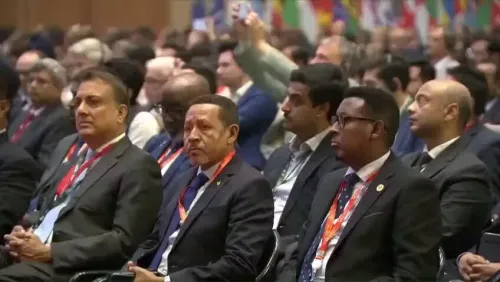
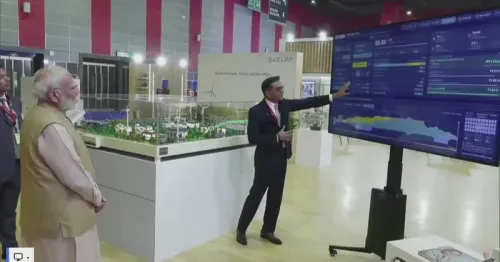
Quoting Prime Minister Modi directly, CM Gupta shared: 'Aaj desh ki 50% se adhik sthapit bijli utpadan kshamata Non-fossil sources par aadharit hai' — 'Today, more than 50 per cent of the country's installed electricity generation capacity is based on non-fossil sources.' The statement was made under the hashtag #PMModiAtBharatRE, situating it squarely within a high-profile industry gathering focused on India's clean-energy ambitions.
Crossing the half-way mark is not merely symbolic. Installed capacity is the bedrock metric of any power system — it determines what a grid can produce, shapes long-term investment decisions, and signals to global climate financiers whether a country's promises are translating into steel and silicon on the ground.
From Glasgow pledge to grid reality
The trajectory here has deep roots. At COP26 in Glasgow in November 2021, India committed to reaching 500 GW of non-fossil fuel electricity capacity by 2030 — one of five headline pledges that formed the country's updated Nationally Determined Contribution under the Paris Agreement. At the time, the target looked audacious. The 50-per-cent share milestone now suggests the trajectory is holding.
The shift has been driven by successive waves of utility-scale solar and wind additions, alongside contributions from large hydro and nuclear. India's solar tariffs fell to among the lowest in the world through competitive auctions during the 2010s and early 2020s, unlocking private capital at a scale that state-owned thermal capacity alone could never have attracted. The result: a power mix that, capacity-wise, has crossed a point that many peer economies have yet to reach.
What the 2030 finish line demands
Reaching 500 GW of non-fossil capacity by 2030 still requires consistent annual additions — and the Central Electricity Authority's rolling capacity data will be the scorecard to watch. Gaps in grid infrastructure, land acquisition bottlenecks, and curtailment in solar-heavy states remain real friction points. But the political momentum, at least as signalled from a sitting Prime Minister's address and amplified by a state chief minister, points firmly in one direction.
CM Gupta's decision to relay the PM's words serves a dual function: it ties Delhi's BJP administration to a nationally owned clean-energy narrative, and it puts a headline-grade statistic — one the party clearly regards as a 2026 electoral asset — in front of a wider urban readership.
Half the capacity is now clean. The harder question is whether the second half of this decade can match the pace of the first.
Point of View
Citable number. By relaying PM Modi's words at a dedicated renewable-energy forum, CM Rekha Gupta is helping nationalize a success story and attach her administration to it. The milestone also matters geopolitically: India has consistently pushed back against Western pressure to accelerate coal phase-out timelines, and this figure strengthens its negotiating hand at upcoming climate forums. Whether installed capacity translates into actual clean generation — a function of grid balancing, storage, and curtailment management — remains the more complex, less headline-friendly challenge ahead.
NationPress
3 Nov 2026
Frequently Asked Questions
What is India's non-fossil electricity capacity share in 2026?
Prime Minister Narendra Modi stated at the Bharat RE event that more than 50 per cent of India's total installed electricity generation capacity now comes from non-fossil sources, including solar, wind, hydro, and nuclear.
What is India's renewable energy target for 2030?
At COP26 in Glasgow in 2021, India pledged to achieve 500 GW of non-fossil fuel electricity capacity by 2030 as part of its updated Paris Agreement commitments.
Why did Delhi CM Rekha Gupta post about renewable energy?
CM Rekha Gupta shared PM Modi's statement from the Bharat RE event on X to amplify the milestone, connecting Delhi's BJP administration to the national clean-energy achievement narrative.
What counts as non-fossil electricity capacity in India?
Non-fossil electricity capacity includes solar, wind, large hydro, small hydro, nuclear, and other renewable sources — essentially all generation that does not rely on coal, natural gas, or oil.