Pralhad Joshi Marks 300 GW Clean Energy Milestone
Synopsis
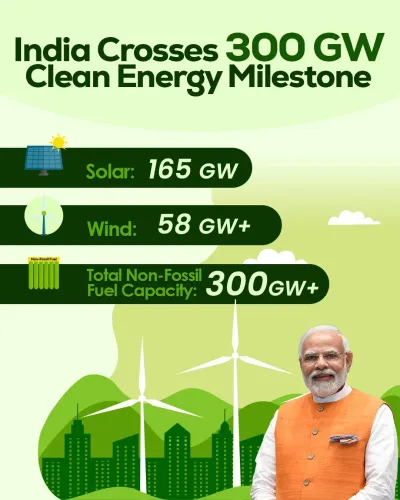
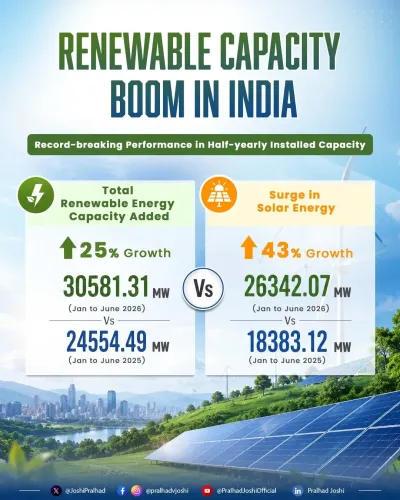
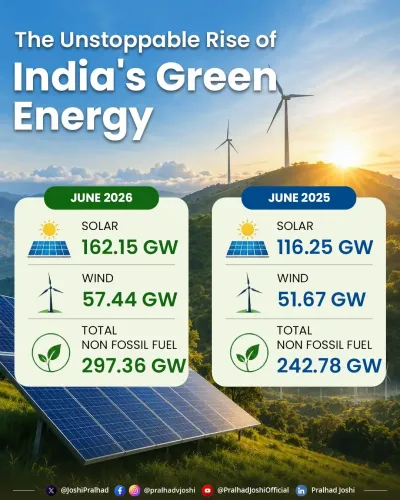
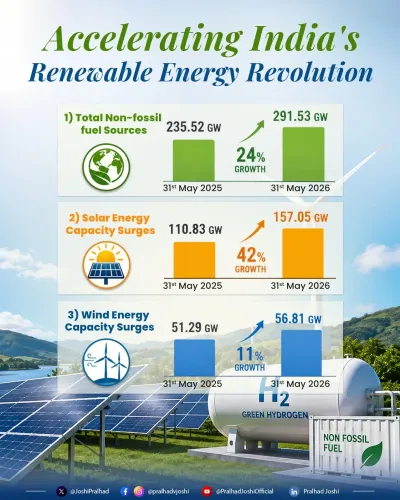
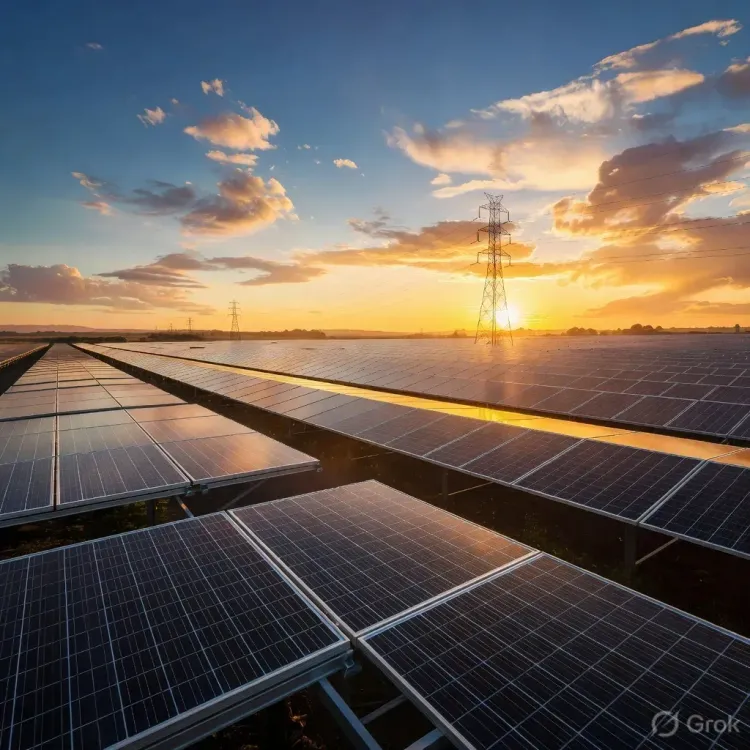
India has crossed 300 GW of non-fossil fuel installed power capacity, with Union Minister Pralhad Joshi highlighting a 400% renewable surge over 12 years. The milestone marks significant progress toward the Panchamrit target of 500 GW by 2030, set by PM Modi at COP26.
Key Takeaways
India has achieved 300 GW of non-fossil fuel-based installed power capacity , a landmark in its clean energy transition.
Union Minister Pralhad Joshi cited a 400 per cent surge in renewable energy capacity over 12 years .
PM Modi's Panchamrit strategy at COP26 in 2021 targets 500 GW of non-fossil fuel capacity by 2030 — the 300 GW mark is a major waypoint.
India's 2015 Paris Agreement pledge of 40% non-fossil electricity capacity has been surpassed ahead of schedule.
The National Solar Mission , launched in 2010, has been a primary driver of capacity growth alongside wind and other renewables.
Quarterly capacity-addition data from the Ministry of New and Renewable Energy will be the key indicator of whether the 2030 target stays on track.
India's electricity grid crossed a landmark threshold — 300 GW of non-fossil fuel-based installed power capacity — as Union Minister of New and Renewable Energy Pralhad Joshi on Saturday, August 8, 2026, declared the achievement a defining chapter in the country's clean-energy story, citing a 400 per cent surge in renewable capacity over the last 12 years.
From Paris pledges to 300 GW: the arc of a decade
The milestone does not arrive in a vacuum. When Prime Minister Narendra Modi stood at COP26 in Glasgow in 2021, he unveiled the Panchamrit strategy — five climate commitments, the centrepiece of which was 500 GW of non-fossil fuel capacity by 2030. The 300 GW mark, if sustained, puts India past the halfway point of that target with four years still on the clock. Before that, India's pledge at the 2015 Paris Climate Conference — 40 per cent non-fossil electricity capacity by 2030 — set the original ambition. The country has since surpassed that proportion well ahead of schedule.
The engine behind the numbers has been solar. The National Solar Mission, launched in 2010 and revised upward multiple times, anchored a decade-long buildout that drew global capital and drove down tariffs to among the lowest in the world. Wind, small hydro, and emerging green hydrogen programmes layer on top of that solar base.
Why 300 GW is more than a round number
Scale changes the game. At 300 GW of clean installed capacity, India is no longer just a promising emerging-market story — it is one of the world's largest renewable power bases, competing in the same tier as the United States and the European Union. For a country that once ran chronic power deficits and relied heavily on coal imports, the shift carries real energy-security weight. It also repositions India at multilateral climate negotiations: the numbers give New Delhi credibility to push harder on technology transfer and climate finance from developed nations.
Joshi, who holds the New and Renewable Energy portfolio alongside Consumer Affairs and Food and Public Distribution, framed the moment in explicitly global terms, saying India's clean energy transition 'continues to set global benchmarks.' The next signpost on the road to 2030 will be quarterly capacity-addition data from his own ministry — the pace of additions in solar and wind will determine whether the 500 GW Panchamrit target stays within reach.
A 400 per cent capacity surge in twelve years. The numbers are India's argument — made in gigawatts, not just speeches.
Point of View
The milestone is a core plank of the 'Viksit Bharat' framing, linking energy self-reliance to national ambition. The real test, however, is whether the pace of additions accelerates enough in the remaining four years to close the gap to 500 GW — a target that will require sustained policy support, grid infrastructure investment, and continued private capital inflows. Joshi's public emphasis on the 400% surge figure also signals the government's intent to make renewable energy a central campaign narrative ahead of any electoral cycle.
NationPress
23 Sept 2026
Frequently Asked Questions
What is India's 300 GW clean energy milestone?
India has reached 300 GW of installed non-fossil fuel-based power capacity, meaning nearly a third of a terawatt of electricity generation now comes from sources like solar, wind, and small hydro rather than coal or gas.
What is India's renewable energy target for 2030?
Under PM Modi's Panchamrit strategy announced at COP26 in 2021, India targets 500 GW of non-fossil fuel power capacity by 2030. The 300 GW milestone represents significant progress toward that goal.
What is the Panchamrit climate strategy?
Panchamrit refers to five climate commitments made by PM Modi at COP26 in Glasgow in 2021, with the headline pledge being 500 GW of non-fossil fuel electricity capacity by 2030 alongside net-zero emissions by 2070.
Who is Pralhad Joshi and what ministry does he head?
Pralhad Joshi is a senior BJP leader from Karnataka who serves as Union Minister of New and Renewable Energy as well as Minister of Consumer Affairs, Food and Public Distribution in the Modi government.
How has India's renewable energy capacity grown in 12 years?
According to Minister Pralhad Joshi's post, India has recorded a 400 per cent surge in renewable energy capacity over the last 12 years, driven primarily by rapid solar and wind installations since 2014.