White House: Trump Has Revived NASA for Mars and Beyond
Synopsis
The White House declared on November 7, 2026, that President Trump has reversed years of failed leadership that nearly collapsed U.S. space exploration, with NASA now targeting crewed missions to Mars and beyond under his administration's space policy direction.
Key Takeaways
The White House declared on November 7, 2026 , that President Trump has revived NASA after what it called years of failed leadership that nearly collapsed U.S. space exploration.
NASA is now publicly positioned by the administration as targeting crewed missions to Mars and beyond .
The Trump administration's space policy lineage includes Space Policy Directive-1 (December 2017), the Artemis programme (2019), and the creation of the U.S.
Space Force (December 2019).
The Artemis programme is designed as a sustainable lunar presence architecture that serves as a stepping stone to crewed Mars missions.
U.S. space ambitions are set against growing competition from China , which has its own crewed lunar and Mars goals, raising the geopolitical stakes of NASA's funding and timeline.
Congressional appropriations for Artemis and new Mars architecture studies remain the key variable between political ambition and actual spaceflight.
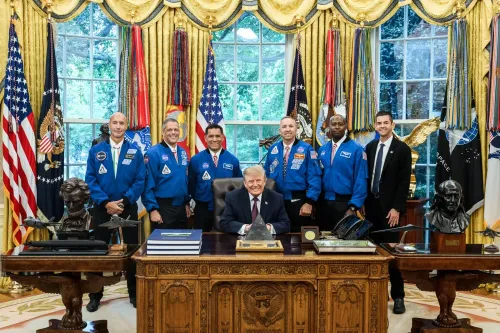
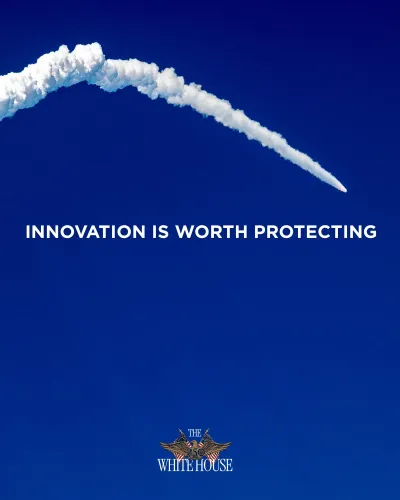
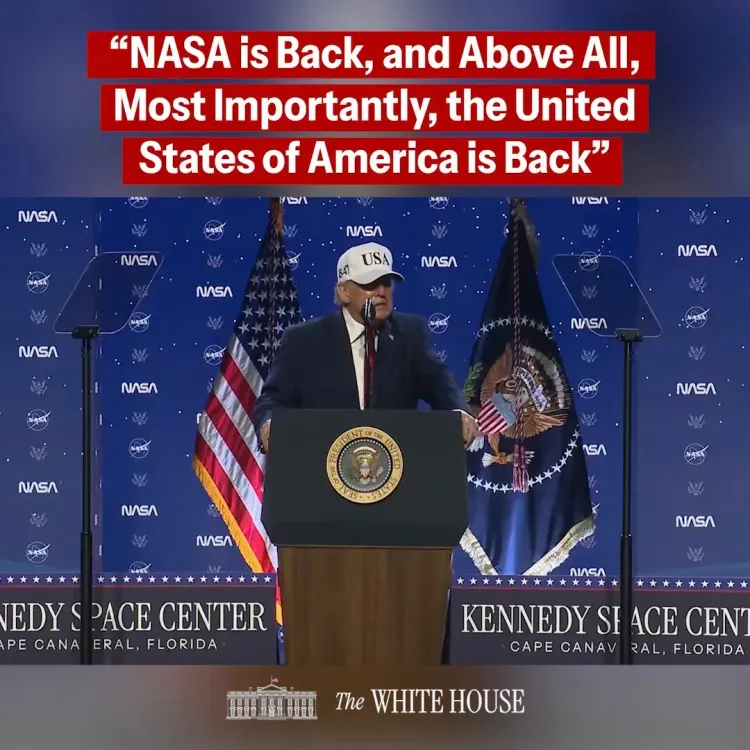
America's ambitions beyond Earth are back in the headlines — and the White House wants the world to know exactly who gets the credit. On Saturday, November 7, 2026, the official White House account posted a sweeping declaration on X, arguing that years of prior leadership failures had brought U.S. space exploration to the brink of collapse, and that President Donald Trump had reversed that trajectory, putting NASA back on course for Mars and beyond.
The claim at the centre: NASA's near-collapse and its revival
The post's core assertion is stark: 'Years of failed leadership led to the near collapse of space exploration in the United States.' That is a sweeping political charge, and it frames the current administration's record as a historic course-correction. The White House did not name prior administrations specifically, but the implication — that NASA had been allowed to drift — echoes a long-running debate inside U.S. space policy circles about chronic underfunding, shifting priorities, and the gap left after the Space Shuttle's retirement in 2011.
What is on the public record: in December 2017, Trump's first term produced Space Policy Directive-1, which formally redirected NASA toward returning U.S. astronauts to the Moon as a stepping stone to Mars. That directive gave formal presidential backing to what became the Artemis programme, announced in 2019, which set out a sustainable lunar presence architecture explicitly designed to enable eventual crewed Mars missions.
Artemis, Mars, and the race with China
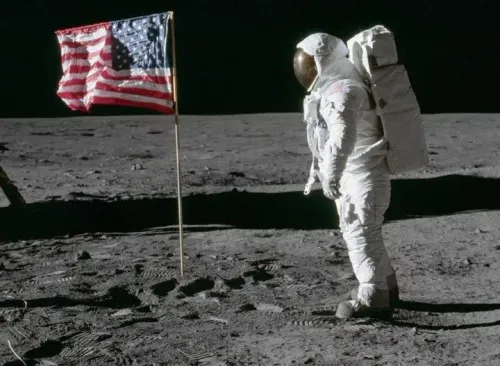
The Artemis architecture matters because it isn't simply about planting a flag on the Moon again — it is designed as the logistics and technology backbone for deep-space transit. Mars features prominently in multiple U.S. space policy documents as the ultimate long-duration human exploration target, requiring advances in life support, propulsion, and in-space refuelling that lunar missions are meant to validate.
That ambition sits against a sharper geopolitical backdrop than any previous space race. China has articulated its own crewed lunar and Mars goals, and commercial providers — led by firms operating under NASA contracts — have compressed the timeline and cost assumptions that once made Mars feel like a distant-century objective. Congressional appropriations for Artemis hardware and any new Mars mission architecture studies will be the real test of whether the rhetoric translates into funded flight plans.
Space Force and the military dimension Trump added
The Trump record on space also includes the creation of the U.S. Space Force — the sixth branch of the U.S. armed forces, formally established in December 2019 under the National Defense Authorization Act for Fiscal Year 2020. That move reflected a recognition that space had become a contested operational domain, not merely a scientific frontier. The White House post does not mention Space Force explicitly, but it is part of the same policy lineage the administration is invoking.
The post's confident, flag-and-rocket tone signals that space exploration will continue to be used as a proof-of-national-greatness argument going into the next phase of the administration's agenda. For NASA's workforce and the aerospace contractors building Artemis hardware, the political signalling matters: sustained presidential attention is the closest thing to a budget guarantee that a space agency can get.
If the appropriations follow the ambition, Americans may yet stand on Martian soil. The rockets are only as powerful as the political will that fuels them.
Point of View
Using Mars ambition as a nationalistic differentiator at a moment when China's own deep-space programme is maturing. For India and other spacefaring nations, the signal is clear: Washington intends to treat human Mars exploration as a prestige and strategic contest, not merely a scientific one, which could reshape partnership architectures and commercial opportunities in the global space economy.
NationPress
7 Nov 2026
Frequently Asked Questions
What did the White House say about NASA in November 2026?
The White House posted on X on November 7, 2026, claiming that years of failed leadership had nearly collapsed U.S. space exploration and that President Trump had revived NASA, setting it on course for crewed missions to Mars and beyond.
What is the Artemis programme and how does it relate to Mars?
Artemis is NASA's lunar return architecture announced in 2019, designed to establish a sustainable human presence on the Moon as a technological and logistical stepping stone toward eventual crewed Mars missions.
What space policies did Trump sign during his first term?
Trump signed Space Policy Directive-1 in December 2017, directing NASA to return U.S. astronauts to the Moon, and signed the National Defense Authorization Act in December 2019, which created the U.S. Space Force as the sixth branch of the military.
Is the United States in a space race with China over Mars?
China has publicly stated crewed lunar and Mars exploration goals, creating a competitive dynamic. Multiple U.S. space policy documents identify Mars as the long-term human exploration target, and competition with China is part of the broader strategic rationale for sustained NASA funding.
What will determine whether NASA actually reaches Mars under Trump?
Congressional appropriations for the Artemis programme and any new Mars mission architecture studies or commercial crew contracts will be the practical tests of whether the administration's declared ambitions translate into funded, executable flight plans.