Bangladesh-China ties make India partnership indispensable: Report
Synopsis
Bangladesh's China visit yielded infrastructure pledges but no help on the Teesta — because Beijing deliberately stayed out of Sino-Indian rivalry. A Centre for Peace Studies report now argues that the closer Dhaka gets to Beijing, the more it needs New Delhi: geography, water rights, and border security leave Bangladesh no choice but to keep both relationships functional.
Key Takeaways
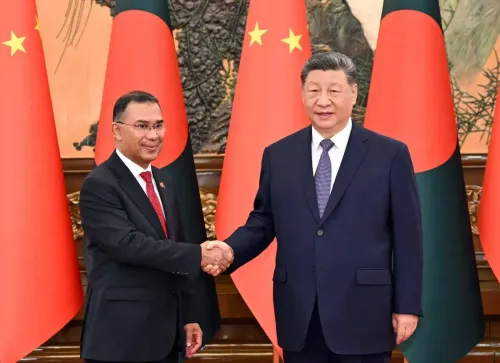
Prime Minister Tarique Rahman 's state visit to China secured infrastructure and water-management commitments but no Chinese involvement in Bangladesh 's water disputes with India .
The Centre for Peace Studies report concludes that a stronger China partnership makes constructive ties with India 'more indispensable than ever.' Beijing signalled diplomatic restraint on the Teesta River dispute, stating its cooperation with Dhaka 'does not target any third party.' India remains Bangladesh 's permanent neighbour, upper-riparian state, and vital security partner — roles no external power can fill.
The report urges a dual-track approach: deepen China ties in infrastructure and investment while strengthening India ties in water governance, border management, and connectivity.
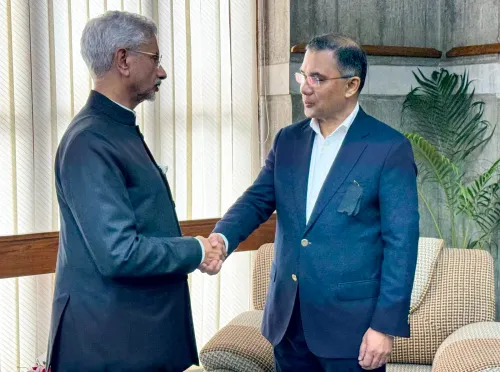
New Delhi has reportedly kept diplomatic channels open and avoided irreversible confrontation despite recurring bilateral frictions.
Bangladesh's deepening economic engagement with China — anchored by Prime Minister Tarique Rahman's recent three-day state visit to Beijing — has yielded fresh infrastructure and water-management commitments, but a new report warns that expanding ties with China makes constructive relations with India more critical, not less. The assessment, published by the Centre for Peace Studies, argues that geography and geopolitics make Dhaka's relationship with New Delhi structurally irreplaceable.
What the China Visit Delivered
Rahman's state visit produced multiple bilateral agreements and pledges of Chinese support across infrastructure and water-management sectors, developments that were received domestically as a diplomatic and economic win. Beijing offered technical assistance, feasibility studies, and water-management expertise — but stopped well short of inserting itself into Bangladesh's long-running water-sharing disputes with India.
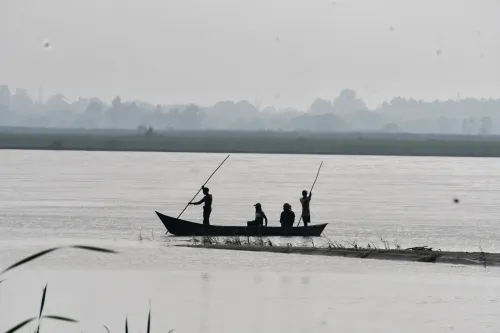
The Teesta River dominated discussions, yet China was explicit that its bilateral cooperation with Dhaka 'does not target any third party.' According to the report, this reflected Beijing's own preference not to transform the Teesta into another theatre of Sino-Indian rivalry — a signal of diplomatic restraint that New Delhi is likely to have noted.
Why India Remains Indispensable
The Centre for Peace Studies report underscores that while China provides robust infrastructure financing, India remains Bangladesh's 'permanent neighbour, vital security partner, and upper-riparian state.' These are roles no external power can substitute.
'Unlike relationships with extra-regional powers, Bangladesh's engagement with India cannot be paused, deferred, or compartmentalised. Geography ensures that every deterioration in bilateral relations produces immediate consequences for both countries,' the report warned. Bilateral frictions over water sharing, border management, and security along the Myanmar frontier, it noted, cannot be resolved through external engineering or financing alone.
The Strategic Recommendation
The report urges Dhaka to pursue a dual-track approach: expand cooperation with China in infrastructure, manufacturing, technology, and investment, while simultaneously deepening institutional ties with India in water governance, border management, regional security, trade facilitation, and connectivity. The two tracks, it argues, are complementary rather than contradictory — and a stronger partnership with Beijing makes constructive ties with New Delhi more indispensable than ever.
India's Posture Amid Friction
Despite recurring frictions between the two neighbours, New Delhi has continued to signal its interest in rebuilding the relationship. High-level contacts have reportedly remained open, diplomatic channels preserved, and public messaging has, according to the report, 'carefully avoided irreversible confrontation.' This cautious posture suggests India is keeping the door open even as Bangladesh diversifies its strategic partnerships.
The report's conclusions arrive at a moment when South Asia's geopolitical alignments are being tested by intensifying China-India competition. How Dhaka navigates the space between its two giant neighbours will have implications well beyond its own borders.
Point of View
Rather than lowers, the cost of a broken New Delhi relationship — is strategically sound and often missed in coverage that frames South Asian diplomacy as a zero-sum China-versus-India contest. What the analysis also quietly reveals is Beijing's own strategic calculation: China has no interest in becoming Dhaka's water-dispute proxy, because doing so would harden Indian opposition to Chinese influence across the subcontinent. For Bangladesh, the lesson is that diversification is not a substitute for neighbourhood management. Dhaka's unresolved Teesta grievance remains the single biggest friction point with India, and no amount of Chinese feasibility studies changes the hydraulic reality that India sits upstream.
NationPress
1 Oct 2026
Frequently Asked Questions
What did Bangladesh Prime Minister Tarique Rahman's China visit achieve?
The three-day state visit produced multiple bilateral agreements and Chinese pledges of support for infrastructure and water-management projects. However, Beijing stopped short of involving itself in Bangladesh's water-sharing disputes with India, explicitly stating its cooperation 'does not target any third party.'
Why does the Centre for Peace Studies report say India ties are indispensable for Bangladesh?
The report argues that geography makes Bangladesh's relationship with India structurally irreplaceable. India is Bangladesh's permanent neighbour, upper-riparian state, and vital security partner — roles no external power can substitute. Every deterioration in bilateral ties, the report warns, produces immediate consequences for both countries.
What is the Teesta River dispute between Bangladesh and India?
The Teesta River is a shared waterway whose flow is critical to Bangladesh's agriculture. Bangladesh has long sought a formal water-sharing agreement with India, but a deal has remained elusive due to political complexities. During Rahman's China visit, the Teesta dominated discussions, but Beijing declined to take sides.
What dual-track strategy does the report recommend for Bangladesh?
The Centre for Peace Studies report urges Dhaka to simultaneously expand cooperation with China in infrastructure, manufacturing, technology, and investment, while deepening institutional ties with India in water governance, border management, regional security, trade facilitation, and connectivity. It frames the two tracks as complementary, not contradictory.
How has India responded to tensions with Bangladesh?
Despite recurring bilateral frictions, New Delhi has reportedly kept high-level contacts open, preserved diplomatic channels, and avoided public messaging that could lead to irreversible confrontation, according to the report. This signals India's continued interest in rebuilding the relationship.