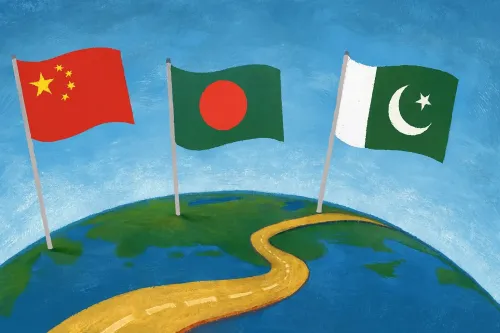
Bangladesh-China ties: Can Dhaka protect its national interests?
Synopsis
Bangladesh's sweeping post-summit engagement with China — covering infrastructure, defence, media, and a rare party-to-party MoU between the BNP and CPC — is raising pointed questions about transparency, debt risk, and a $24 billion trade relationship where Dhaka exports only a fraction. The central challenge: can Bangladesh move fast enough to capture the benefits without locking itself into dependency?
Key Takeaways
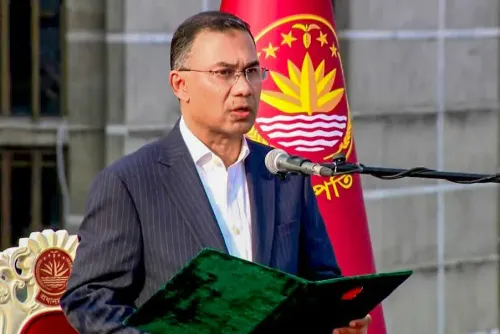
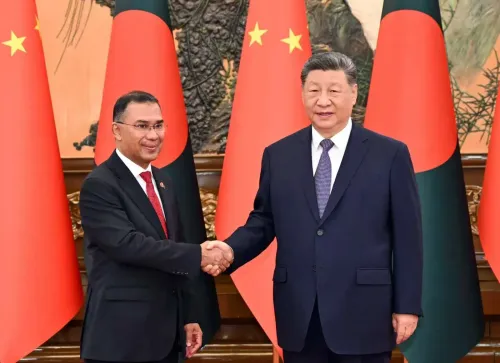
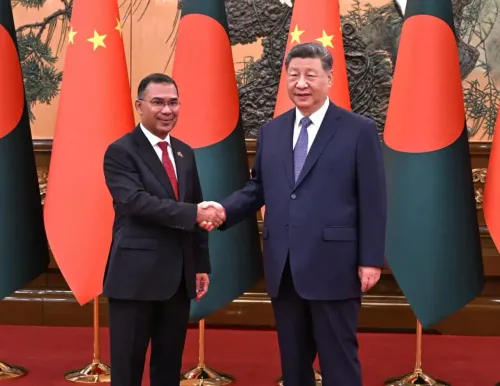
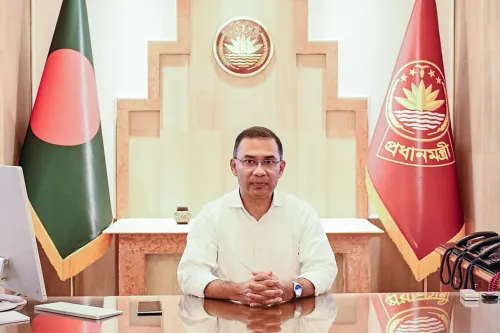
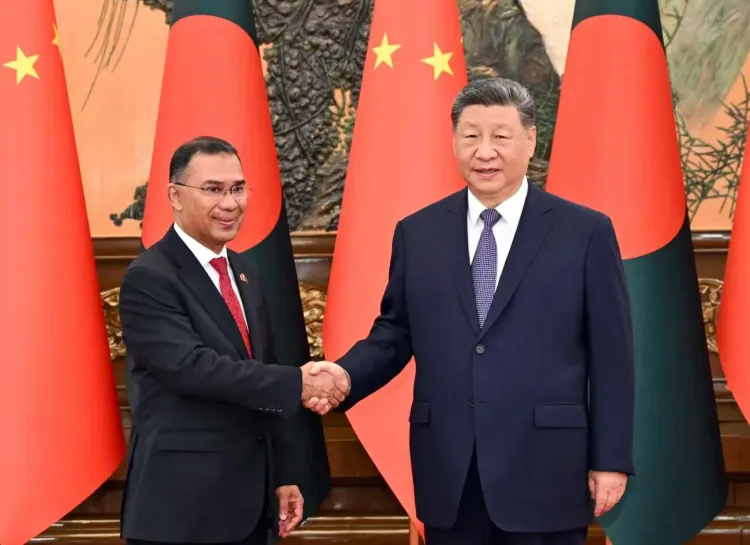
Prime Minister Tarique Rahman's visit to China last month produced agreements across infrastructure, trade, education, healthcare, defence, and party-to-party cooperation.
A Memorandum of Understanding (MoU) between the Bangladesh Nationalist Party (BNP) and the Communist Party of China (CPC) marks an unusually direct political linkage outside normal state diplomacy.
China Media Group (CMG) has expanded content-sharing and journalist exchange agreements with Bangladeshi media, raising questions about narrative influence.
Key infrastructure projects include the expansion of Mongla Port , a proposed Chinese Industrial Park , and the Chinese Economic and Industrial Zone in Chattogram .
Bilateral trade exceeds $24 billion annually, but Bangladesh's exports to China remain a small fraction — a structural imbalance analysts say must be addressed in future negotiations.
The Dhaka Tribune warned that defence modernisation should match Bangladesh's economic capacity and not be driven by the pace of Chinese offer-making.
Bangladesh and China have entered a new and consequential phase of engagement following Prime Minister Tarique Rahman's visit to Beijing last month, which produced a sweeping package of agreements spanning infrastructure, trade, education, healthcare, defence, and party-to-party cooperation. While analysts acknowledge that closer ties with the world's second-largest economy carry clear economic logic, a growing body of expert commentary argues that the speed and breadth of this engagement demand careful scrutiny of how Dhaka intends to protect its long-term strategic interests.
Key Developments from the Rahman-Beijing Summit
The most structurally significant outcome of the visit, according to a report in Bangladesh's Daily Sun, was a Memorandum of Understanding (MoU) signed between the Bangladesh Nationalist Party (BNP) and the Communist Party of China (CPC). Unlike conventional state-to-state diplomacy, party-to-party agreements of this kind create direct political linkages that operate outside formal foreign policy channels. Researchers have long noted that the CPC's International Department and its United Front Work Department have cultivated such relationships globally as part of Beijing's broader diplomatic outreach — including with academic institutions, civil society organisations, and overseas communities.
Media and Information Landscape
China Media Group (CMG), China's state broadcaster, has deepened its presence in Bangladesh through content-sharing agreements, journalist exchange programmes, and cooperation with local broadcasters. Such arrangements are not unusual in international media diplomacy, but analysts note they also expand Beijing's capacity to project its own narratives within Bangladeshi public discourse — a dynamic that warrants transparency from both sides.
Infrastructure and Debt: The Transparency Question
China's growing footprint in Bangladesh's physical infrastructure is already visible. The expansion of Mongla Port, a proposed Chinese Industrial Park in its vicinity, and the Chinese Economic and Industrial Zone in Chattogram are among the flagship projects currently in play. Drawing on global experience with similar arrangements, the Daily Sun report warned that 'transparency, competitive procurement and careful debt management' are non-negotiable safeguards if Bangladesh is to avoid the pitfalls that have burdened other nations that have pursued infrastructure-led engagement with China.
Trade Imbalance: A Structural Concern
Bilateral trade between Bangladesh and China has surpassed $24 billion annually, yet Bangladesh's exports to China remain only a small fraction of that total. The structural asymmetry is a recurring concern among economists. A separate analysis in leading Bangladeshi daily Dhaka Tribune cautioned that while the relationship offers genuine opportunities, those opportunities carry the risk of long-term dependency if not strategically balanced. It specifically noted that defence modernisation should be calibrated against Bangladesh's economic capacity, technology development, and human resource growth — rather than driven by the pace of Chinese offer-making.
What Dhaka Must Do Next
Analysts and commentators agree that the central question is not whether Bangladesh should engage with China — it clearly should, and is — but whether it will do so with equal clarity, confidence, and foresight on its own side of the table. Future negotiations, experts argue, must prioritise improved market access for Bangladeshi goods and a credible plan to narrow the widening trade imbalance. Partnerships built on transparency and balanced negotiation, the Daily Sun report concluded, are the only durable kind.
Point of View
And the CPC has used precisely this channel to deepen influence in developing nations well beyond what bilateral trade figures suggest. Bangladesh's $24 billion trade relationship with China sounds like partnership — but a relationship where one side exports only a fraction of the total is structurally closer to dependency. The real test of this engagement is not the summit communiqué but whether Dhaka can convert infrastructure access and investment into export market gains and technology transfer. History in South Asia and Africa suggests that without explicit, enforceable conditionalities, that conversion rarely happens on the weaker party's terms.
NationPress
24 Oct 2026
Frequently Asked Questions
What agreements did Bangladesh sign with China during PM Tarique Rahman's visit?
Prime Minister Tarique Rahman's visit to China last month yielded a broad package of agreements covering infrastructure, trade, education, healthcare, defence, and party-to-party cooperation. The most notable was an MoU between the Bangladesh Nationalist Party and the Communist Party of China — an unusual direct political linkage outside conventional state diplomacy.
What is the Bangladesh-China trade imbalance?
Bilateral trade between Bangladesh and China has surpassed $24 billion annually, but Bangladesh's exports to China represent only a small fraction of that total. Analysts argue that future negotiations must focus on improving market access for Bangladeshi goods to address this widening structural imbalance.
Why is the BNP-CPC MoU significant?
Unlike standard state-to-state agreements, party-to-party MoUs create direct political links that operate outside formal foreign policy oversight. Researchers have noted that the CPC's International Department and United Front Work Department use such channels globally to deepen Beijing's influence with political parties, civil society, and academic institutions.
What are the concerns about Chinese infrastructure projects in Bangladesh?
China's infrastructure footprint includes the expansion of Mongla Port, a proposed Chinese Industrial Park nearby, and a Chinese Economic and Industrial Zone in Chattogram. Analysts warn that transparency, competitive procurement, and careful debt management are essential safeguards, citing global experience with similar arrangements that have led to debt dependency in other nations.
How is China expanding its media presence in Bangladesh?
China Media Group, China's state broadcaster, has strengthened ties with Bangladeshi media through content-sharing agreements, journalist exchanges, and cooperation with local broadcasters. While such arrangements are common in international media diplomacy, analysts note they also give Beijing greater scope to project its narratives within Bangladesh's public information space.