China-Myanmar-Bangladesh corridor faces security, geopolitical hurdles: Report
Synopsis
The China-Myanmar-Bangladesh Economic Corridor is back on the table after PM Tarique Rahman's Beijing visit — but the route runs straight through Myanmar's war-torn Rakhine State, where the Arakan Army holds sway. With India sidelined, the US watching, 1.2 million Rohingyas in limbo, and debt-trap precedents from Sri Lanka to Pakistan, Bangladesh faces one of its most consequential infrastructure decisions yet.
Key Takeaways
The proposed CMBC corridor would link Kunming in China's Yunnan province to Bangladesh's ports via Myanmar's Rakhine State .
Rakhine State has been under active armed conflict since 2021 , with the Arakan Army controlling much of the proposed route.
Bangladesh hosts approximately 1.2 million Rohingya refugees, adding a humanitarian dimension to any connectivity decision.
India exited the predecessor BCIM corridor over concerns about China's Belt and Road Initiative and regional influence.
Economists cite Hambantota Port , CPEC , and the China-Laos Railway as cautionary precedents on infrastructure-led debt risk.
Analysts urge Bangladesh to assess the corridor solely on national interest rather than geopolitical alignment.
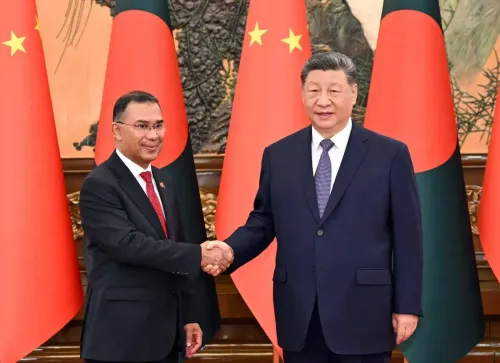
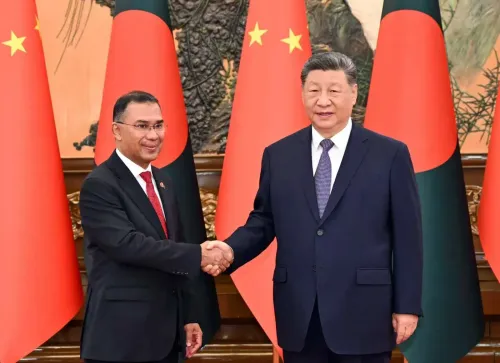
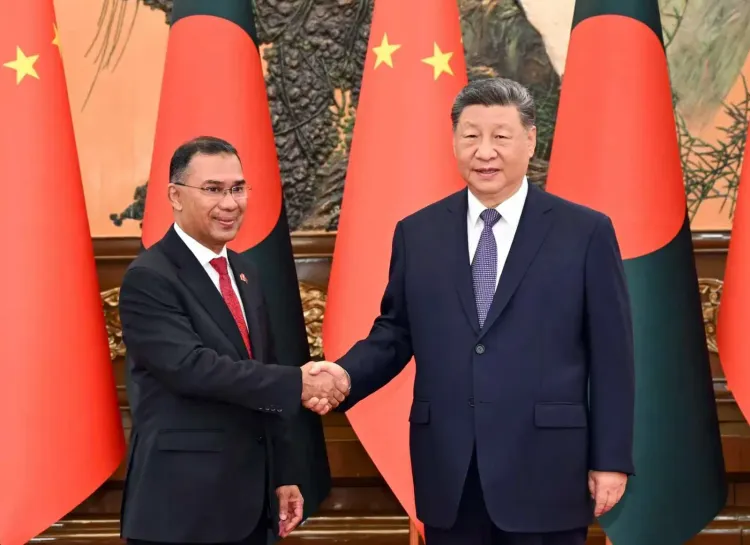
The proposed China-Myanmar-Bangladesh Economic Corridor (CMBC) faces formidable security and geopolitical obstacles that could stall its implementation, according to a report, even as the project gained fresh momentum following Bangladesh Prime Minister Tarique Rahman's visit to China in June 2025. The corridor was among the central agenda items during the visit.
The Security Fault Line
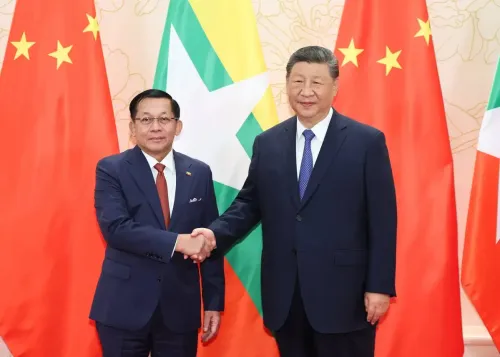
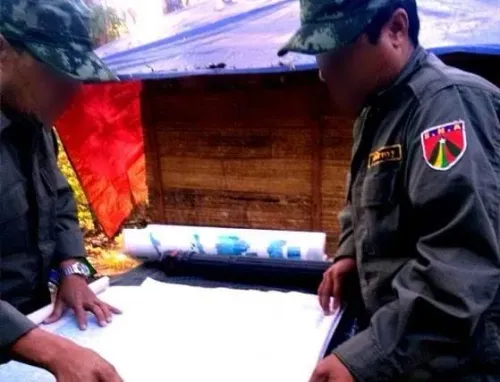
The most critical challenge is the proposed route itself. According to a report in Bangladesh's Daily Sun, the corridor would pass through Myanmar's Rakhine State, where armed conflict has persisted since the military takeover in 2021. 'The Arakan Army now controls or influences much of the territory through which the corridor would run, creating serious uncertainty for long-term infrastructure projects,' the report stated.
Experts cited in the report warned that infrastructure routed through active conflict zones could inadvertently empower armed groups by generating new revenue streams or expanding their influence. They underscored the need for comprehensive security assessments before any commitments are formalised.
The Rohingya Complication
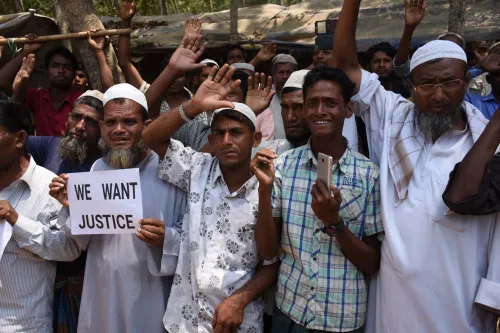
The Rohingya crisis adds a further layer of complexity. Bangladesh currently hosts approximately 1.2 million Rohingya refugees, and analysts argue that any regional connectivity initiative must not be allowed to undercut efforts toward their safe, voluntary, and dignified repatriation. This humanitarian dimension makes Dhaka's calculus on the corridor particularly delicate.
Geopolitical Pressures From All Sides
The CMBC is a revival of the original Bangladesh-China-India-Myanmar (BCIM) Economic Corridor, first proposed in 1999. India subsequently withdrew from the project over concerns about China's Belt and Road Initiative (BRI) and Beijing's expanding regional footprint — leaving the corridor without New Delhi's participation.
India's wariness persists. The country remains concerned that the project could deepen China's presence near its strategically sensitive northeastern region and the Siliguri Corridor. Meanwhile, the United States has reportedly encouraged Bangladesh to preserve its strategic balance even as economic ties between Dhaka and Washington deepen.
Financial Scrutiny and Debt Risk
Economists cited in the report cautioned that the financial implications of the corridor warrant rigorous examination. Large-scale infrastructure projects demand substantial upfront investment, sustained maintenance, and commercially viable operations. They argued that any major outlay must be weighed against competing national priorities — including port modernisation, export infrastructure, climate resilience, healthcare, education, and industrial development.
The report pointed to cautionary precedents: the China-Laos Railway, the China-Pakistan Economic Corridor (CPEC), and Sri Lanka's Hambantota Port all demonstrate that infrastructure alone cannot guarantee economic returns. 'Transparent financing, careful feasibility studies, strong institutions and a competitive domestic economy are equally important,' the report noted.
Bangladesh's Strategic Calculus
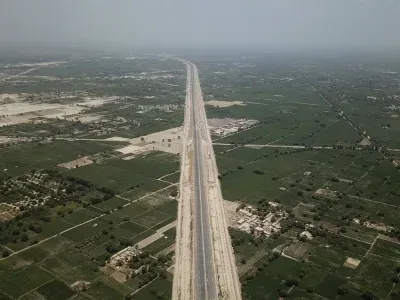
Analysts broadly agree that Bangladesh should evaluate the CMBC strictly through the prism of its own national interests rather than as a participant in broader geopolitical competition. The corridor envisions a road and rail network linking Kunming in China's Yunnan province with Bangladesh's ports via Myanmar — a route with transformative trade potential, but one that currently runs through some of the region's most contested territory. How Dhaka navigates these competing pressures will be closely watched in the months ahead.
Point of View
Without India at the table and with the US watching closely. The revival of this corridor so soon after PM Rahman's Beijing visit raises questions about whether the momentum is commercially driven or diplomatically managed. The Hambantota and CPEC comparisons are not alarmist — they are relevant precedents for a country whose fiscal headroom is limited. Bangladesh's real leverage lies in slowing down, demanding transparent feasibility studies, and insisting on multilateral financing — not in choosing between Beijing and Washington.
NationPress
12 Oct 2026
Frequently Asked Questions
What is the China-Myanmar-Bangladesh Economic Corridor (CMBC)?
The CMBC is a proposed road and rail network that would connect Kunming in China's Yunnan province to Bangladesh's ports via Myanmar. It is a revival of the Bangladesh-China-India-Myanmar (BCIM) Economic Corridor first proposed in 1999, now without India's participation.
Why is the CMBC corridor considered a security risk?
The proposed route passes through Myanmar's Rakhine State, which has been engulfed in armed conflict since the 2021 military takeover. The Arakan Army controls or influences much of the territory along the corridor, creating significant uncertainty for long-term infrastructure investment.
How does the Rohingya crisis affect the CMBC proposal?
Bangladesh hosts around 1.2 million Rohingya refugees, and analysts argue that any regional connectivity initiative must not undermine efforts for their safe, voluntary, and dignified repatriation. The humanitarian situation adds a politically sensitive dimension to Dhaka's decision-making.
Why did India exit the predecessor BCIM corridor?
India withdrew from the Bangladesh-China-India-Myanmar Economic Corridor due to concerns over China's Belt and Road Initiative and Beijing's growing regional influence. India also remains wary of Chinese infrastructure projects near its northeastern region and the Siliguri Corridor.
What financial risks does the CMBC pose for Bangladesh?
Economists warn that large infrastructure projects require substantial investment, maintenance, and commercially viable operations. They point to cautionary examples — including Sri Lanka's Hambantota Port and the China-Pakistan Economic Corridor — where infrastructure alone did not deliver economic success without transparent financing and strong institutions.