Is China Striving to Safeguard Myanmar's Military Regime in Naypyidaw?
Synopsis
As China amplifies its involvement in Myanmar's military regime, the geopolitical implications are profound. Explore how infrastructure projects and military cooperation shape the future of this Southeast Asian nation.
Key Takeaways
China-Myanmar Economic Corridor enhances bilateral trade.
Military cooperation between China and Myanmar strengthens.
Upcoming elections exclude significant political opposition.
Strategic alliances shape regional power dynamics.
Ongoing civil conflict complicates Myanmar's political landscape.
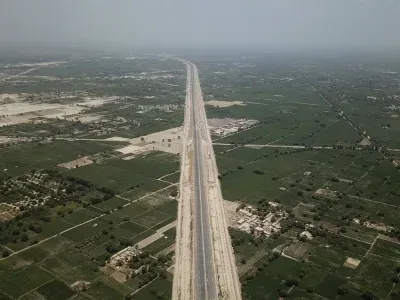
Dhaka: A plethora of infrastructure initiatives and economic zones emerging under the China-Myanmar Economic Corridor (CMEC) will grant Beijing access to the Indian Ocean while ostensibly fostering bilateral economic and trade collaboration. CMEC is a segment of the contentious Belt and Road Initiative (BRI), with China's multi-faceted strategy leaning towards enhanced intervention and support.
Several Chinese economic hubs consist of pivotal port cities and border areas tied together by infrastructure developments. The Kyaukphyu Special Economic Zone (SEZ) serves as a cornerstone of China's economic interests, while the Muse-Mandalay-Kyaukphyu corridor links Yunnan to the Indian Ocean and Northern border Commercial and Economic Cooperation Zones (Muse and Chin Shwe Haw in northern Shan State and Kanpaikti in Kachin State).
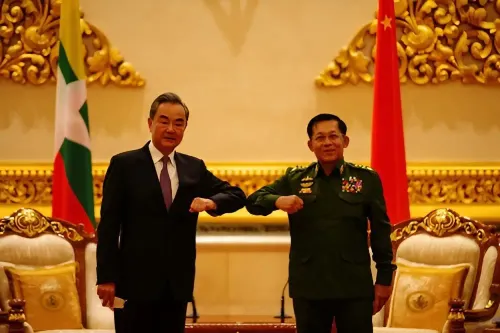
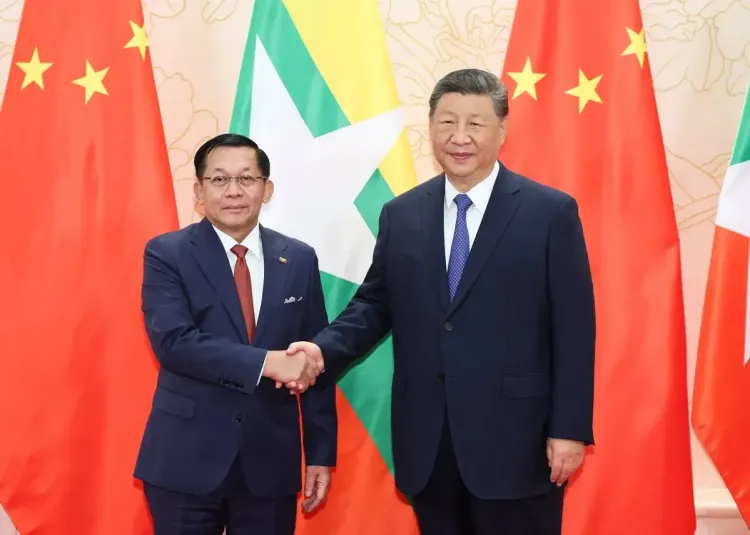
September has witnessed a surge of visits by Myanmar Generals to China following coup leader Min Aung Hlaing's assertion during his trip to Beijing that the two nations are experiencing their 'strongest ties ever.'
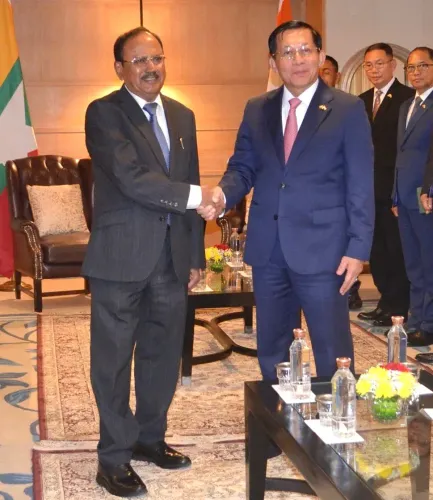
Recently, Myanmar’s Defence Minister General Maung Maung Aye, Home Affairs Minister Lt. Gen. Tun Tun Naung, and Navy Chief Admiral Htein Win each made separate trips to Beijing aimed at enhancing cooperation in drone and military technology, securing Chinese projects in Myanmar, and fortifying bilateral security connections.
Parallel visits to China included Prime Minister Nyo Saw in Nanning, where he advocated for greater Chinese investments; Central Bank Governor Than Than Swe toured the Huawei Global Cyber Security Transparency Centre in Dongguan, Guangdong to deliberate on banking partnerships; and Construction Minister Myo Thant visited Guilin to discuss the execution of BRI and CMEC projects.
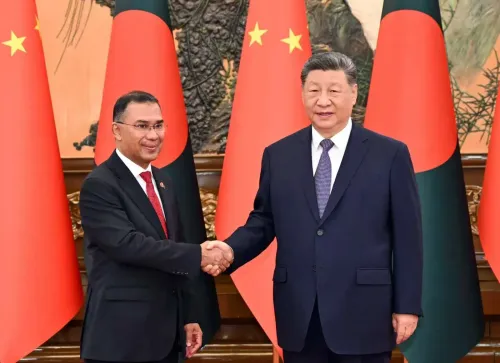
Senior General and Chairman of the State Security and Peace Commission, Min Aung Hlaing, visited China coinciding with the 75th anniversary of bilateral diplomatic relations to further deepen strategic cooperation. On August 30, President Xi Jinping met with Min Aung Hlaing in Tianjin during the SCO Summit, and both leaders reconvened during the September 3 Victory Day Parade in Beijing, commemorating the 80th anniversary of China's victory over Japan in World War II.
Immediately following Hlaing's visit to China, Myanmar’s junta-appointed Prime Minister U Nyo Saw participated in the inaugural ceremony of the China-ASEAN Business Leaders Forum on September 17, themed 'Connecting ASEAN through AI for Innovation of Digitalization and Sharing the Future of Development.'
During the event, he highlighted the potential for enhanced cooperation in trade, economy, and industry among China and ASEAN countries, aiming for long-term sustainable development and mutual benefits through close collaboration with regional partners. Nyo Saw also attended the inauguration of the 22nd China-ASEAN Expo (CAEXPO) and the China-ASEAN Business and Investment Summit at the Nanning International Convention Centre on the same day.
A former Lieutenant General, Nyo Saw is perceived as a trusted confidant of Hlaing. In Nanning, Prime Minister Nyo Saw engaged in discussions with Chinese Vice-President Han Zheng at the Liyuan State Guesthouse on September 16. Both parties examined bilateral relations and strategies for improving the socio-economic conditions of citizens in both nations, enhancing trade and investment, and collaborating on anti-narcotic measures, human trafficking, online fraud, and transnational crime, alongside further humanitarian assistance from China. Nyo Saw also conferred with Guangxi Zhuang Autonomous Region Communist Party of China (CPC) Secretary Chen Gang and Chinese business leaders. Minister for Commerce U Chit Swe and Deputy Minister for Education Dr Zaw Myint also attended the Nanning meetings.
In a separate instance, a Myanmar delegation led by Minister for Defence General Maung Maung Aye convened with China's Minister of National Defence Admiral Dong Jun in Beijing on September 17. The meeting addressed matters related to defense cooperation, maintaining peace and law enforcement in border regions, scholar exchanges, and the enhancement of friendly relations between the two countries.
On September 18, the Myanmar delegation participated in the 12th Beijing Xiangshan Forum focused on 'Safeguarding the International Order and Promoting Peaceful Development Together.' The forum commenced with Admiral Dong Jun's keynote address addressing topics including Taiwan, the South China Sea, and Beijing’s stance on regional alliances formed by US allies. Minister General Maung Maung Aye contributed to the 2nd plenary session of the forum with a speech titled 'Strategic Mutual Trust and Security Cooperation in the Asia-Pacific Region.'
Myanmar's last free and fair elections occurred on November 8, 2015, when the National League for Democracy (NLD) party won a parliamentary majority.
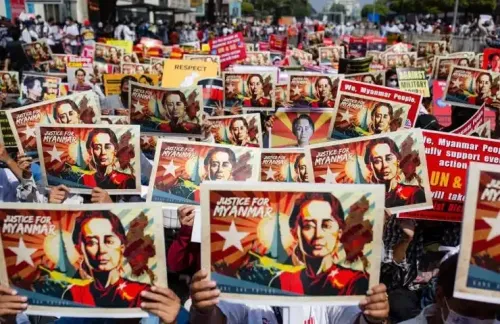
Currently, Aung San Syu Kyi (ASSK) is viewed as a global pariah, having failed to realize her vision for Myanmar, which aimed to advance the legacy of her father, General Aung San, the nationalist leader of Burma, who played a crucial role in securing the nation’s independence from Great Britain.
Myanmar is currently engulfed in a civil war between the junta and ethnic armed factions. Junta leader, Min Aung Hlaing, who orchestrated the coup d'état on February 1, 2021, has pledged to organize general elections on December 28 this year and has issued threats of severe consequences for anyone who criticizes or obstructs the electoral process.
China has signaled its support for the upcoming elections in this Southeast Asian nation, which will not permit the NLD to contest. Approximately 61 parties are registered for the elections, with nine of them competing nationwide. The election may perpetuate the junta's influence by proxy and might not receive recognition from the United States and the West.
The participating parties include the junta's proxy Union Solidarity and Development Party (USDP), the National Unity Party (NUP), the People’s Pioneer Party (PPP), and the People’s Party (PP), along with the Democratic Party of National Politics (DNP), Myanmar Farmers Development Party (MFDP), Shan and Ethnic Democratic Party (SEDP), the Women’s Party (Mon), and the National Democratic Force Party (NDF) competing across all constituencies nationwide.
China actively trains, arms, and funds insurgents along its border and beyond, nurturing the Tatmadaw both institutionally and on an individual level. There is ongoing engagement with all factions, facilitated by the absence of a language barrier. Beijing harbors a significant geopolitical agenda, alongside its economic and security interests. China remains Myanmar's closest ally and has directly intervened in the ongoing conflict. It is determined to safeguard the regime in Naypyidaw to ensure the security of Chinese personnel, projects, and institutions within Myanmar.
(The writer is an expert on South Asia and Eurasia. He was previously associated with the Manohar Parrikar Institute for Defence Studies and Analyses. The views expressed are personal.)
Point of View
It is crucial to recognize the intricate relationship between China and Myanmar. The ongoing support from China for Myanmar's military regime underscores Beijing's strategic interests in maintaining stability in the region, which ultimately impacts both nations and their economic futures.
NationPress
5 Oct 2026
Frequently Asked Questions
What is the China-Myanmar Economic Corridor?
The China-Myanmar Economic Corridor (CMEC) is a series of infrastructure projects aimed at enhancing trade and economic cooperation between China and Myanmar, forming part of China's Belt and Road Initiative (BRI).
What role does China play in Myanmar's military regime?
China is a key ally of Myanmar's military regime, providing political support, military technology, and economic investments to bolster the junta’s stability and influence.
How has the political situation in Myanmar evolved since the coup in 2021?
Since the February 2021 coup, Myanmar has been embroiled in civil unrest and conflict, with the military junta facing significant opposition from ethnic armed groups and the pro-democracy movement.
What are the implications of the upcoming elections in Myanmar?
The upcoming elections, scheduled for December 28, 2023, are controversial as they will not include the National League for Democracy (NLD) party, potentially perpetuating the military's control over the political landscape.
What are the key economic projects under the CMEC?
Key projects under the CMEC include the Kyaukphyu Special Economic Zone, which connects vital trade routes from Yunnan to the Indian Ocean, and various infrastructure developments linking port cities and border zones.