CMBC stalled: China's Myanmar gamble exposes BRI's strategic limits
Synopsis
China's proposed CMBC corridor through Myanmar is colliding with an inconvenient reality: the Arakan Army controls 14 of 17 Rakhine townships, the proposed deep-sea port at Kyaukphyu is under siege, and Bangladesh refuses to commit until peace is restored. Beijing's willingness to absorb these risks — mirroring its pattern in Pakistan and Afghanistan — signals that the corridor is as much a geopolitical tool as an economic one.
Key Takeaways
Bangladesh Foreign Minister Khalilur Rahman said on 27 June that Dhaka has 'taken no position' on the CMBC and will only consider overland connectivity once peace is restored in Rakhine State .
The Arakan Army controls 14 of 17 townships in Rakhine State; the proposed Kyaukphyu deep-sea port site is reportedly under siege.
Bangladesh links the corridor to the Rohingya crisis , hosting approximately 1.2 million refugees and demanding conditions for their safe return before engaging on connectivity.
Chinese-backed projects in Myanmar have already been dismantled or suspended due to insecurity; the Muse-Mandalay railway alone could take close to a decade to complete.
China's risk tolerance in Myanmar mirrors its approach in Pakistan , Afghanistan , and Nepal , pointing to a strategic calculus that blends economic corridors with geopolitical influence and security objectives.
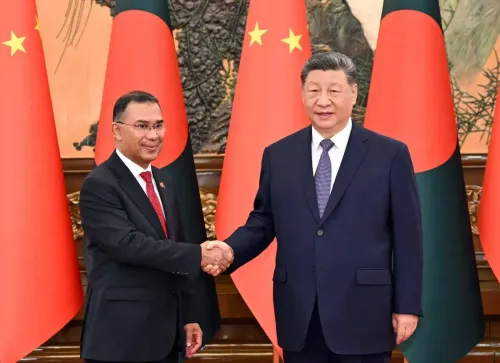
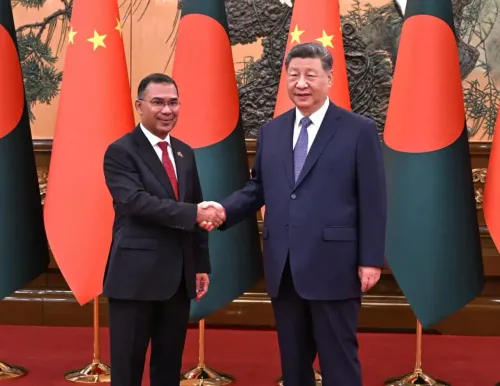
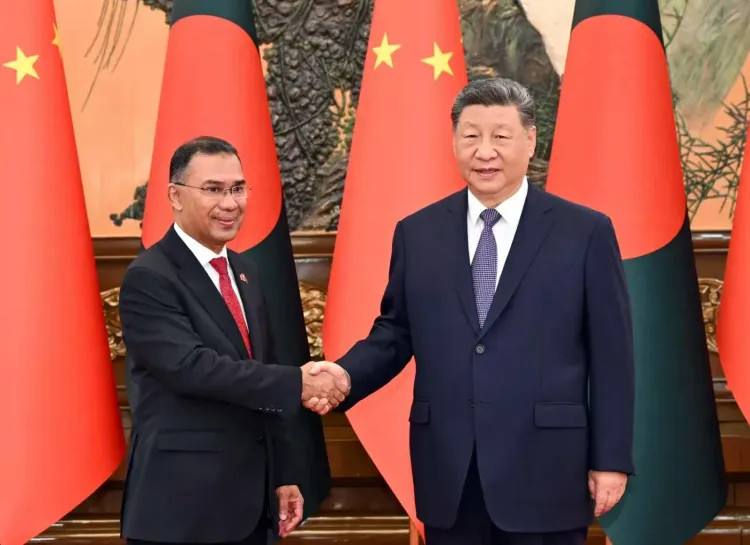
The proposed China-Myanmar-Bangladesh Economic Corridor (CMBC) faces mounting feasibility questions in Dhaka, as Myanmar's Rakhine State descends deeper into conflict and Bangladesh withholds any formal commitment to the project. The corridor, floated following Bangladesh Prime Minister Tarique Rahman's recent visit to China, has run headlong into ground realities that diplomatic blueprints have so far failed to account for.
Bangladesh's Cautious Stance
Foreign Minister Khalilur Rahman, speaking to the media on 27 June, said Bangladesh was 'currently examining' the CMBC proposal and had 'taken no position' on it. He added that any overland connectivity through Myanmar would remain explicitly conditional on the restoration of peace and stability in Rakhine State. An analytical piece in The Daily Star, Bangladesh's prominent English-language daily, argued that while the corridor looks attractive on paper, it is not a viable near-term option. 'For now, its prospects are shaped less by diplomatic agreements than by the realities inside Myanmar,' the article stated.
The Rakhine Problem
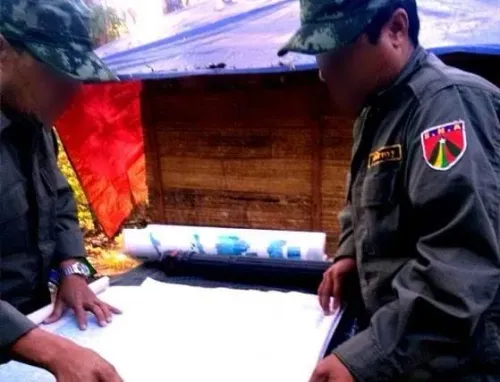
The ground situation in Rakhine State is the corridor's central obstacle. The Arakan Army — an ethnic armed organisation seeking greater autonomy — now controls 14 of 17 townships in the region, leaving Myanmar's military government clinging to Kyaukphyu, Sittwe, and Manaung. Critically, Kyaukphyu, the proposed site of a Chinese-backed deep-sea port, is reportedly under siege, with skirmishes occurring within two kilometres of junta naval bases. Chinese-backed projects in the area have already been dismantled or suspended due to insecurity. According to The Daily Star's assessment, even under optimistic conditions — fighting subsiding, financing secured, construction proceeding without major interruptions — the Muse-Mandalay railway alone would likely require close to a decade to complete.
The Rohingya Dimension
For Bangladesh, the CMBC is inseparable from the Rohingya crisis. Dhaka hosts approximately 1.2 million Rohingya refugees, whose numbers have continued to grow as renewed violence in Rakhine State drives fresh displacement. Dhaka has consistently argued that progress on regional connectivity should be accompanied by conditions enabling the safe, voluntary, and dignified return of these refugees. With fighting worsening, the corridor carries significant political and diplomatic risk for Bangladesh's government.
China's Broader Strategic Pattern
China's persistence in Myanmar is not an isolated calculation. In Afghanistan, Beijing's interest is reportedly driven as much by security imperatives — specifically, preventing Uyghur separatists from finding sanctuary across its shared borderlands — as by economic expansion. In Pakistan, Chinese engineers, infrastructure, and diplomatic sites working under the Belt and Road Initiative (BRI) have faced repeated attacks, reportedly by separatists, despite heightened security arrangements and counterterrorism measures. In Nepal, infrastructure projects near the strategically sensitive Siliguri Corridor — also known as the 'Chicken's Neck' — suggest motives that extend well beyond trade facilitation. Taken together, analysts argue, Beijing's calculus blends economic corridors as instruments of geopolitical influence with security buffers against challenges to its authority at the periphery.
What Comes Next
The CMBC, as currently envisioned, appears stalled by the dual constraints of Myanmar's fragmentation and Dhaka's deliberate diplomatic caution. Bangladesh's immediate priorities, according to The Daily Star's analysis, are likely to remain bilateral projects that can advance today, while the corridor is evaluated as a longer-term possibility rather than a near-term development strategy. China's willingness to absorb investment risk and diplomatic setbacks — as demonstrated in Pakistan, Afghanistan, and now Myanmar — suggests Beijing will not abandon the corridor concept. Whether that persistence translates into a viable project, or remains a tool of strategic signalling, will depend on how the conflict in Rakhine State evolves.
Point of View
Which means it will persist even when the ground situation makes viability implausible. Bangladesh's cautious hedging is rational — the Rohingya variable alone makes any premature commitment politically toxic at home. What mainstream coverage underplays is the Arakan Army's leverage: by controlling Kyaukphyu's hinterland, it has become an unacknowledged veto player in a corridor that China and Bangladesh are nominally negotiating bilaterally. Until Beijing engages with that reality — rather than routing around it — the CMBC risks becoming another BRI announcement that outlasts its own feasibility.
NationPress
17 Aug 2026
Frequently Asked Questions
What is the China-Myanmar-Bangladesh Economic Corridor (CMBC)?
The CMBC is a proposed connectivity project that would link China to Bangladesh through Myanmar's Rakhine State via road and railway networks, including a deep-sea port at Kyaukphyu. It was reportedly proposed by China following Bangladesh Prime Minister Tarique Rahman's recent visit, and is positioned as an extension of Beijing's Belt and Road Initiative in South Asia.
Why is Bangladesh hesitant to commit to the CMBC?
Bangladesh Foreign Minister Khalilur Rahman said on 27 June that Dhaka is 'currently examining' the proposal and has 'taken no position.' Bangladesh has made any overland connectivity through Myanmar conditional on the restoration of peace and stability in Rakhine State, and has also linked the corridor to progress on the safe return of approximately 1.2 million Rohingya refugees.
What is the situation in Myanmar's Rakhine State?
The Arakan Army, an ethnic armed organisation, now controls 14 of 17 townships in Rakhine State, with Myanmar's military government reduced to holding Kyaukphyu, Sittwe, and Manaung. The proposed deep-sea port site at Kyaukphyu is reportedly under siege, with skirmishes within two kilometres of junta naval bases, and Chinese-backed projects in the area have already been dismantled or suspended.
How does China's approach to Myanmar fit its broader BRI strategy?
China has shown a pattern of absorbing significant investment and diplomatic risk across BRI projects — facing separatist attacks in Pakistan, security-driven engagement in Afghanistan to counter Uyghur networks, and strategic infrastructure near sensitive corridors in Nepal. Analysts argue Beijing uses economic corridors as tools of geopolitical influence and security buffers, not purely as commercial ventures.
How long would the CMBC take to become operational?
According to an analysis in Bangladesh's The Daily Star, even under optimistic conditions — fighting subsiding, financing secured, and construction proceeding without major interruptions — the Muse-Mandalay railway alone would likely require close to a decade to complete. The corridor is assessed as unlikely to become operational in the foreseeable future.