Tarique Rahman meets Xi Jinping in Beijing amid fighter jet, MoU push
Synopsis
Bangladesh PM Tarique Rahman's Beijing visit is more than a diplomatic courtesy call — the potential acquisition of 24 Chinese J-10CE fighter jets near India's Siliguri Corridor, combined with 13 MoUs signed with Premier Li Qiang, signals a decisive post-Hasina pivot toward Beijing that is already rattling New Delhi and Washington.
Key Takeaways
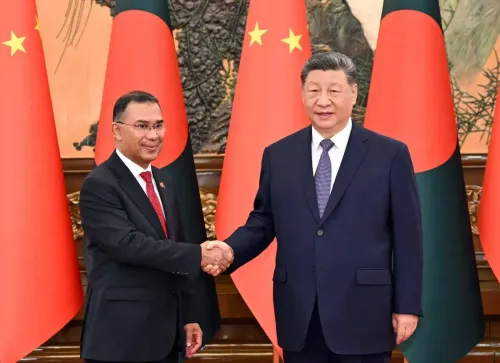
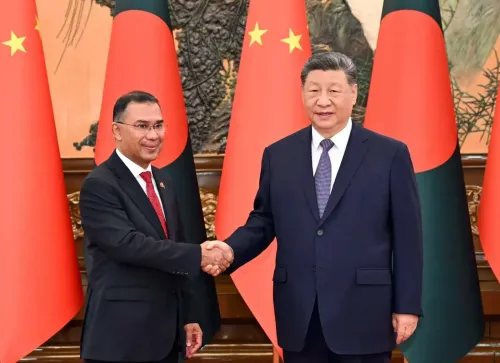
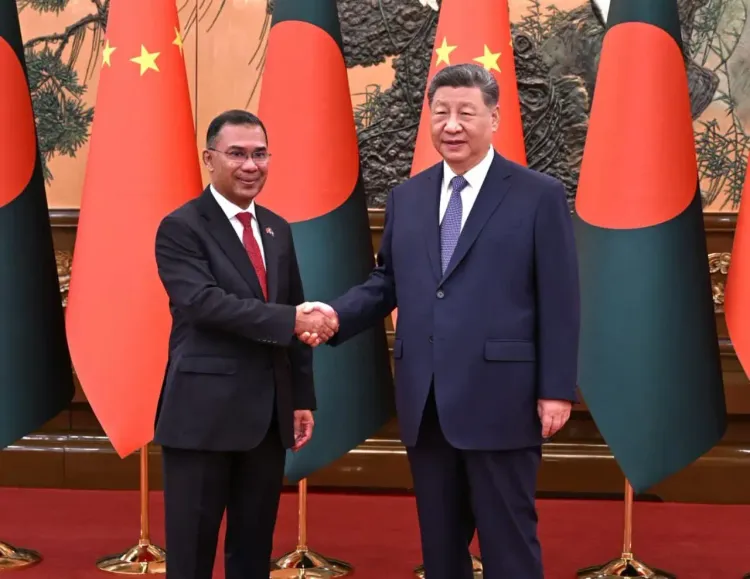
Tarique Rahman held bilateral talks with Xi Jinping at the Great Hall of the People in Beijing on 27 June 2025 .
The visit has already produced 2 agreements and 13 MoUs , signed during Thursday's meeting with Premier Li Qiang .
Reports indicate Bangladesh may finalise the purchase of 24 J-10CE fighter jets and UAV technology from China.
The potential defence deals raise concerns in New Delhi over proximity to the strategically vital Siliguri Corridor .
The visit marks a clear foreign-policy pivot by Dhaka toward China , Turkey , and Pakistan following the fall of the Awami League government.
The US trade pact — signed on 9 February 2025 , three days before elections — does not explicitly bar the Chinese defence deals.
Bangladeshi Prime Minister Tarique Rahman on Friday, 27 June 2025, held bilateral talks with Chinese President Xi Jinping at the Great Hall of the People in Beijing, one of the centrepiece engagements of his four-day official visit to China. The meeting signals a deepening of Bangladesh-China ties across trade, defence, and infrastructure, according to local media reports.
What the Two Leaders Discussed
Prime Minister's office spokesperson Mahdi Amin said the two leaders were expected to hold wide-ranging discussions on bilateral issues including trade, investment, infrastructure, and connectivity. 'The Prime Minister is expected to raise a number of issues relating to Bangladesh's interests during his meeting with President Xi Jinping,' Amin told reporters in Beijing ahead of the talks.
Prime Minister's Additional Press Secretary Atikur Rahman Rumon confirmed the meeting commenced on Friday morning.
MoUs and Agreements Signed
The Xi-Rahman meeting follows Rahman's bilateral talks with Chinese Premier Li Qiang on Thursday, during which both sides reportedly discussed the Teesta river project, trade, and investment. The session culminated in the signing of two agreements and 13 Memoranda of Understanding (MoUs). The Bangladesh Nationalist Party (BNP) described the outcome as 'a significant step forward in Bangladesh-China cooperation and partnership.'
The Fighter Jet Deal at the Centre
Rahman's visit is widely seen as an effort to cement economic and defence ties, with reports suggesting Dhaka may finalise the acquisition of 24 J-10CE fighter jets and separate UAV technology during the trip. The potential deal has drawn attention given that the aircraft, if acquired, would be positioned in proximity to India's strategically sensitive Siliguri Corridor.
Analysts note that Bangladesh's pursuit of Chinese military hardware is not explicitly prohibited under the US trade pact signed by the previous Muhammad Yunus-led interim government on 9 February 2025 — just three days before general elections — a timing that itself drew widespread criticism.
Strategic Implications for India and the US
Bangladesh's deepening defence engagement with China is being closely watched in New Delhi and Washington. Observers argue that advanced Chinese aircraft near the Siliguri Corridor could complicate India's northeastern security calculus. Critics also contend that the defence deals risk undermining Washington's Indo-Pacific strategy, even if they stop short of violating the letter of the bilateral trade agreement.
This comes amid a broader realignment in Dhaka's foreign policy following the fall of the Sheikh Hasina-led Awami League government, with Bangladesh reportedly pivoting toward China, Turkey, and Pakistan. Rahman arrived in China via Dalian on Monday night after concluding a two-day official visit to Malaysia — the first leg of his maiden overseas tour as Prime Minister.
How Beijing and Dhaka translate the MoUs and potential defence agreements into concrete outcomes will be closely watched by regional powers in the months ahead.
Point of View
And the reported J-10CE fighter jet deal is the sharpest edge of that signal. What mainstream coverage underplays is the compounding pressure on India: advanced Chinese aircraft near the Siliguri Corridor is not an abstract threat but a direct complication for the Northeast's connectivity lifeline. Washington's discomfort is real but constrained — the trade pact it signed with the Yunus interim government three days before elections leaves little legal leverage. The MoU count is impressive on paper; the test will be whether disbursements follow, or whether this joins a familiar South Asian pattern of summit-level announcements that quietly stall in implementation.
NationPress
24 Sept 2026
Frequently Asked Questions
What did Bangladesh PM Tarique Rahman and China's Xi Jinping discuss in Beijing?
The two leaders held wide-ranging bilateral talks covering trade, investment, infrastructure, connectivity, and defence cooperation at the Great Hall of the People on 27 June 2025. The meeting followed Thursday's session with Premier Li Qiang, which produced 13 MoUs and 2 formal agreements.
What is the J-10CE fighter jet deal Bangladesh is reportedly pursuing with China?
Reports indicate Bangladesh may finalise the acquisition of 24 J-10CE fighter jets and UAV technology during Tarique Rahman's current China visit. The deal, if confirmed, would mark a significant expansion of Bangladesh's Chinese-origin military hardware and has raised concern in India given the jets' potential positioning near the Siliguri Corridor.
Why does Bangladesh's China visit concern India?
Advanced Chinese aircraft positioned near India's Siliguri Corridor — the narrow land link connecting the Northeast to the rest of the country — could complicate India's strategic calculus in the region. New Delhi is also wary of the broader Dhaka pivot toward Beijing following the fall of the Sheikh Hasina government.
Does the US-Bangladesh trade pact prevent Dhaka from buying Chinese weapons?
No. The trade pact signed by the Muhammad Yunus-led interim government on 9 February 2025 does not explicitly prohibit Bangladesh from pursuing defence deals with China. However, analysts argue the acquisitions could still undermine Washington's Indo-Pacific strategy and strain the bilateral relationship.
What is the broader context of Tarique Rahman's China visit?
Rahman's four-day China visit is the second leg of his maiden overseas tour as Prime Minister, following a two-day stop in Malaysia. It reflects a deliberate post-Hasina foreign-policy reorientation, with Dhaka deepening ties with China, Turkey, and Pakistan — a marked departure from the Awami League era's India-leaning posture.