Bangladesh's New Leadership: A Chance to Strengthen Ties with India
Synopsis
Bangladesh's new Prime Minister Tarique Rahman faces a significant opportunity to fortify relations with India, a partnership crucial for both nations. With historical ties and ongoing collaboration, this leadership change could redefine South Asian diplomacy.
Key Takeaways
Bangladesh's new leadership under Tarique Rahman presents a chance to enhance ties with India.
Historical connections date back to Bangladesh's liberation in 1971.
Ongoing diplomatic engagement signals a commitment to cooperation.
India's support in energy supplies is vital for Bangladesh's stability.
People-to-people connections enrich the bilateral relationship.
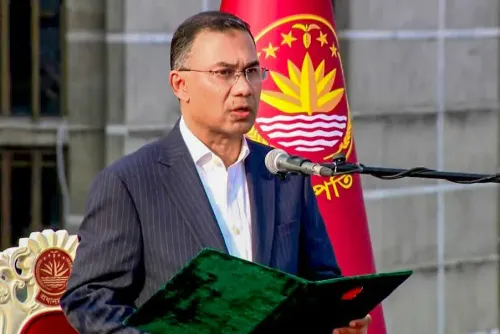
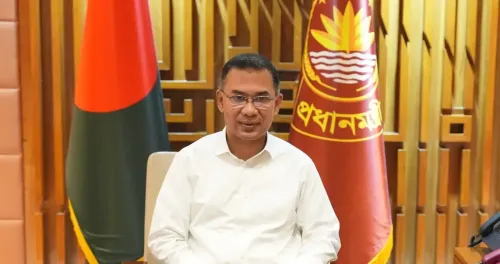
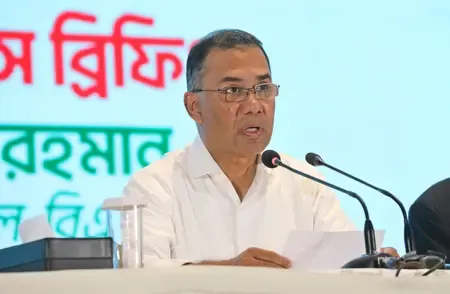
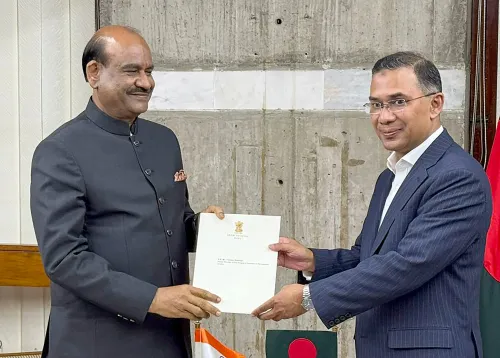
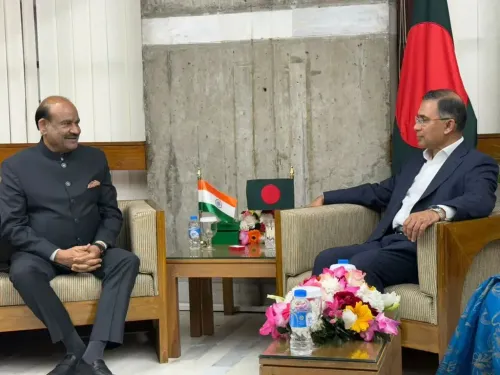
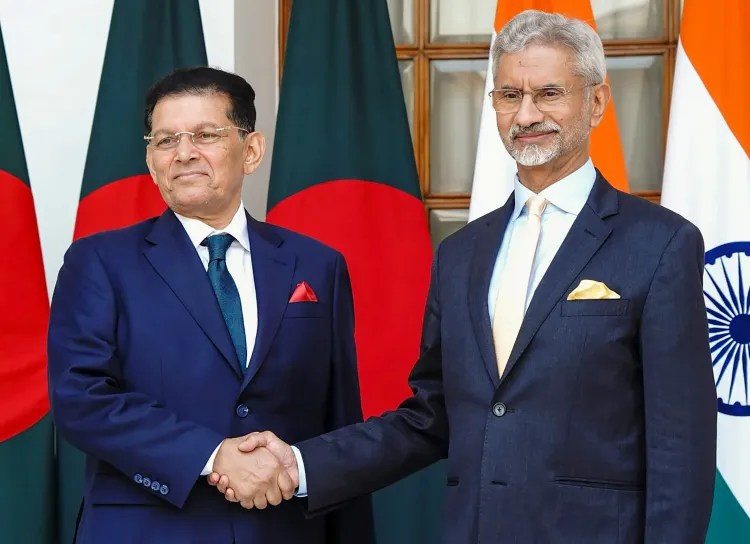
Dhaka, April 9 (NationPress) With Prime Minister Tarique Rahman at the helm, the newly formed government of Bangladesh holds a pivotal chance to strengthen one of its most vital international partnerships—its relationship with India, as reported by local media this week.
India has consistently demonstrated its role as a dependable ally for Bangladesh, contributing to economic advancement, infrastructure enhancement, and fostering regional collaboration.
"The political shift in Bangladesh after the 2026 elections marks a fresh chapter in South Asian diplomacy. The Bangladesh Nationalist Party (BNP) has achieved a parliamentary majority, placing Tarique Rahman in a leadership position that coincides with a crucial moment for both Dhaka and New Delhi," elaborated an editorial in the 'Dhaka Tribune.'
"India is observing these developments with measured optimism. The truth is that India harbors significant hopes for the new Bangladeshi leadership. Historical precedents suggest that Tarique Rahman will likely find success if he opts to collaborate with India as a reliable partner," it further noted.
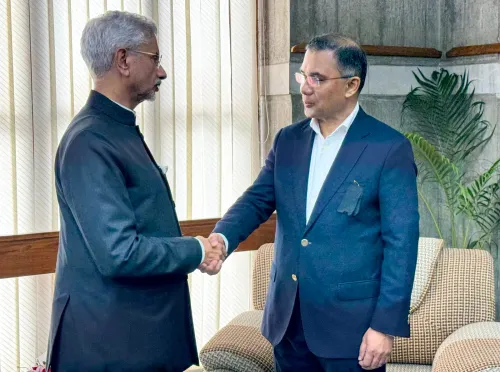
The report indicates that initial signs of collaboration between the two countries are emerging, highlighted by a discreet visit from Bangladesh's military intelligence chief to New Delhi in March, where he engaged with senior Indian security and intelligence officials.
"Such visits might not capture public attention, but they often play a critical role in sustaining strategic stability and trust among neighboring nations. The trip signified that, despite political transitions in Dhaka, institutional cooperation between India and Bangladesh remains both active and constructive," the report outlined.
"Few bilateral ties in the region are as profound or historically entrenched as that between India and Bangladesh. This relationship is fundamentally shaped by the events of 1971, during which India played an instrumental role in Bangladesh’s independence from Pakistan, supporting the Mukti Bahini resistance and helping to establish a sovereign nation," it continued.
The report emphasized that recent occurrences highlight the practical benefits of this partnership.
Amid concerns regarding potential disruptions in global fuel supplies due to ongoing tensions in West Asia, India has upheld its energy commitments to Bangladesh.
"In March 2026, India supplied approximately 5,000 tonnes of diesel to Bangladesh under the existing bilateral agreement, ensuring stability in Bangladesh’s fuel supply during a period of uncertainty in global energy markets," the report affirmed.
Beyond commercial and infrastructure collaborations, the bond between India and Bangladesh is enriched by deep-rooted people-to-people connections.
"The two nations share a 4,000-kilometer border, one of the longest land borders globally. Millions of families maintain linguistic, cultural, and historical links across this boundary. Annual educational exchanges, tourism, medical travel, and religious pilgrimages foster ties between the citizens of these two countries," the report observed.
New Delhi perceives stability and prosperity in Bangladesh as a strategic priority, contributing to security in India’s northeast and enhancing connectivity with Southeast Asia, while promoting regional economic growth across the Bay of Bengal.
Reiterating the importance of a steady partnership, the report highlighted, "This is where expectations regarding Tarique Rahman take on added importance. As the new leader of Bangladesh, he faces a nation grappling with intricate challenges, including economic stress, political division, and heightened geopolitical competition in the region. Therefore, balanced diplomacy and regional collaboration will be essential for Bangladesh’s sustained development."
Point of View
It's essential to recognize the potential impact of Tarique Rahman's leadership on Bangladesh-India relations. This moment presents a unique opportunity for both nations to navigate challenges together, emphasizing diplomacy and cooperation.
NationPress
19 Sept 2026
Frequently Asked Questions
What is the significance of Bangladesh's relationship with India?
Bangladesh's relationship with India is historically significant, rooted in India's support during Bangladesh's liberation in 1971, and continues to be vital for economic growth and regional stability.
How does the new leadership in Bangladesh affect diplomatic ties?
The new leadership under Tarique Rahman presents an opportunity to strengthen diplomatic ties with India, potentially enhancing cooperation in areas like trade, security, and cultural exchanges.
What recent developments indicate renewed engagement between Bangladesh and India?
Recent visits from Bangladeshi officials to India signal a willingness to engage and cooperate, maintaining strategic stability despite political transitions.
Why is India's support crucial for Bangladesh's energy security?
India's consistent energy supplies, such as the recent diesel shipment, are crucial for Bangladesh's energy security, especially during global market uncertainties.
How do cultural ties influence Bangladesh-India relations?
Cultural ties, including shared history and family connections across borders, play a significant role in fostering goodwill and cooperation between Bangladesh and India.