Can a new triad with Pakistan and Bangladesh facilitate China’s BRI expansion?
Synopsis
Discover how Pakistan's collaboration with China and Bangladesh may reshape South Asia's geopolitical landscape and boost China’s Belt and Road Initiative. Will this trilateral cooperation bolster economic ties or provoke tensions with India? Explore the implications and potential outcomes in this insightful analysis.
Key Takeaways
Pakistan seeks closer ties with China and Bangladesh .
The trilateral cooperation may enhance China 's BRI.
Islamabad is burdened with significant debt to Beijing .
Limited issue-specific collaborations are expected.
Regional trade remains low despite a large population.
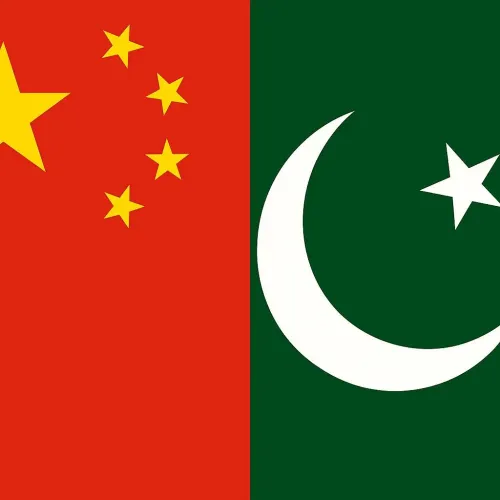
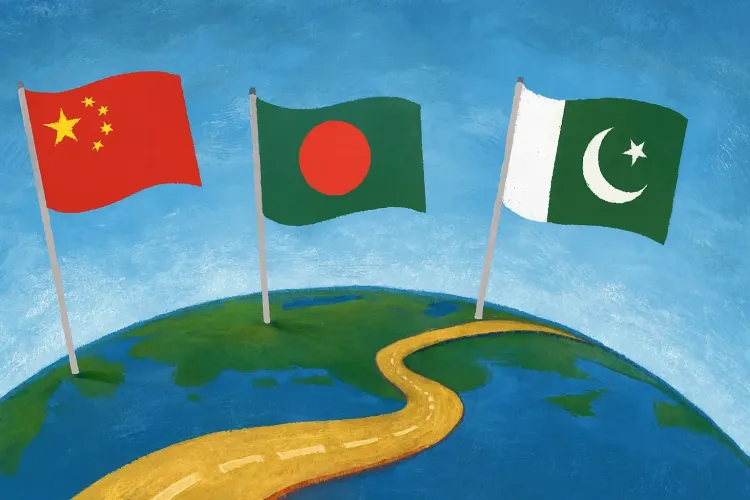
New Delhi, Dec 11 (NationPress) Pakistan's latest endeavor to enhance trilateral cooperation with China and Bangladesh primarily serves to provide Beijing with an opportunity to expand its Belt and Road Initiative (BRI), amidst Islamabad grappling with substantial debts.
This initiative is expected to yield limited, issue-specific collaborations aimed at developing connectivity corridors or targeted trade facilitation, rather than forming a formalized bloc.
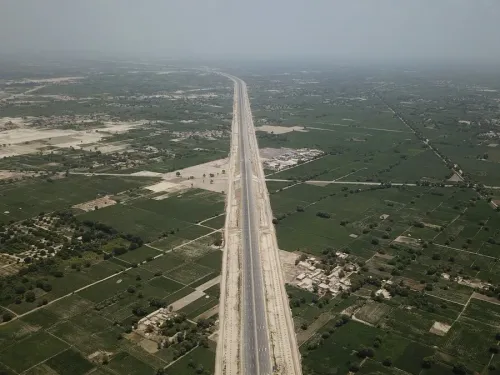
Current reports indicate that Islamabad is burdened with a staggering USD 30 billion debt owed to Beijing as part of the ambitious China-Pakistan Economic Corridor (CPEC) project, with many of the associated projects left unfinished due to significant economic, security, and environmental hurdles.
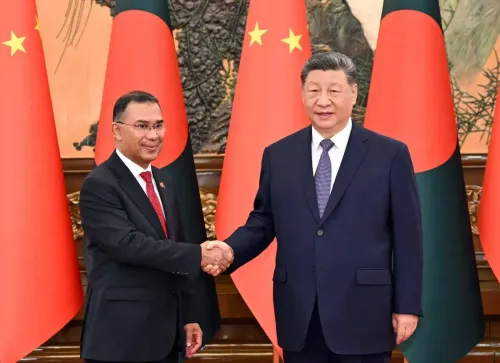
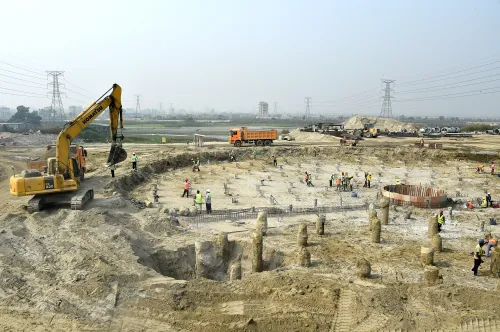
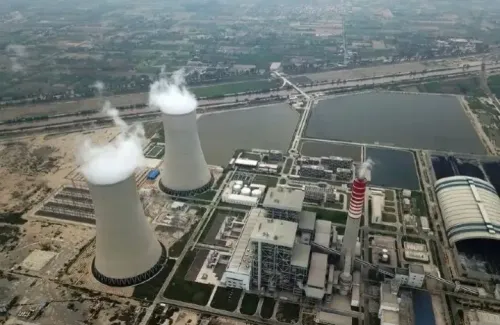
In Bangladesh, the BRI projects encompass the Rooppur Nuclear Power Plant, numerous port and connectivity initiatives, the Karnaphuli Tunnel, and various contracts in the power sector and infrastructure.
Estimates regarding China's financial involvement in these projects vary, with one analysis suggesting an investment of approximately USD 7.07 billion, while Chinese contractors have reportedly secured contracts worth nearly USD 23 billion in construction.
China's ambassador to Bangladesh mentioned that Beijing has allocated about USD 4.45 billion for 35 projects under the BRI, which may not fully encompass all China-related contracts and investments outside this initiative.
For Pakistan and Bangladesh, the objective may be to broaden this framework and create a South Asian alternative that excludes India.
Additionally, China is the largest provider of arms and equipment to the military forces in both nations.
Consequently, strengthening relations with India's immediate neighbors holds substantial strategic importance for China, amplifying the perceived threat to the South Asian giant from multiple directions.
For Islamabad and Dhaka, this trilateral relationship enhances their diplomatic and strategic standing in comparison to a much more powerful nation. From Bangladesh's viewpoint, increased collaboration with Beijing and Islamabad offers a perceived tool to navigate its current tensions. However, the extent to which Bangladesh may risk aggravating New Delhi remains uncertain.
This geopolitical triangle can be traced back to their inaugural summit held in Kunming, China on June 19. Over time, Islamabad has been experiencing gradual estrangement from the South Asian Association for Regional Cooperation (SAARC), which was established in 1985 and includes India, Pakistan, Bangladesh, Sri Lanka, Nepal, Bhutan, and the Maldives, with Afghanistan joining in 2007.
This platform has been nearly dormant since India opted to boycott the Islamabad summit following Pakistan's involvement in the 2016 Uri terror attack. Two years earlier, Pakistan had obstructed an agreement allowing vehicles to traverse across South Asia, similar to arrangements in Europe.
Islamabad also disrupted a similar initiative aimed at regional railway collaboration.
Despite a combined population exceeding two billion, trade within South Asia amounts to merely USD 23 billion, as per a World Bank report.
Simultaneously, India is involved in other regional formations such as the Bay of Bengal Initiative for Multi-Sectoral Technical and Economic Cooperation (BIMSTEC), which notably excludes Pakistan. BIMSTEC comprises Bangladesh, Bhutan, India, Myanmar, Nepal, Sri Lanka, and Thailand, representing a total population of around 1.73 billion and accounting for a total trade volume of approximately USD 1.95 trillion.
The pressing question now is not whether this new grouping is politically and diplomatically appealing, but rather its operational viability and the broader geopolitical implications for South Asia.
Point of View
I recognize that the evolving dynamics of South Asian geopolitics require careful analysis. While the trilateral cooperation among Pakistan, Bangladesh, and China may promise economic opportunities, it also raises concerns regarding regional stability and India's response. It is imperative for us to monitor these developments closely, ensuring that we remain informed and prepared for any implications that may arise.
NationPress
26 Sept 2026
Frequently Asked Questions
What is the Belt and Road Initiative?
The Belt and Road Initiative (BRI) is a global development strategy adopted by China in 2013, aimed at enhancing regional connectivity and embracing a brighter economic future through building infrastructure and broadening trade links.
What are the implications of Pakistan's debt to China?
Pakistan's significant debt to China, primarily from the CPEC project, poses risks of economic instability and dependency, potentially limiting its sovereignty in decision-making.
How does this trilateral cooperation impact India?
The cooperation may heighten India's security concerns and strategic isolation, prompting New Delhi to reassess its diplomatic engagements in South Asia.
What is the current status of SAARC?
SAARC has been largely inactive in recent years due to political tensions, particularly following India's boycott of the Islamabad summit over terrorism concerns.
What are BIMSTEC's objectives?
BIMSTEC aims to promote regional cooperation in various sectors, including trade and security, among its member countries, which exclude Pakistan.