What Led to the Tragic Sinking of a Ferry in the Philippines?
Synopsis
A ferry tragedy in the Philippines has left 13 dead and over 100 missing. As search efforts continue, this incident has raised questions about maritime safety in the region. Discover the shocking details surrounding this maritime disaster.
Key Takeaways
At least 13 bodies have been recovered from the ferry sinking.
More than 100 individuals are still missing.
The ferry was en route to Jolo Island from Zamboanga City .
Search and rescue operations are ongoing despite rough sea conditions.
The cause of the incident is currently under investigation.
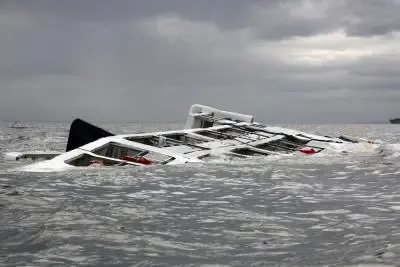
Manila, Jan 26 (NationPress) In a tragic incident, authorities reported that at least 13 bodies have been recovered while over 100 individuals are still unaccounted for following the sinking of an inter-island ferry. The ferry, which carried more than 300 passengers and crew members, capsized early Monday morning off the coast of Basilan province in the southern Philippines.
The vessel was making its way to Jolo Island in Sulu province from Zamboanga City when it sank near Balukbaluk Island in the municipality of Hadji Muhtamad, as reported by the Xinhua news agency.
As of Monday morning, search and rescue teams have retrieved 13 bodies from the waters, while several survivors were rescued by Coast Guard units, navy ships, and local fishing boats, officials indicated.
The coast guard confirmed that 244 passengers have been rescued, and the 13 bodies have been found.
The cause behind the ferry's sinking remains unclear, and an investigation is currently underway. Authorities stated that the ferry had been cleared for departure from Zamboanga port, and there were no indications of overloading.
The exact count of survivors is still being verified.
Ongoing search and rescue operations are in progress, utilizing both aircraft and marine assets to comb the area, despite challenging sea conditions.
Authorities have emphasized that the cause of the sinking is still under investigation.
Sea accidents occur frequently in the Philippine archipelago due to a combination of factors such as frequent storms, poorly maintained vessels, overcrowding, and inconsistent enforcement of safety regulations, particularly in remote areas.
Historically, the ferry Dona Paz sank in December 1987 after colliding with a fuel tanker in the central Philippines, resulting in the tragic loss of over 4,300 lives—the worst peacetime maritime disaster in history.
Point of View
I approach this tragic incident with deep concern for the lives affected. The loss of 13 lives and the uncertainty surrounding over 100 missing individuals is a stark reminder of the need for stringent maritime safety regulations in the Philippines, where such incidents have unfortunately become too common.
NationPress
19 Sept 2026
Frequently Asked Questions
What caused the ferry to sink?
The cause of the ferry sinking is currently under investigation, with authorities indicating that there were no signs of overloading before departure.
How many people were on board?
The ferry was carrying over 300 passengers and crew members.
What are the ongoing rescue efforts?
Search and rescue operations are ongoing, with aircraft and marine assets deployed to locate missing individuals.
Has this happened before in the Philippines?
Yes, maritime accidents are unfortunately common in the Philippines due to various factors, including overcrowding and poor vessel maintenance.
What is the historical significance of maritime disasters in the region?
The Philippines has a history of maritime disasters, including the Dona Paz ferry sinking in 1987, which resulted in over 4,300 fatalities.