Pralhad Joshi Visits ISRO HQ, Meets Scientists in Bengaluru
Synopsis
Union Minister Pralhad Joshi visited ISRO's Bengaluru headquarters on 16 July 2026, interacting with scientists and engineers, touring world-class facilities, and crediting PM Modi's leadership for ISRO's drive toward innovation, precision, and self-reliance in India's expanding space programme.
Key Takeaways
Pralhad Joshi visited ISRO headquarters in Bengaluru on 16 July 2026 , meeting scientists and engineers.
The minister described witnessing state-of-the-art technologies and research shaping India's future as 'truly inspiring.' He credited PM Narendra Modi's leadership for ISRO's commitment to innovation, precision, and Atmanirbharta .
Chandrayaan-3 achieved a historic soft landing near the lunar south pole in August 2023 , and Mangalyaan reached Mars in 2014 .
The Gaganyaan human spaceflight programme, approved in 2018 , and IN-SPACe , established in 2020 , represent India's ambitions for crewed missions and private-sector space participation.
India's space achievements are positioned as contributions to both national capability and the global scientific community.
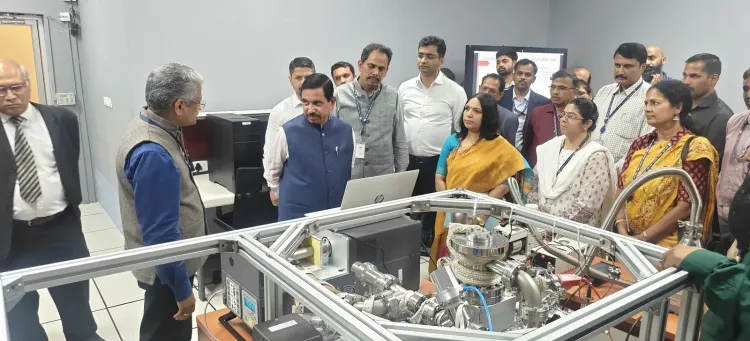
Union Consumer Affairs Minister Pralhad Joshi visited the headquarters of the Indian Space Research Organisation (ISRO) in Bengaluru on Thursday, 16 July 2026, interacting with scientists and engineers and touring cutting-edge research facilities. The minister described the experience as deeply inspiring, praising ISRO's contributions to India's technological standing and to the global scientific community.
Context
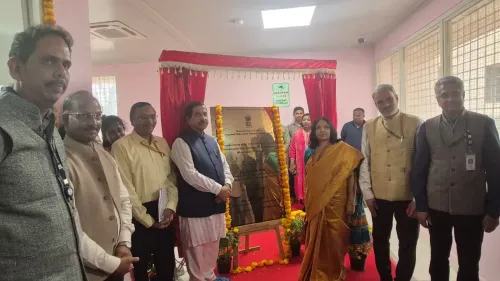
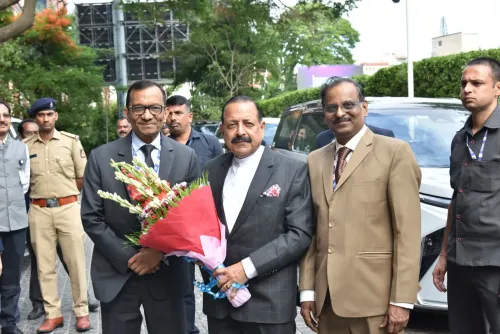
Posting in Kannada on X, Joshi wrote that he had the opportunity to witness firsthand the 'ಅತ್ಯಾಧುನಿಕ ತಂತ್ರಜ್ಞಾನಗಳು' — 'state-of-the-art technologies' — and world-class facilities shaping India's future. He called ISRO's scientists and engineers a 'continuous source of inspiration' through their dedication and hard work in achieving extraordinary milestones in India's space sector. The minister also shared four photographs from the visit on the platform.
Joshi credited Prime Minister Narendra Modi's visionary leadership for ISRO's unwavering commitment to innovation, precision, and Atmanirbharta (self-reliance), stating that the organisation reflects the spirit of 'New India.' He noted that India's achievements in space not only strengthen the nation's capabilities but also make a significant contribution to the global scientific community.
Policy Backdrop
ISRO's recent record has given Indian policymakers considerable cause for pride. Chandrayaan-3 achieved a landmark soft landing near the lunar south pole in August 2023, making India the first country to do so, while the Mars Orbiter Mission (Mangalyaan), launched in 2013, made India the first Asian nation to reach Mars when it entered orbit in 2014.
The current administration approved the Gaganyaan human spaceflight programme in 2018 and established IN-SPACe in 2020 to open the sector to private participation. These policy moves reflect a deliberate shift toward Atmanirbhar Bharat goals — expanding domestic capability while creating commercial opportunities in launch services and satellite operations.
Stakeholders and Impact
ISRO employs thousands of scientists and engineers across its network of centres, with the Bengaluru headquarters serving as the nerve centre for mission planning, satellite design, and launch coordination. The organisation's milestones carry both strategic and economic weight, underpinning national security applications, agricultural monitoring, disaster management, and a growing commercial launch business that competes globally.
The push for private-sector involvement through IN-SPACe has begun attracting Indian startups into satellite manufacturing and launch vehicle development, broadening the stakeholder base well beyond ISRO's own workforce. Ministerial visits of this kind signal continued political support for sustained budget allocations and regulatory facilitation for the sector.
What's Next
All eyes in India's space community remain on the Gaganyaan programme, which aims to send Indian astronauts to low-Earth orbit — a mission that would make India only the fourth country to achieve crewed spaceflight independently. Further regulatory steps to deepen private-sector access to launch infrastructure and spectrum are also expected as the government accelerates its space economy ambitions. Joshi's visit underscores the cross-ministerial political interest in ISRO's trajectory as a symbol of India's self-reliant technological rise.
Point of View
The language of Karnataka where ISRO is headquartered — carries a dual signal: it reinforces the BJP's narrative of national technological pride ahead of continued Gaganyaan milestones, while also reflecting a Karnataka-specific outreach by a senior state leader. The framing around Atmanirbhar Bharat and PM Modi's 'visionary leadership' is consistent with the administration's broader effort to politically anchor India's space successes within its governance story. Cross-ministerial engagement with ISRO also suggests the space sector is being woven into a wider economic and innovation agenda beyond the purview of the space ministry alone. As India courts private investment in launch services and satellites, such visible political endorsements help sustain the policy momentum needed for regulatory reform.
NationPress
14 Oct 2026
Frequently Asked Questions
Why did Pralhad Joshi visit ISRO headquarters?
Pralhad Joshi visited ISRO's Bengaluru headquarters on 16 July 2026 to interact with scientists and engineers, view cutting-edge research facilities, and express support for India's space programme achievements.
Where is ISRO headquarters located?
ISRO's headquarters is located in Bengaluru, Karnataka, and serves as the central hub for India's space mission planning, satellite design, and programme coordination.
What are ISRO's biggest recent achievements?
ISRO's landmark recent achievements include the Chandrayaan-3 soft landing near the lunar south pole in August 2023 — a world first — and the Mars Orbiter Mission (Mangalyaan) that entered Mars orbit in 2014, making India the first Asian nation to reach Mars.
What is the Gaganyaan mission?
Gaganyaan is India's human spaceflight programme, approved by the government in 2018, which aims to send Indian astronauts to low-Earth orbit and make India only the fourth country to achieve independent crewed spaceflight.
What is IN-SPACe and what does it do?
IN-SPACe (Indian National Space Promotion and Authorisation Centre) was established in 2020 to promote and regulate private-sector participation in India's space activities, including satellite manufacturing and commercial launch services.