PM Modi Highlights India's Space and Nuclear Strides at VivaTech
Synopsis
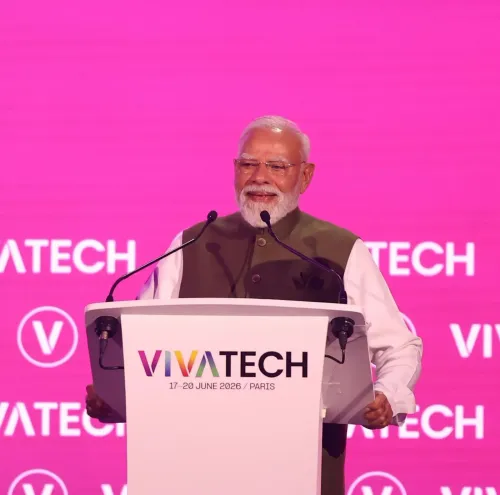
Prime Minister Narendra Modi addressed VivaTech in Paris on 18 June 2026, highlighting India's advances in space technology and nuclear energy and positioning the country as a global frontier in human scientific capability.
Key Takeaways
PM Modi addressed VivaTech , a major European tech forum in Paris , on 18 June 2026 .
He stated India is 'expanding the frontiers of human capability' in space technology and nuclear energy.
ISRO's Chandrayaan-3 achieved the world's first lunar south-pole landing in August 2023 , underpinning India's space credibility.
The 2008 Indo-US Civil Nuclear Agreement enabled India to expand civilian nuclear trade and international partnerships.
India's Make in India programme, launched in 2014 , provides the industrial framework for both strategic sectors.
Potential follow-on announcements on nuclear capacity targets and space-sector FDI from European engagements are being watched.
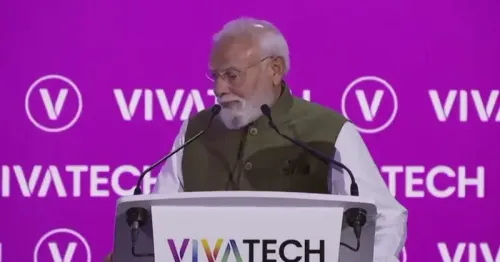
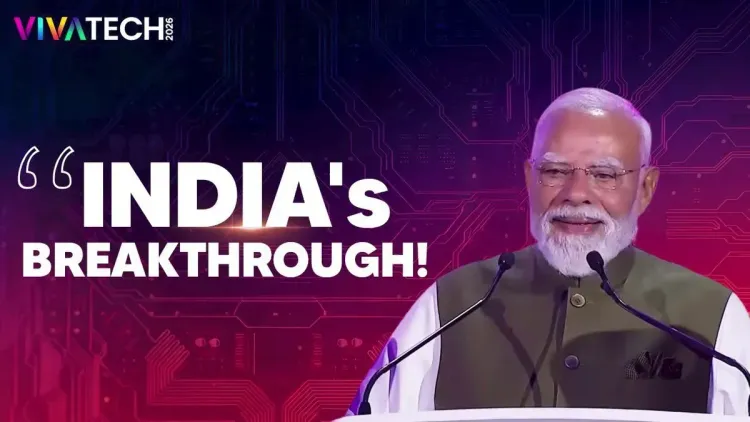
Prime Minister Narendra Modi on Thursday, 18 June 2026, invoked India's advances in space technology and nuclear energy while addressing the global audience of VivaTech, the annual technology and innovation summit held in Paris, France, positioning the country as a frontier-expanding power in strategic science.
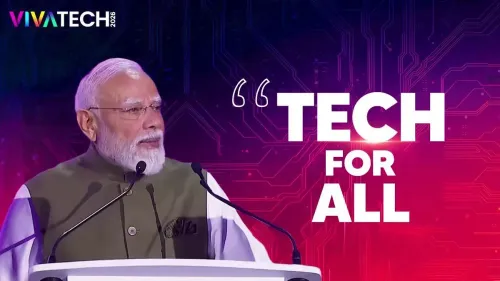
In his post directed at VivaTech, PM Modi stated: 'Be it space technology or nuclear energy, India is expanding the frontiers of human capability.' The message, accompanied by a video, was shared from his official account and signalled India's intent to project its dual-use strategic capabilities on a major international platform.
Context
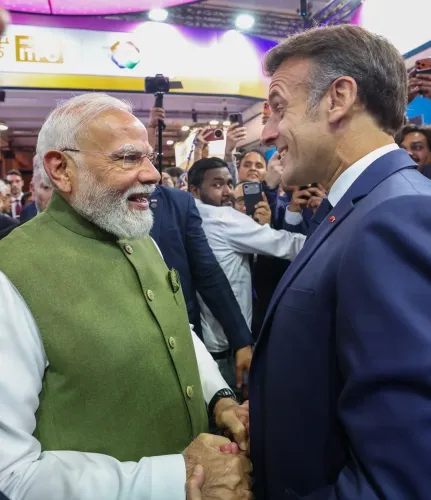
VivaTech is one of Europe's largest technology and startup gatherings, drawing investors, governments and innovators from across the world each year in Paris. India's engagement with the forum reflects a deliberate diplomatic strategy of using high-visibility international tech events to showcase national capability and attract foreign investment.
PM Modi has consistently used such platforms to highlight India's scientific achievements, framing them within the broader Atmanirbhar Bharat (self-reliant India) vision that successive government programmes have sought to advance since 2014.
Policy Backdrop
India's space programme, led by the Indian Space Research Organisation (ISRO), achieved a landmark milestone in August 2023 when the Chandrayaan-3 mission became the first to land near the lunar south pole, drawing global attention to India's cost-effective deep-space capability. Since then, the commercialisation of space launch services has accelerated under the government's liberalised space-sector policy.
On the nuclear front, the Department of Atomic Energy, established in 1954, oversees a growing civilian nuclear fleet. The landmark 2008 Indo-US Civil Nuclear Agreement, which secured India a waiver from the Nuclear Suppliers Group, opened the door to expanded civil nuclear trade and technology cooperation with major powers. India has since pursued simultaneous expansion of its domestic nuclear power capacity and international partnerships in the sector.
The Make in India programme, launched in 2014, has provided the overarching industrial framework within which both the space and nuclear sectors have sought to deepen domestic manufacturing and reduce import dependence.
Stakeholders and Impact
The primary stakeholders in this narrative include Indian scientists and engineers at ISRO and the Department of Atomic Energy, global technology investors present at VivaTech, and nuclear utilities and space-sector firms seeking partnerships with India. For European investors and governments, PM Modi's remarks serve as a direct signal of India's openness to collaboration in high-technology domains.
For domestic audiences, the statement reinforces the government's long-running message that India is no longer merely a recipient of global technology but an active contributor to human scientific progress. The framing of space and nuclear capability as expanding 'frontiers of human capability' elevates the discourse beyond national pride to a claim of universal relevance.
What's Next
Observers will watch for follow-up announcements on India's nuclear power capacity targets and any new space-sector foreign direct investment or commercial launch-service agreements that may emerge from engagements with European partners around the VivaTech forum. India's growing commercial space ambitions and its plans to expand the civilian nuclear fleet make both domains active sites for potential international deal-making in the months ahead.
Point of View
The government signals that India's strategic technology ambitions are broad-based and not limited to any single domain. The framing of Indian capability as advancing 'human' rather than merely national frontiers is a deliberate rhetorical move to position India as a global contributor rather than a developing-world aspirant. This dual-domain projection is likely to intensify as India seeks deeper technology partnerships with European nations amid shifting global supply-chain dynamics.
NationPress
18 Sept 2026
Frequently Asked Questions
What did PM Modi say at VivaTech 2026?
PM Modi stated that India is expanding the frontiers of human capability in both space technology and nuclear energy, addressing the VivaTech audience in Paris on 18 June 2026.
What is VivaTech and why did PM Modi address it?
VivaTech is one of Europe's largest annual technology and startup summits, held in Paris. PM Modi addressed it as part of India's strategy to showcase strategic scientific achievements and attract global investment.
What has India achieved in space technology recently?
India's ISRO successfully landed the Chandrayaan-3 mission near the lunar south pole in August 2023, making India the first country to achieve this feat and demonstrating cost-effective deep-space capability.
What is India's nuclear energy policy?
India's nuclear programme is overseen by the Department of Atomic Energy, established in 1954. The 2008 Indo-US Civil Nuclear Agreement gave India access to expanded civil nuclear trade, and the government has since pursued growth of its domestic nuclear power fleet alongside international partnerships.
How does VivaTech connect to India's Make in India programme?
Make in India, launched in 2014, is the overarching industrial policy under which India promotes domestic manufacturing in strategic sectors including space and nuclear. PM Modi's VivaTech engagement signals these sectors as priority areas for foreign investment and technology collaboration.